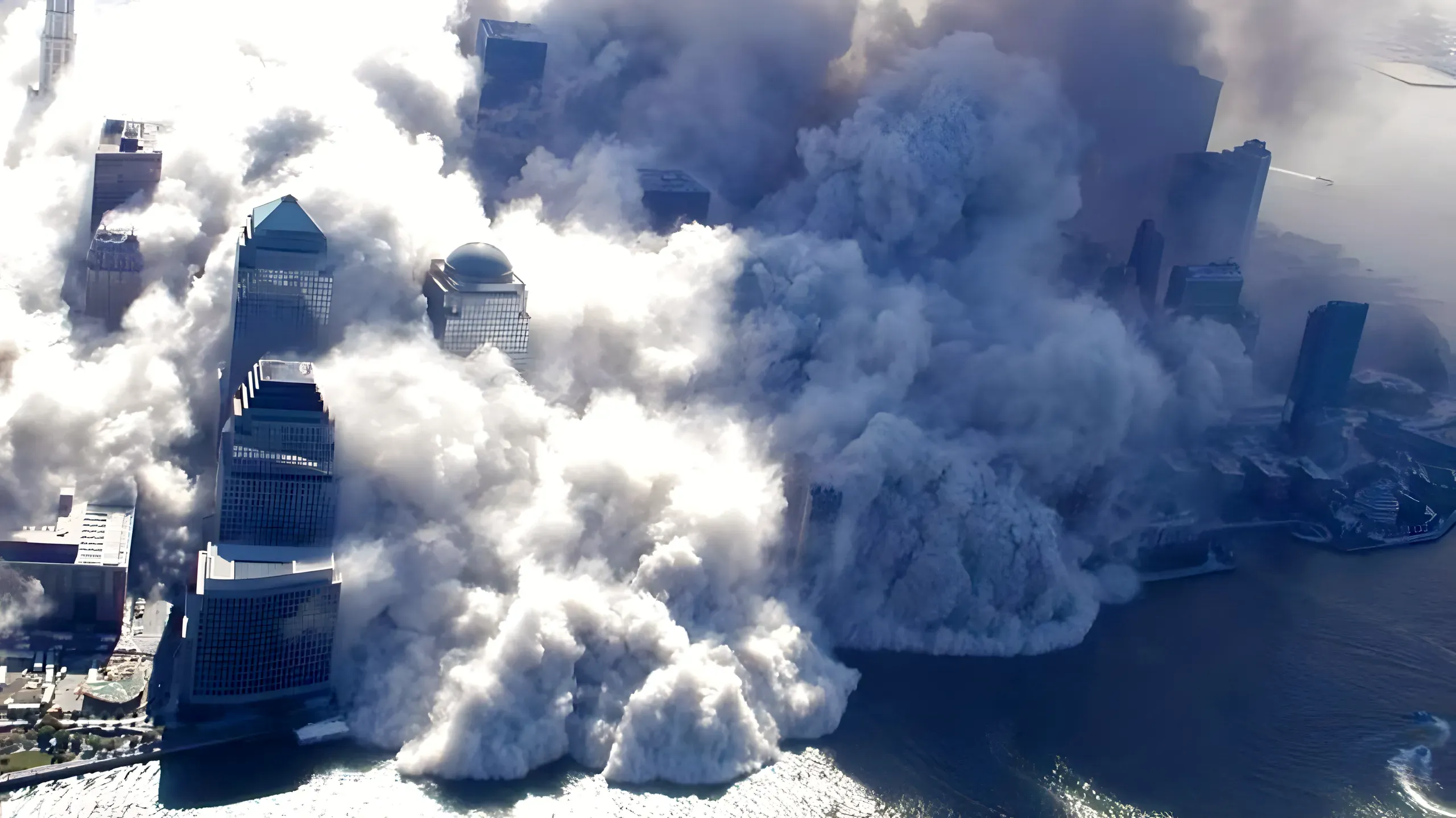
“The building collapsed to dust”
You have two 110-storey office buildings. You don’t find a desk. You don’t find a chair. You don’t find a telephone, a computer. The biggest piece of a telephone I found was half of the keypad and it was about this big. The building collapsed to dust.
Piledriver?
”I did not see one phone, one desk, one chair - nothing”
… so it was, you know, very surreal what we experienced and what we were going through at the time and as you know there was just so many people in different agencies that were involved in, you know, search and rescue efforts, we were a little bit different because of our training, you know, with heavy rescue and being able to, you know, cut through steel and do different things with the fire department and get lowered into different voids because we had that capability of doing it. So our operations were a little bit more intense than what you seen at the bucket brigades and things like that; we were actually, you know, in the steel climbing under things and, you know, trying to locate loss of life and, you know, recover remains however possible.
Were you able to make any rescue?
No rescues on our team. A lot of recovery though.
How do you deal with that, when you went, during that moment?
During that moment, I mean, the thing was the mission of what we had to do. You really didn’t wrap your arms around what just happened until - it was weeks later when you actually got a chance to sit down and actually think about everything that went on and, you know, what the country had just went through and start thinking about what you looked at.
You know, people would ask me, you know, “What was it like, the pile? What did it look like?” And the biggest thing I always remember and I say to people:
You think about the offices in the World Trade Center, how many offices were there? How many desks, phones, computers, chairs, things like that?
I did not see one phone, one desk, one chair, nothing. All the commonalities of what’s inside an office - nothing was there. Everything was pulverized.
It was steel and concrete and rebar and, you know, the the dust clouds, you know, from the concrete being pulverized. But you know that was really interesting to me: paper, you know, a lot of paper all over the place and, you know, things like that but, you know, the biggest thing that stuck out to me was no furniture, no phones, all the common things that you would see in an office building - two of them of that size and the amount of offices, that actually caught up to me later and when you thought about that, like wow, where did all that stuff go? And you know everything just got, you know, pulverized as, you know, the buildings came down.
How the World Trade Center skyscapers turned into dust | ABC News | 14 September 2001
It is hard to conceive, but three days ago, both World Trade towers rose 1,362 feet into the sky. Visit those same towers today - at their tallest point, they rise maybe 100 feet above the street.
And while it’s true there are six floors below street level, now filled with debris, engineers at the firm that built the buildings’ best guess to account for the missing 1,200 feet of material from each tower is that large portions simply vaporized into the dust that rained down on New Yorkers immediately after the collapse; it was that powerful.
“We’re talking here about 43,600 windows, 600,000 square feet of glass, 200,000 tons of structural steel, 5,000,000 square feet of gypsum, 6 acres of marble, and 425,000 cubic yards of concrete - turned in good part into a cloud”, says environmental medical doctor Stephen Levin.
“I was astonished at the degree to which solid materials were turned into pulverized dust as a consequence of that building collapse. I think it was striking."
"Every thing was pulverized”
Peter Tully, president of [Tully Construction], was, notably, the only person willing to speak openly with AFP about his work at the WTC site. … “Think of the thousands of file cabinets, computers, and telephones in those towers—I never saw one—every thing was pulverized,” Tully said. “Everything that was above grade—above the 6th and 7th floor—disintegrated … it was like an explosion.” Tully Construction specializes in concrete. AFP asked Tully if he had ever seen concrete pulverized as it was at the WTC. “No—never,” he said.
New York Governor George Pataki
The concrete was pulverized and I was down here Tuesday and it was like you were on a foreign planet. All of lower Manhattan, not just this site, from river to river, there was dust powder, two, three inches thick. The concrete was just pulverized.
Dust galleries
2 World Trade Center (South tower)


