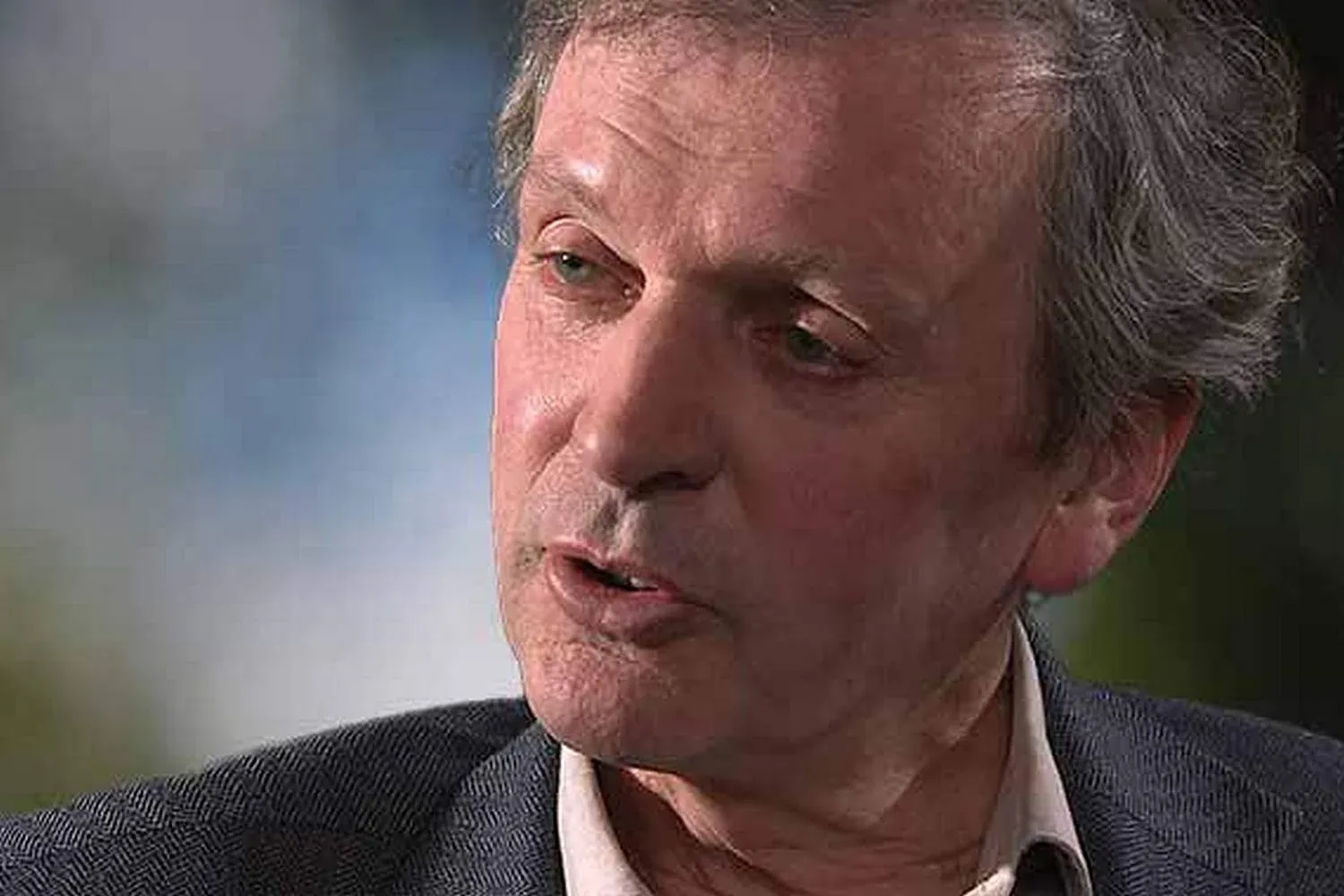
Why we might live in a conscious universe - 24 July 2025
Rupert Sheldrake explores the radical implications of panpsychism.
If the panpsychists are right, why should we stop at the brain?
Most scientists think that consciousness is created by the brain. After all, most assume consciousness vanishes if the brain is destroyed. But what if this consensus view is radically mistaken? Join distinguished Cambridge scientist Rupert Sheldrake as he argues that the mind extends beyond the brain and explores the radical implications of this account.
Evidence that your mind is NOT just in your brain - 12 June 2024
In this episode Rupert Sheldrake, biologist and author, debunks the standard view that the mind is nothing but brain activity and argues that our mind is extended in every act of visual perception.
Is the Sun Conscious? (pdf)
Abstract: The recent panpsychist turn in philosophy opens the possibility that self-organizing systems at all levels of complexity, including stars and galaxies, might have experience, awareness, or consciousness. The organismic or holistic philosophy of nature points in the same direction. Meanwhile, field theories of consciousness propose that some electromagnetic fields actually are conscious, and that these fields are by their very nature integrative. When applied to the sun, such field theories suggest a possible physical basis for the solar mind, both within the body of the sun itself and also throughout the solar system. If the sun is conscious, it may be concerned with the regulation of its own body and the entire solar system through its electromagnetic activity, including solar flares and coronal mass ejections. It may also communicate with other star systems within the galaxy.
With a free trial, you can watch the full talk at iai.tv.
Panpsychism: If Computers Can Have Minds, Why Can’t the Sun? | Mind Matters 2022
Sheldrake’s argument that the Sun is conscious cannot be dismissed out of hand by those who insist that computers can become conscious
…
Sheldrake is pretty controversial but he is likely right to note a “recent panpsychist turn in philosophy.” Prominent philosopher David Chalmers, who coined the term the “Hard Problem of consciousness,” has also said “We’re not going to reduce consciousness to something physical … it’s a primitive component of the universe.”
Setting science free from materialism - Explore 2013
Contemporary science is based on the claim that all reality is material or physical. There is no reality but material reality. Consciousness is a by-product of the physical activity of the brain. Matter is unconscious. Evolution is purposeless. This view is now undergoing a credibility crunch. The biggest problem of all for materialism is the existence of consciousness. Panpsychism provides a way forward. So does the recognition that minds are not confined to brains.
Rupert Sheldrake explores the concept of God as the consciousness that exists not only within humans, but within the entire cosmos.
The mood has shifted. Subjects that were once taboo - like God - are now discussed openly. So if a new theism is abroad, what might it bring?
In this episode of the Sheldrake-Vernon Dialogues, Rupert Sheldrake and Mark Vernon ask why individuals engaged in pursuits from cultural critique to theoretical biology are now actively interested in traditions such as Christianity and Platonism.
What is new about this turn and what is old? What does it mean in terms of understanding our humanity, the sciences and wider cosmology? And how can these new currents be best assessed and discerned?
More on Mark: https://www.markvernon.com
What if the whole universe is conscious? Rupert Sheldrake explains how panpsychism is the best explanation we have today for how we can understand consciousness.
The Institute of Art and Ideas
What is panpsychism? Does it finally offer an explanation of consciousness? From the problems with materialism to the tradition of dualism, we asked the world’s leading thinkers to explain all.
Although one of the oldest philosophical theories, panpsychism is often seen as an outsider in the philosophy of mind. Recent interest in the hard problem of consciousness however has revived interest in panpsychism and mean it could provide new understandings of the mind and view of reality.
Parapsychology expert Rupert Sheldrake, professor of philosophy Phillip Goff, cognitive psychologist Donald Hoffman, philosopher James Ladyman and professor of religion Mary-Jane Rubenstein give us their views.
From Wonderful World 2024
Where does consciousness come from? Most people have been taught that consciousness only originates in small lumps of grey matter, such as the brains of humans and possibly other higher species, while the rest of the universe is devoid of this quality.
But how can some forms of matter possess consciousness while others do not? After all, our brains are composed of the same atoms and molecules as the rest of the universe. More and more philosophers are approaching the theory of panpsychism, which claims that all matter has some form of consciousness or mind.
The British biologist Rupert Sheldrake has long proposed similar ideas. In his book A New Science of Life (1981), he introduced his well-known theory of morphic resonance, which suggests that all self-regulating systems in nature, such as cells, plants and animals, inherit a form of collective memory called the morphic field. Patterns of behaviour and organisation are influenced by similar past forms and experiences, creating a non-local transfer of information and memory across time and space, known as morphic resonance. In his bestselling book The Science Delusion (2012), Sheldrake addresses similar topics in the chapters “Is Nature Mechanical?” and “Is Matter Unconscious?”
In 2021, he published a paper in the Journal of Consciousness Studies titled “Is the Sun Conscious?” Sheldrake admits that even asking such a question seems utterly ignorant, even childish. However, he draws on numerous sources from different fields of science to support his ideas. He argues that it is certainly possible that self-organizing systems at all levels of complexity, including stars and galaxies, might have experience, awareness, or consciousness.
It appears that his views are no longer on the fringes of science and philosophy. In December last year, Sheldrake was invited to the distinguished Holberg Debate in Bergen to discuss the topic “Does Consciousness Extend Beyond Brains?”. Since then the YouTube video of the debate has garnered 2 million views [now 5 million].
We are proud to present this lecture by Rupert Sheldrake, one of the most original and thought-provoking thinker of our times.