The Federal Reserve System should be abolished for the following reasons: It is a cartel operating against the public interest …
– G. Edward Griffin, author of The Creature from Jekyll Island
Clandestine 1910 Jekyll Island meeting to plan what became the Federal Reserve
In 1910, Senator Nelson Aldrich told a handful of New York bankers to go on a given night, one by one, to a train station in New Jersey. There they would find a private rail car hitched to the back of a southbound train.
To conceal their identities, Aldrich told the bankers to come dressed as duck hunters and to address each other only by first name.
A Locked Door, A Secret Meeting And The Birth Of The Fed | Planet Money | NPR
From the first chapter of G. Edward Griffin’s The Creature from Jekyll Island:
The group that gathered at Jekyll Island was a strange mixture of bankers and politicians, but the bankers were clearly in the majority. The politicians were there primarily to provide the legislative mechanism to translate the bankers’ wishes into law. The purpose of this meeting, therefore, was to create the blueprint for a banking cartel. The goal of the cartel, as is true with all of them, was to protect its members from competition and to convince the government to enforce the cartel’s agreements. In the case of banking, this meant to control the nation’s money supply and to ensure that no new banks could enter the field unless they were approved by the existing members.
The entire function of the Federal Reserve System is to create money for the government to borrow. It is that simple. And the process is made to appear complicated only to keep the public from discovering the truth.
– G. Edward Griffin, author of The Creature from Jekyll Island
The preface to The Creature from Jekyll Island lists seven reasons why the Federal Reserve System must be abolished:
- It is incapable of accomplishing its stated objectives.
- It is a cartel operating against the public interest.
- It is the supreme instrument of usury.
- It generates our most unfair tax.
- It encourages war.
- It destabilizes the economy.
- It is an instrument of totalitarianism.
The American people have no idea they are paying the bill. They know that someone is stealing their hubcaps, but they think it is the greedy businessman who raises prices or the selfish laborer who demands higher wages… They do not realize that these groups also are victimized by a monetary system which is constantly being eroded in value by and through the Federal Reserve System.
– G. Edward Griffin, author of The Creature from Jekyll Island
For a complete transcript - with hyperlinked sources - and more, visit: corbettreport.com/federalreserve/
The real truth of the matter is, as you and I know, that a financial element in the larger centers has owned the Government ever since the days of Andrew Jackson.
– Franklin D. Roosevelt, letter to Colonel Edward House, 21 November 1933
The founders
John Adams
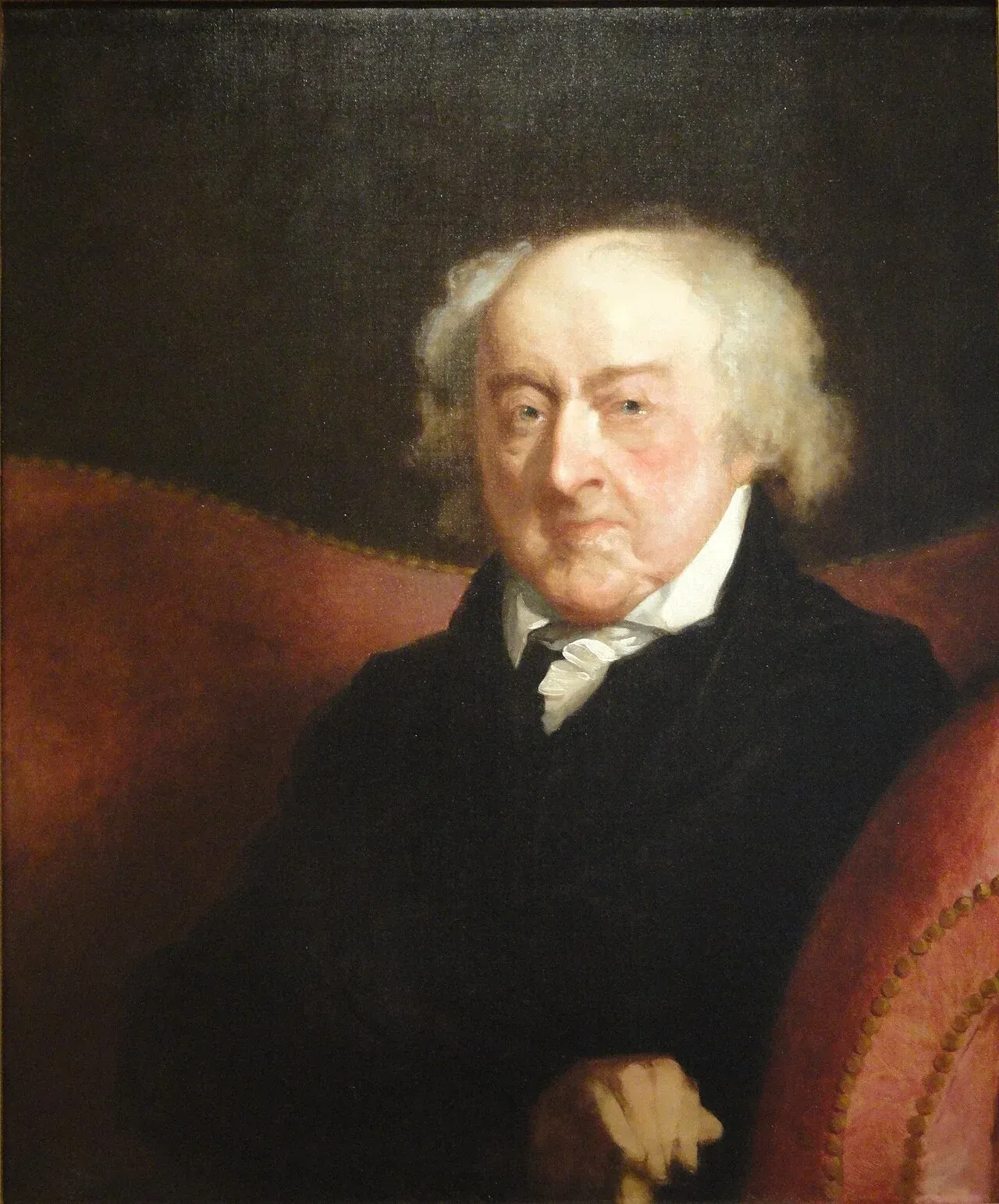
Lawyer, diplomat and political theorist who was deeply suspicious of banking institutions and their corrupting influence on republican government.
Banks have done more injury to the religion, morality, tranquility, prosperity, and even wealth of the nation than they can have done or ever will do good.
All the perplexities, confusion and distress in America arise, not from defects in their Constitution or Confederation, not from want of honor or virtue, so much as from the downright ignorance of the nature of coin, credit and circulation.
– Letter to Jefferson on the banking system
Thomas Jefferson
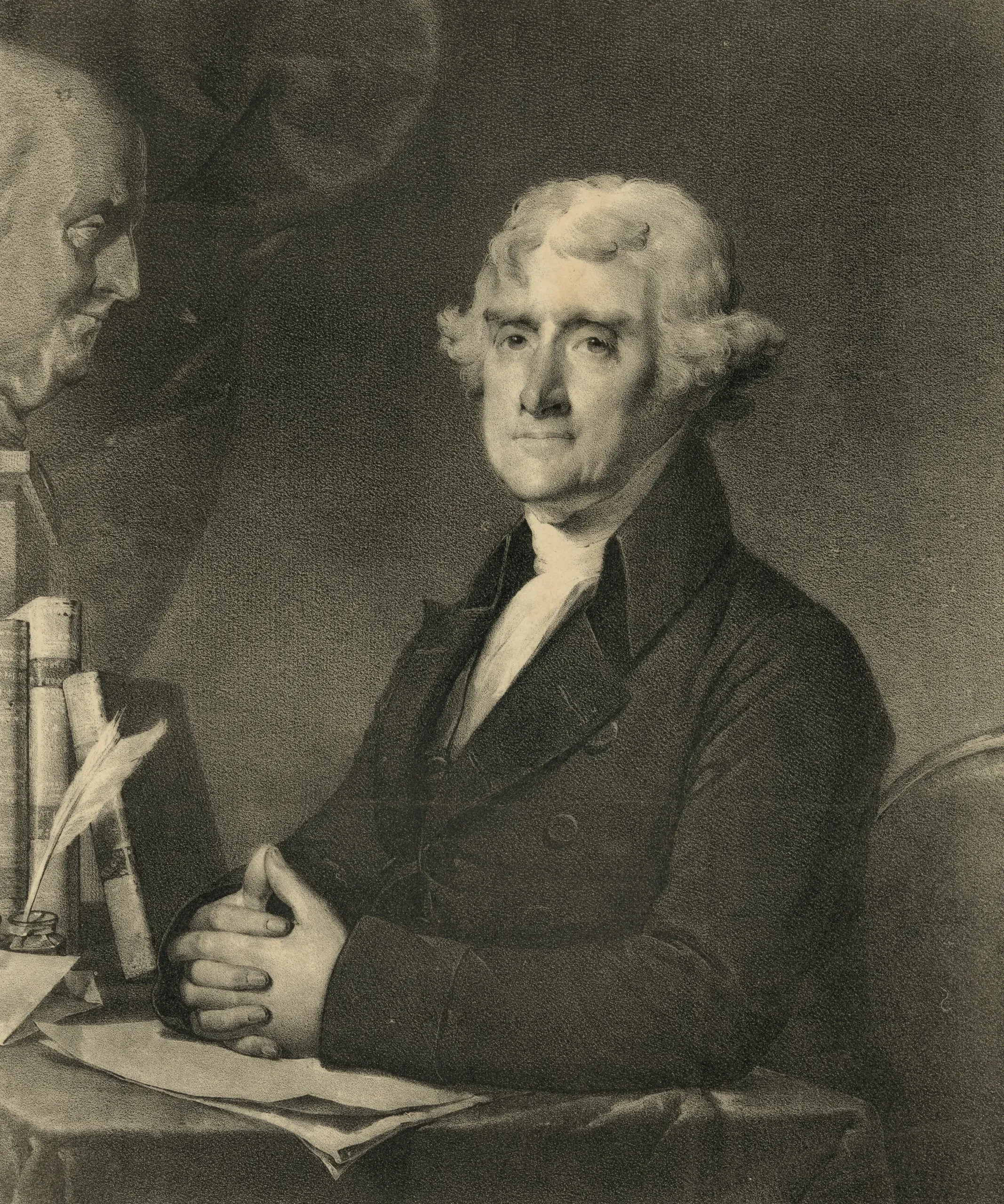
Statesman, diplomat, philosopher and architect of American democracy who waged a lifelong intellectual war against centralised banking power.
And I sincerely believe, with you, that banking establishments are more dangerous than standing armies; & that the principle of spending money to be paid by posterity, under the name of funding, is but swindling futurity on a large scale.
– 1816 letter to John Taylor
Bank-paper must be suppressed, and the circulating medium must be restored to the nation to whom it belongs.
– 1813 letter to his son-in-law, John Wayles Eppes
James Madison (1751–1836)
American Founding Father, principal author of the U.S. Constitution, and fourth U.S. President
Known as the “Father of the Constitution”, James Madison believed that a just government’s primary role was to protect all forms of property, and he saw the manipulation of money as a threat to that core principle. He warned that the “money changers” were a persistent threat to this stability:
History records that the money changers have used every form of abuse, intrigue, deceit, and violent means possible to maintain their control over governments by controlling money and its issuance.
Andrew Jackson (1767–1845)
American soldier, statesman, hero of the War of 1812, and seventh U.S. President
As the seventh president, Andrew Jackson’s entire political identity was built around his titanic struggle against the Second Bank of the United States, which he viewed as a corrupt, unconstitutional “monster”. His arguments directly foreshadowed the critiques of the Federal Reserve.
If congress has the right under the Constitution to issue paper money, it was given them to use themselves, not to be delegated to individuals or corporations.
Later critics
Louis T. McFadden
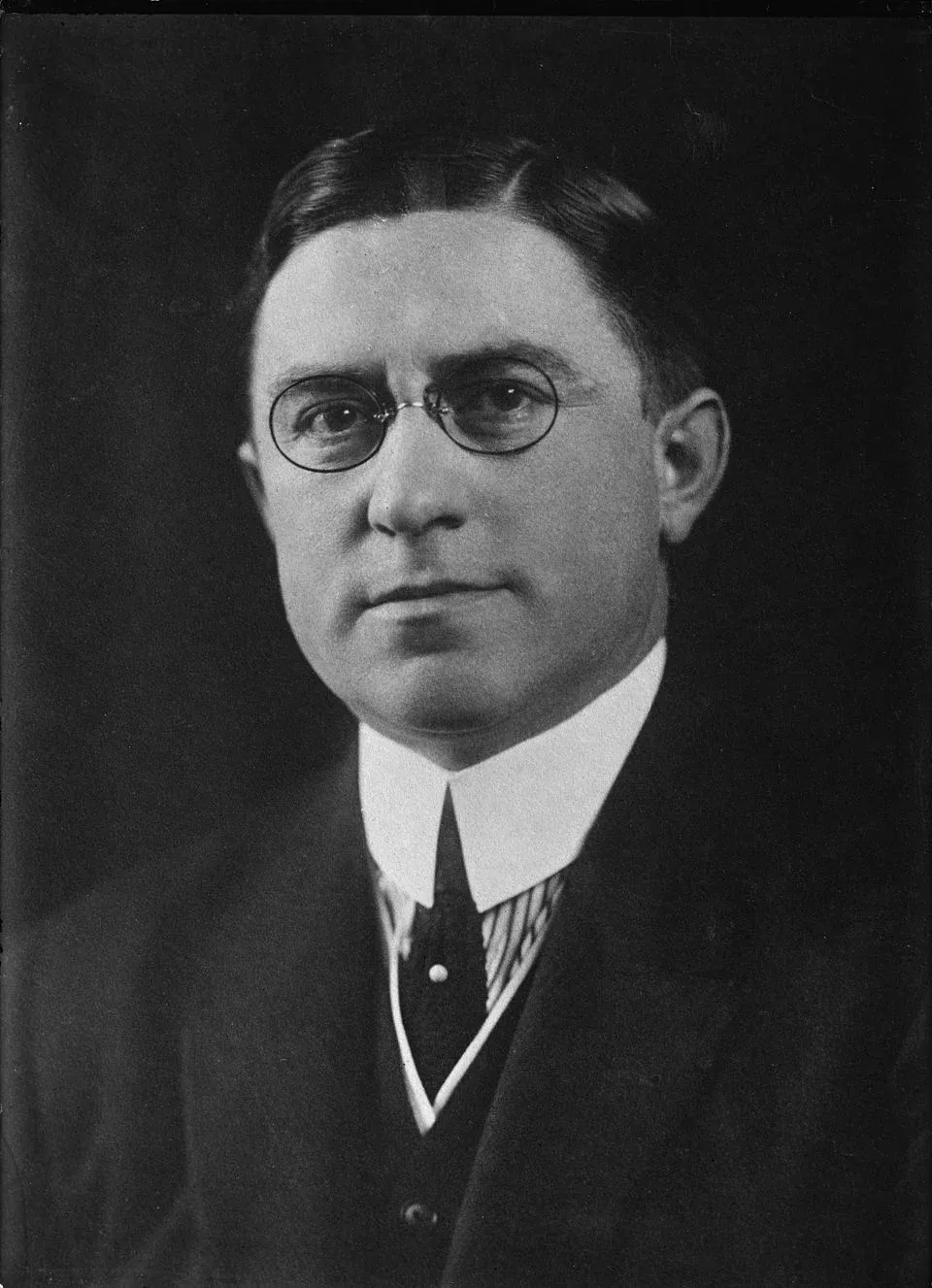
Republican congressman from Pennsylvania who served as Chairman of the House Banking and Currency Committee. Launched formal proceedings against the Federal Reserve Board, accusing it of conspiracy and criminal conduct.
On the floor of the House of Representatives, 1934:
Mr. Chairman, we have in this Country one of the most corrupt institutions the world has ever known. I refer to the Federal Reserve Board and the Federal Reserve Banks, hereinafter called the Fed. The Fed has cheated the Government of these United States and the people of the United States out of enough money to pay the Nation’s debt… This evil institution has impoverished and ruined the people of these United States, has bankrupted itself, and has practically bankrupted our Government. It has done this through the defects of the law under which it operates, through the maladministration of that law by the Fed and through the corrupt practices of the moneyed vultures who control it.
In the same speech he accused the Fed of being a “private monopoly which preys upon the people” and argued it had “usurped the government”.
Wright Patman (1893–1976)
American politician who served in the U.S. House of Representatives for 47 years, chairing the House Banking Committee
During hearings in 1964 marking the Fed’s 50th anniversary:
Now the Federal Reserve System in 50 years has never been audited by the U.S. Government. The Federal Reserve System, in 50 years, has never been audited… It is a strange thing that we have set up a fourth department of Government, that is what it is, that is not subject to audit.
More than a decade later, in 1975, his argument remained unchanged. During a hearing on a bill to audit the Fed, he said:
Without an appropriation’s review and without an independent audit by the General Accounting Office, this subcommittee and the Congress have only limited means of determining what any employee within the Federal Reserve might be doing at any given moment. We have no audit which would tell us… how any of the facilities or funds under the control of the Federal Reserve are being spent.
Patman frequently argued that the Federal Reserve, despite being a public institution, primarily served the interests of private commercial banks.
The Federal Reserve is a creature of the commercial banks. It is true that the Congress created the Federal Reserve, but it did so in a way which delivered this institution as a servant of the commercial banks.
Patman believed the power wielded by the Fed was fundamentally unconstitutional, as it represented a delegation of Congress’s own authority. In a 1941 entry in the Congressional Record, he made his constitutional case clear:
The Constitution of the United States does not give the banks the power to create money. The Constitution says the Congress shall have the power to create money, but now, under our system, we will sell bonds to commercial banks and obtain credit from them. I believe the time will come when people will actually blame you and me and everyone else connected with this Congress for sitting idly by and permitting such an idiotic system to continue.
John Kenneth Galbraith (1908–2006)
Canadian-American economist, diplomat and leading proponent of 20th-century American liberalism
The process by which banks create money is so simple that the mind is repelled.
– Money: Whence It Came, Where It Went (1975)
Galbraith uses this accurate, if cynical, assessment of modern finance to make two key points:
- The simplicity of the mechanism: The actual process of a private commercial bank creating new money by issuing a loan is mechanically simple - it’s an accounting entry.
- The repulsion of the mind: He argues that people are “repelled” because the process seems too mundane and easy for something so profoundly important as creating a nation’s money supply. He follows it up by saying, “Where something so important is involved, a deeper mystery seems only decent.” He believed this simplicity is often deliberately hidden behind a veil of complexity to discourage public scrutiny.
Friedrich von Hayek (1899–1992)
Austrian-British economist and political philosopher, Nobel laureate and a leading figure in the Austrian School of economics
History is largely a history of inflation, and usually of inflations engineered by governments and for the gain of governments. With the exception only of the period of the gold standard, practically all governments of history have used their exclusive power to issue money to defraud and plunder the people.
– The Denationalisation of Money (1976)
Murray N. Rothbard (1926–1995)
American economist of the Austrian School and a central figure in the American libertarian movement
Unlike the days of the gold standard, it is impossible for the Federal Reserve to go bankrupt; it holds the legal monopoly of counterfeiting (of creating money out of thin air) in the entire country.
But in that case, what are we to say when the government seizes control of the money supply, abolishes gold as money, and establishes its own printed tickets as the only money? In other words, what are we to say when the government becomes the legalized, monopoly counterfeiter?
It should be clear that modern fractional reserve banking is a shell game, a Ponzi scheme, a fraud in which fake warehouse receipts are issued and circulate as equivalent to the cash supposedly represented by the receipts.
Ron Paul
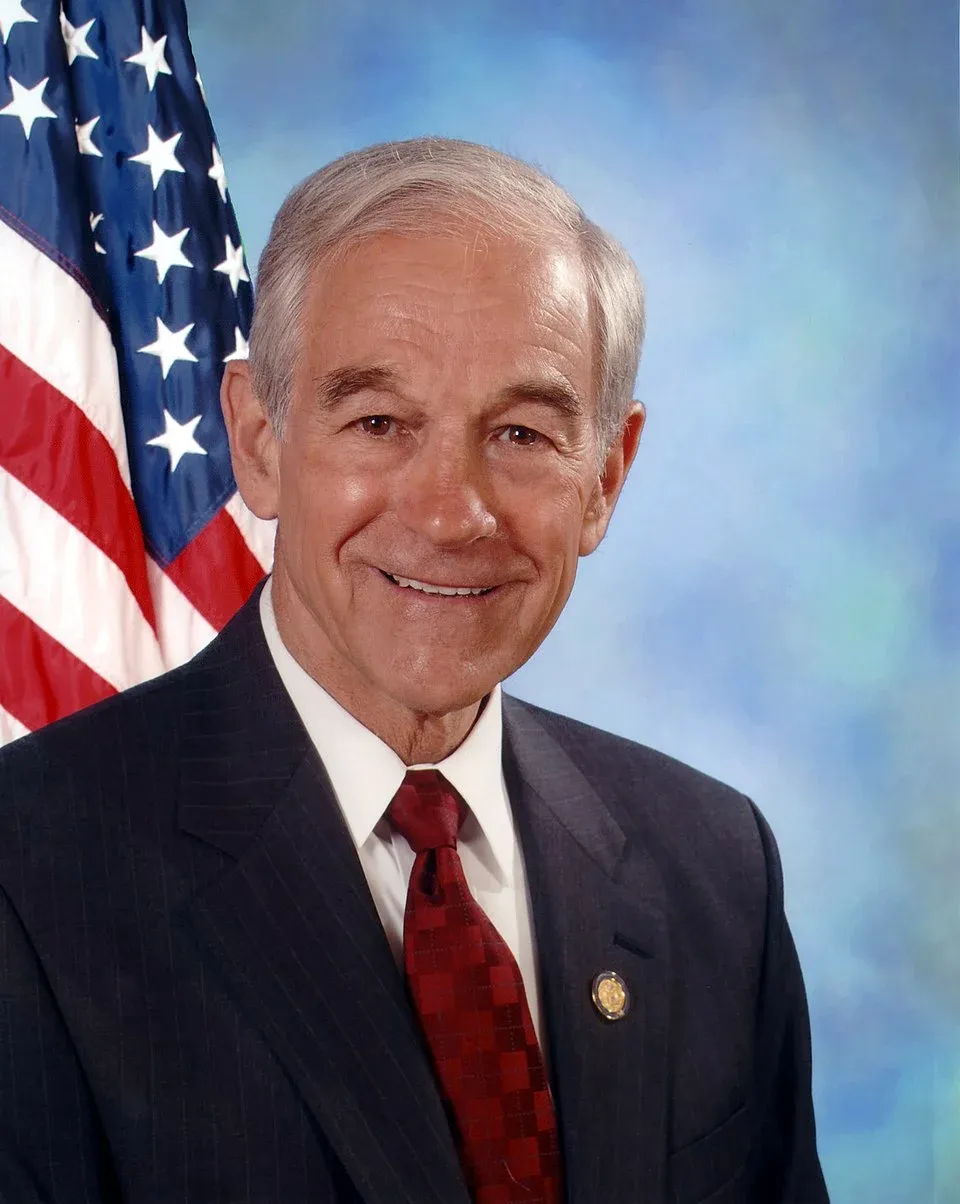
Physician, author and libertarian who served 12 terms in the US House of Representatives. His book End the Fed (2009) made the case for abolishing the Federal Reserve.
The Federal Reserve System is nothing more than legalised counterfeit.
First reason is, it’s not authorised in the Constitution, it’s an illegal institution. The second reason, it’s an immoral institution, because we have delivered to a secretive body the privilege of creating money out of thin air; if you or I did it, we’d be called counterfeiters, so why have we legalised counterfeiting?
And see this.