
A couple of galleries.
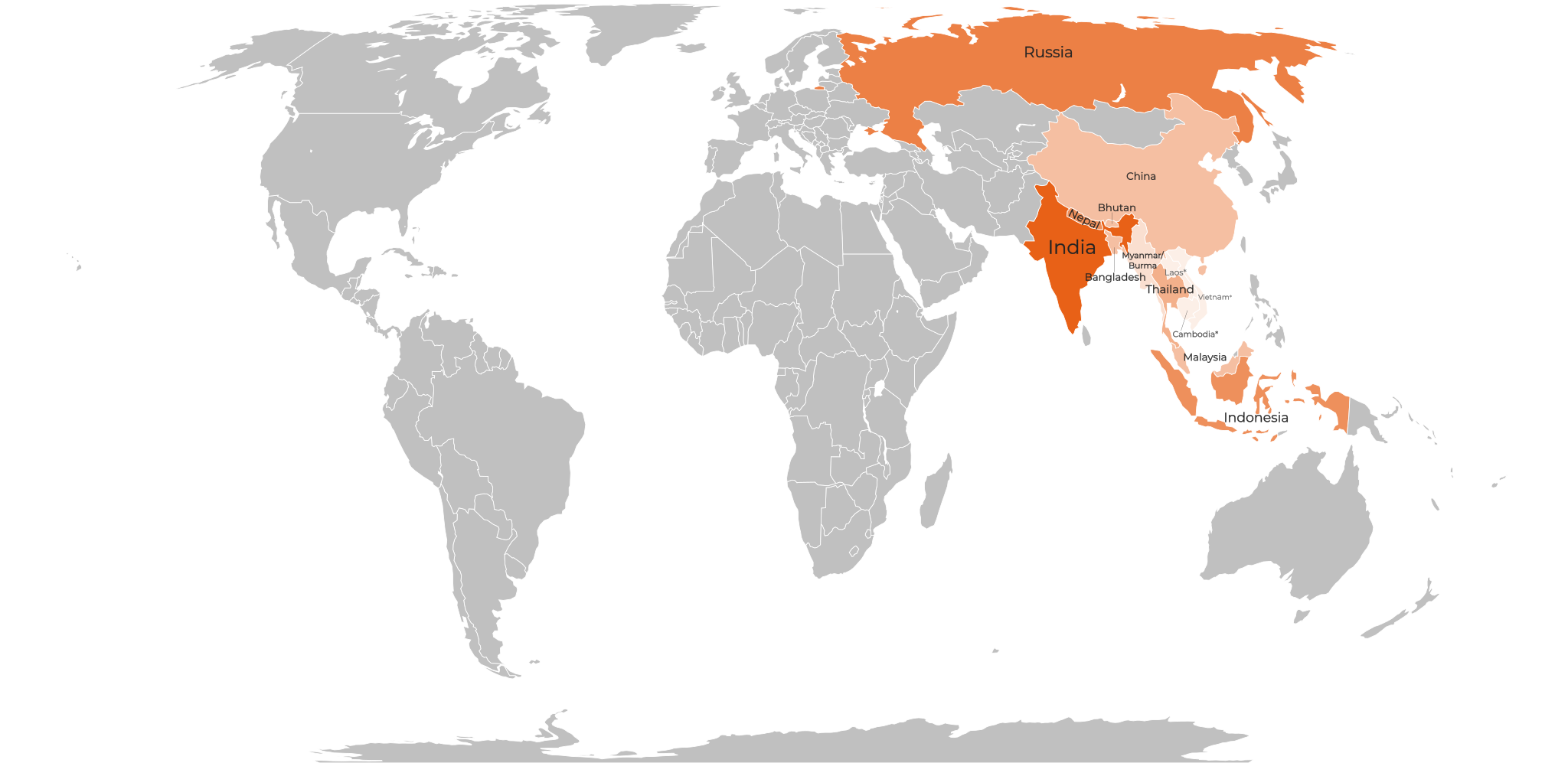
A map - lovingly crafted by 777168.xyz’s chief cartologist.
A reminder for anyone who might need it: these totemic animals are not native to the USA.
Countries with wild tigers
Landscape gallery


Portrait gallery


Detailed tiger population estimates
| Country | Est. pop. | Notes |
|---|---|---|
| India | 3,682 | Home to ~⅔ of the world’s wild tigers. The population has more than doubled since 2006, a result of the country’s five-decade-long ‘Project Tiger’. |
| Russia | 485-750 | The Russian Far East is the primary habitat for the Amur (or Siberian) tiger. The population has recovered from a low of ~40 individuals in the 1940s. |
| Indonesia | 400 | The Sumatran tiger, a critically endangered subspecies found only on the island of Sumatra. |
| Nepal | 355 | Nepal nearly tripled its wild tiger population between 2010 and 2022, increasing the count from 121 to 355 individuals. |
| Thailand | 200 | Thailand is the primary habitat for the critically endangered Indochinese tiger, with a population of ~179–223 individuals. |
| Malaysia | <150 | Numbers of the critically endangered Malayan tiger have plummeted from ~3,000 in the 1950s. Habitat loss and poaching remain severe threats. |
| Bhutan | 131 | Home to a high-altitude Himalayan tiger population, Bhutan recorded an increase from 103 individuals in 2015 to 131 in its 2023 national survey. |
| Bangladesh | 114 | Home to a unique population of Bengal tigers adapted to living in the Sundarbans, the world’s largest mangrove forest. |
| China | 100 | 10 Bengal tigers in Tibet, ~20 Indochinese tigers in the south and a recovering population of ~70 Siberian tigers in the N.E. |
| Myanmar/Burma | 22 | Reliable data is scarce due to internal conflict and lack of resources, but the population is believed to be very small and fragmented. |
| *Cambodia, Laos, Vietnam | 0 | Functionally extinct. The last tiger in Laos was recorded in 2013, in Vietnam in 2009 and in Cambodia in 2007 (but see below). |
Numbers shown are for wild tigers.
Both China and the USA have captive populations estimated to exceed the entire global wild tiger population.
Cambodia to reintroduce wild tigers from India in 2025
Cambodia’s forests were once home to hundreds of Indochinese tigers but intensive poaching of both tigers and their prey drove them to extinction. The last sighting of a wild tiger was in 2007, and they were declared functionally extinct in 2016.
That year Cambodia adopted a national Tiger Action Plan to bring them back and, in April 2025, Cambodia’s Ministry of Environment announced it was ready to receive six Bengal tigers from India. The transfer is due take place after the rainy season, which typically ends in October.
Before being introduced into the wild, the tigers will be kept in a newly constructed 90-hectare (222-acre) Tiger Wildlife Sanctuary in the Cardamom rainforest to acclimatise them to their new home. Developed by Wildlife Alliance, the sanctuary integrates multiple release areas, prey enclosures and tunnels, a veterinary clinic and a dedicated water supply.
Sources
The IUCN Red List of Threatened Species
India’s tiger population doubles in a decade offering key lessons
WWF congratulates Bhutan for increase in wild tiger population | WWF (2023)
Wild tiger populations grow in India and Bhutan – Benar News (2023)
120 Miles of Russian Forest Couldn’t Keep Two Siberian Tigers Apart - The New York Times
South China tiger population rises amid conservation efforts-Xinhua
A Roaring Comeback: How China’s Tigers Returned From the Dead
China: Where tigers are returning | WWF
Big thanks to all the photographers 🕺💃