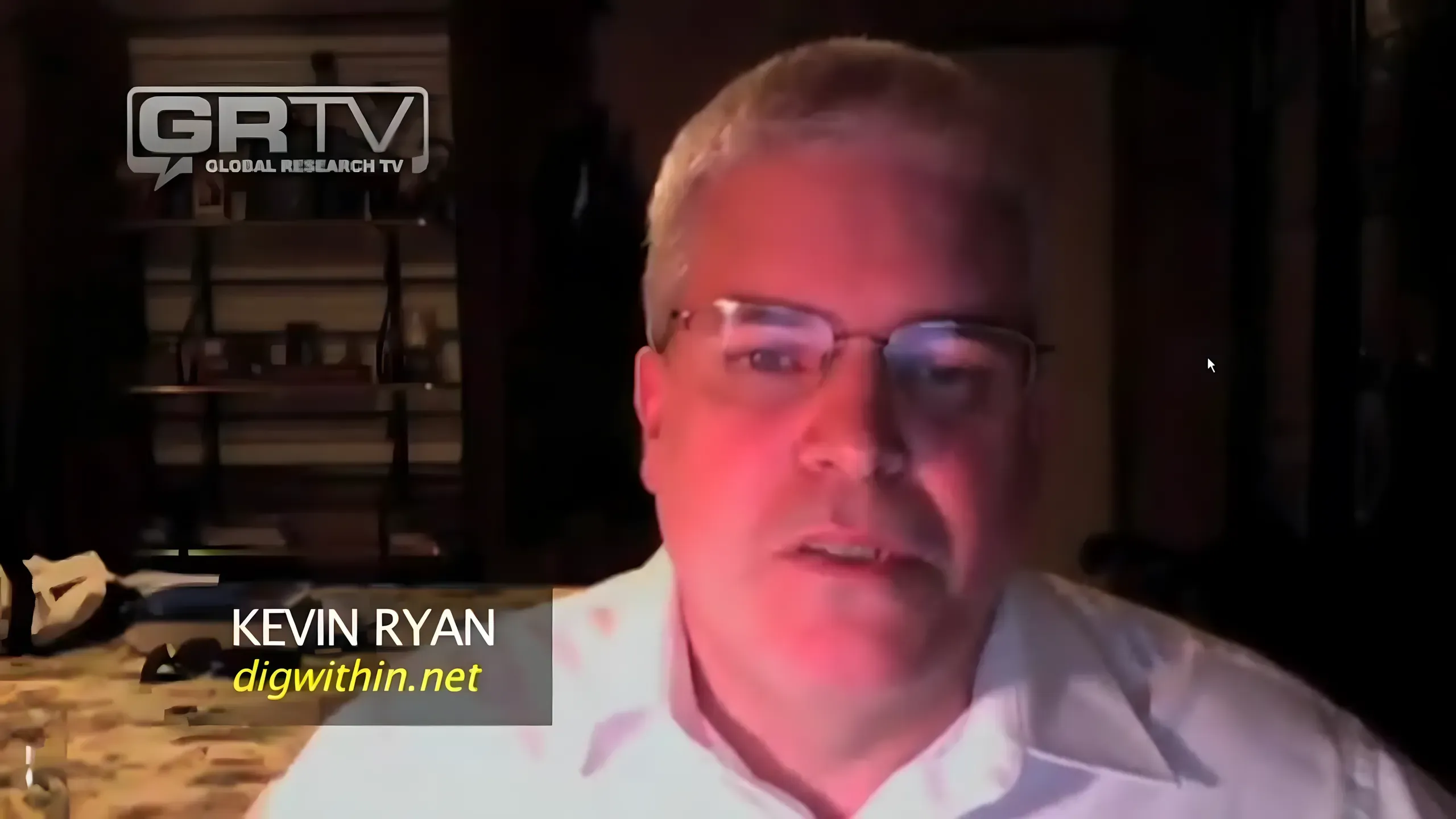
Were the crimes of September 11, 2001 solely the work of Osama bin Laden and nineteen troubled young Arabs, or were more powerful people involved? After a decade of investigation, Kevin Ryan, the co-editor of the Journal of 9/11 Studies, offers an evidence-based analysis of 19 other suspects.
With the support of victims’ families and leading 9/11 researchers, Another Nineteen looks at who was in position to accomplish major elements of the crimes that have yet to be explained. Detailed evidence is presented that reveals how each of the alternative suspects had the means, motive and opportunity to accomplish one or more aspects of the 9/11 attacks.
Starting with what should have happened that did not, and what should not have happened that did, Another Nineteen reveals that certain powerful people had the means, motive and opportunity to make 9/11 happen exactly as it did. Those people represented private networks and government programs that came together in surprising ways on 9/11.
If you only had time to read one book about 9/11, this should be that book.
– Mike Berger, 9/11Truth.org
Finally a comprehensive and meticulously researched book that thoroughly details what occurred before and on 9/11. Without a doubt, Another Nineteen should be required reading for those who want the real story.
– Robert McIlvaine, father of Bobby McIlvaine, who was killed at the World Trade Center on 9/11
Kevin Ryan has written a book that reminds us that the attacks of September 11, 2001 and their details have never really been investigated. Kevin has laid out the historical framework in a way that has never been done before. The importance of this cannot be overstated.
– Lorie Van Auken, member of the Family Steering Committee for the 9/11 Commission and widow of Kenneth Van Auken, who was killed at the World Trade Center
Over the last decade, Kevin Ryan has been one of the most intelligent and useful analysts of what happened on 9/11, on topics ranging from the scientific analyses of how the WTC towers collapsed to the broader political background of the event. It is a most welcome opportunity to have the fruits of his researches collected in a book.
– Peter Dale Scott, author of The Road to 9/11: Wealth, Empire, and the Future of America
I have read and interviewed just about everyone who’s written a book about 9/11/01 since it happened. This one is by FAR the absolute best.
– Meria Heller, Independent Radio Personality
In Another Nineteen, Kevin Ryan brings together a vast amount of research that connects many current and former high-level government and military officials, and business executives, to the 9/11 attacks. Kevin shows in convincing detail how these people were in positions that would allow them to affect the outcome of the attacks, benefit from them, or both. Clearly written and cogently argued, this book is filled with new information on potential 9/11 suspects, and is a must-read for any student of 9/11.
– James Gourley, editor of The 9/11 Toronto Report
Given the profound corruption of the FBI, citizens have had no choice but to become investigators. For over a decade, this new CSI—civil society investigation—has taken on the responsibility of assembling evidence relating to the crime of 9/11. Kevin Ryan’s superb research has now produced a list of suspects, and the investigation has been taken to a new level.
– Graeme MacQueen, founder of McMaster University’s Peace Studies Centre and co-editor of the Journal of 9/11 Studies
This book makes insider participation much more understandable and believable. The result is not to close the book on who did 9/11; it rather opens the book, exposes the players, and calls for a real investigation. It is a masterpiece of deep reporting.
– David Chandler, retired physics teacher
There have been many books about 9/11 explaining why the official story is false. In Another Nineteen, Kevin Ryan has taken a unique approach, dealing with 19 men who probably actually were responsible for the attacks. Perhaps no reader will agree with everything, but Ryan has pioneered an approach that will likely move researchers closer to the truth about that fateful day in September.
– David Ray Griffin, author of 9/11 Ten Years Later: When State Crimes Against Democracy Succeed
A far more honest and believable investigation than the 9/11 Commission Report.
– Klayt Marfoot, U.S. Army veteran of the 9/11 Wars
Read the book for free here: Another Nineteen | International Center for 9/11 Justice
An earlier series of articles on the same subject
Demolition access to the WTC towers - Kevin Ryan
Kevin Ryan is the former Site Manager for Environmental Health Laboratories, a division of Underwriters Laboratories (UL). Mr. Ryan, a Chemist and laboratory manager, was fired by UL in 2004 for publicly questioning the report being drafted by the National Institute of Standards and Technology (NIST) on their World Trade Center investigation. In the intervening period, Ryan has completed additional research while his original questions, which have become increasingly important over time, remain unanswered by UL or NIST.
This essay series presents an idea of what organizations and individuals had the needed access to place explosives in the WTC buildings, and a picture of who had the ability to destroy evidence related to those explosive materials. It also provides more information about who profited from the attacks of 9/11, and therefore who might have been motivated to destroy the buildings and induce the trauma that led to the War on Terror. With this information, a more plausible explanation for what happened at the WTC can be considered, one that better fits the known facts than does the current official explanation. By necessity, any explanation will involve a conspiracy. But perhaps we can now propose a conspiracy “we can believe in”.
Part one - Tenants
… This leads us to ask the obvious question — Who could have placed explosives in the World Trade Center towers? To answer that question, we should first consider who had access to the buildings, specifically the areas of the buildings that would be relevant to a demolition operation. We should also consider the time periods of interest. Those who had access at the necessary times should be further considered in terms of their ability to obtain the necessary explosive technologies and expertise, their ability to be secretive, and the possibility that they could have benefited from the destruction of the WTC buildings or from the resulting War on Terror. But one thing is certain, unless it was done by one person acting alone, it must have been a conspiracy.
…
If we look at the companies that occupied the impact zones of the WTC towers, and other floors that might have played a useful role in the demolition of the towers, we see connections to organizations that had access to explosive materials, and to the expertise required to use explosives. Mining companies like Washington, Morrison-Knudsen, Komatsu and Aoki Construction (and John Lehman’s Special Devices Inc.) have access to many types of explosive materials. Oil and gas companies, like those associated with Exco, use explosives for exploration. Some of the explosive technologies available to these companies, for example Komatsu and Washington, involve thermite, a chemical mixture that has been identified in the WTC dust and in the environmental data at Ground Zero.
It seems that, if certain management representatives of the tenant companies listed above wanted to help bring the WTC towers down, they would have been well suited to do so. The companies mentioned were located at well-spaced intervals in the buildings, and some, for example Marsh and the Primark subsidiaries, had a reputation of being secretive. In fact, a number of the executives from these firms were either on the board of intelligence firms (e.g. In-Q-Tel, TASC), or were closely related to others who were. Others were connected to the CIA itself, and to some of the largest defense contractors in the world, like Lockheed Martin, Raytheon, General Dynamics, Halliburton, and SAIC.
There are also strong connections to those who benefited from the 9/11 attacks, most notably the Bush family and their corporate network, including Dresser Industries (now Halliburton) and UBS, and to Deutsche Bank and it subsidiaries, reported to have brokered the insider trading deals. There are links between these tenant companies and the terrorist-related fraudulent bank BCCI.
…
In the end, we might see that conspiracies are not just limited to the powerless people who happen to live on the most strategically important lands in the world. The conspiracies that matter might involve the powerful people who seek access to those lands, and who have spent their lives seeking more power.
…
Here’s the full essay: Demolition access to the WTC towers - Part One - Tenants
Part two - Security
In Part II of this series of essays, we’ll look at the security companies and other contractors that had access to the WTC buildings. We’ll then see more connections to the Bush family, through the companies that restructured the security systems in the late 1990s, like Securacom, where Marvin Bush and Wirt Walker were directors. Also involved in these security upgrades was Ensec, where future Democrat National Committee chairman Terry McAuliffe was added as a director in 1996 and later worked for Harken Energy’s Alan Quasha. The second essay will also look at E.J. Electric, owned by J. Robert Mann of the Yale Glee Club, and examine particulars about the PANYNJ management staff, and the Giuliani and Silverstein teams that were involved.
…
Here’s the full essay: Demolition access to the WTC towers - Part Two - Security
Part three - Carlyle, Kissinger, SAIC and Halliburton: A 9/11 Convergence
Careful investigation leads one to notice that a number of intriguing groups of people and organizations converged on the events of September 11th, 2001. An example is the group of men who were members of Cornell University’s Quill & Dagger society. This included Paul Wolfowitz, National Security Advisors Sandy Berger and Stephen Hadley, Marsh & McLennan executive Stephen Friedman, and the founder of Kroll Associates, Jules Kroll. Another interconnected group of organizations is linked to these Cornell comrades, and is even more interesting in terms of its members being integral to the events of 9/11, and having benefited from those events.
…
What we can say today, with certainty, is that if we are to believe that al Qaeda orchestrated the events of 9/11 then we do not know much about al Qaeda. Alternatively, there was a far more powerful and highly connected system of intelligence and financial networks, represented by organizations like Carlyle, Kissinger, SAIC and Halliburton, that converged upon the events of 9/11. That other system continues to profit from the 9/11 attacks, and uses the fear and rage generated by al Qaeda-attributed terrorism to its own advantage. Understanding and destroying terrorism might simply be a matter of understanding and destroying the organizations that continue to profit from 9/11.
Here’s the full essay: Demolition access to the WTC towers - Part Three - Carlyle, Kissinger, SAIC and Halliburton: A 9/11 Convergence
Part Four - Cleanup
In addition to the actual placement of explosives, those involved would need to cleanup any evidence of explosives remaining at the site. In this final essay of a multi-part series, it will be seen that certain people had the means, opportunity and motive to destroy such evidence at Ground Zero, and that something was being hidden after the buildings fell. These facts will be reviewed in light of the knowledge that the debris was considered highly sensitive and nearly all the steel evidence was quickly destroyed. 12 Additionally, although security at the site was intense, safety management was lax or nonexistent and human concerns took a back seat to the goal of rapidly disposing of the evidence. Other curious facts include that known criminal entities were hired to accomplish the debris removal, and that evidence was stolen from Fresh Kills landfill with the approval and coordination of FBI agents.
With all of this in mind, we’ll look at who was in charge at Ground Zero and Fresh Kills landfill, and therefore who had the opportunity to destroy evidence of explosives. We’ll also look at those who benefited from the cleanup, either through profiting from the debris removal or the rebuilding of Manhattan, or through promotions and partnerships after the events.
…
Here’s the full essay: Demolition access to the WTC towers - Part Four - Cleanup
Who Had Access to the Twin Towers?
Show notes and more here: corbettreport.com/who-had-access-to-the-twin-towers
More articles on potential suspects from Kevin Ryan’s site Dig Within
Ignoring the Elephant at Gitmo: Yet Another 9/11 Crime
Seven Questions to Evaluate Nineteen 9/11 Suspects
Mueller’s History of Cover-Ups
NORAD’s Coincidental Exercises on 9/11
A Closer Look at 9/11 Legend Rudy Giuliani
WTC Security Firm Held Its Meetings in Saudi Offices
Investigating 9/11 and Naming Suspects
Saudi Ties to 9/11 Mean U.S. Ties to 9/11
Stratesec’s Walker and His Top Secret Business Partners
Barry McDaniel and 15 Reasons to Investigate Stratesec
Oswald and Atta: Erratic, Protected, and Seeking Attention
CIA Director George Tenet Facilitated 9/11
Profiting from 9/11: SAIC and Duane Andrews
Donald Rumsfeld and the Demolition of WTC 7
The CIA in Kuwait: Parallels to a 9/11 Suspect
Getting Real About Richard Clarke
Political Warfare and the 9/11 Commission
The Case Against Ralph Eberhart, NORAD’s 9/11 Commander
Why Louis Freeh Should Be Investigated For 9/11
Two Oklahoma Airports: David Boren, KuwAm, and 9/11
The Nexus Between Terror Propaganda and Terrorism: Bremer and Jenkins
Renovation to Revolution: Was the Pentagon Attacked from Within?
9/11 as Sequel to Iran-Contra: Armitage, Carlucci and Friends
Secret Service Failures on 9/11: A Call for Transparency
KuwAm and Stratesec: Directors and Investors That Link 9/11 to a Private Intelligence Network
The Small World of 9/11 Players: LS2, Vidient, and AMEC
Questions for Richard Clarke on COG, the UAE, and BCCI
FAA Failure on 9/11: The Wall Street Lawyer and the JSOC Hijack Coordinator