A chronological list of 777 notable authors from around the world – poets, novelists, playwrights, essayists, philosophers – excluding Americans.
🏛️ Ancient 56 authors
 Sumerian Empire (modern-day Iraq)
 Read more
A high priestess of the moon god Nanna in Ur. She is the earliest known author whose name has been recorded, celebrated for her hymns that are considered some of the first works of religious literature.
 Middle Kingdom of Egypt (modern-day Egypt)
 Read more
The unknown author of what is considered the masterpiece of ancient Egyptian literature. The tale, relating the story of a court official who flees Egypt and his eventual return, is a profound exploration of identity, exile, and homecoming.
 Ancient Greece (Boeotia)
 Read more
One of the earliest known Greek poets. His work *Theogony* provided a systematic account of the creation of the world and the genealogy of the gods, while *Works and Days* offered moral and practical advice on agriculture and life.
Ancient Greece (Ionia) Read more
The legendary author of the two epic poems that are the foundational works of Western literature. The *Iliad* and the *Odyssey* established the epic genre and have profoundly shaped the course of Western culture and storytelling.
Ancient Greece (Lesbos) Read more
An Archaic Greek poet from the island of Lesbos. She was renowned in the ancient world for her passionate and personal lyric poetry, which explored themes of love and desire, and established her as an iconic female voice.
Ancient Greece Read more
A storyteller credited with a number of fables now collectively known as *Aesop's Fables*. Though his existence is uncertain, his short stories featuring animals and offering universal moral lessons have been influential for millennia.
 China
China Read more
A Chinese philosopher and politician of the Spring and Autumn period. His philosophy, which emphasised personal and governmental morality, correctness of social relationships, and justice, is recorded in the *Analects* and has been central to Chinese thought and culture.
Ancient Greece (Athens) Read more
The first of the three great Athenian tragedians. He is often described as the father of tragedy for his innovations, such as the introduction of a second actor, which allowed for dialogue and conflict, laying the groundwork for all of Western drama.
China Read more
A semi-legendary ancient Chinese philosopher and writer. He is the reputed author of the *Tao Te Ching*, a foundational text of Taoism that has profoundly influenced Eastern philosophy with its teachings on harmony, simplicity, and the nature of the Tao (the Way).
Ancient Greece (Athens) Read more
The second of the three great Athenian tragedians. He is celebrated for his mastery of dramatic structure and characterisation, particularly in his Theban plays, which explore the tragic consequences of fate and human flaws.
Ancient Greece (Athens) Read more
The last of the three great Athenian tragedians. His plays are known for their psychological realism, their focus on the inner lives of his characters (especially women), and their questioning of traditional myths and religious beliefs.
Ancient Greece (Halicarnassus, Persian Empire; modern-day Turkey) Read more
A Greek historian who is often referred to as the "Father of History". His magnum opus is a detailed account of the Greco-Persian Wars and is the first known work to have systematically collected historical materials and arranged them into a narrative.
Ancient Greece Read more
An Athenian historian and general, Thucydides is the author of the foundational work of critical history, which analyses the causes and consequences of the Peloponnesian War. His rigorous approach to evidence and impartiality established the standards of modern historiography.
Ancient Greece (Athens) Read more
A comic playwright of ancient Athens and a master of Old Comedy. His plays are known for their brilliant political satire, their fantastic plots, and their often obscene humour, providing a unique window into Athenian life.
Ancient Greece (Athens) Read more
An Athenian philosopher during the Classical period in Ancient Greece, founder of the Platonist school of thought, and the Academy. He is a pivotal figure in the history of Western philosophy, and his dialogues, featuring his teacher Socrates, explore justice, beauty, and the nature of reality.
 Ancient India
 Read more
A celebrated poet revered as the *Ādi Kavi* (the first poet) in Sanskrit literature. He is credited with writing the epic *Ramayana*, one of the two great epics of ancient India, which tells the story of the prince Rama.
Ancient Greece (Macedon/Athens) Read more
A Greek philosopher and polymath during the Classical period. A student of Plato, he made foundational contributions to nearly every field of human knowledge, and his work on literary theory, *Poetics*, codified the principles of drama and epic poetry.
China Read more
A Chinese Confucian philosopher who is often described as the "second Sage," after only Confucius himself. His interpretation of Confucianism, which emphasised the innate goodness of human nature, has been highly influential in East Asian thought.
China Read more
An influential Chinese philosopher who lived during the Warring States period. The book bearing his name is one of the foundational texts of Daoism, celebrated for its philosophical parables, its wit, and its questioning of conventional reality.
Ancient Greece (Athens) Read more
A Greek dramatist and the best-known representative of Athenian New Comedy. His plays, which replaced the political satire of Old Comedy with stories about the domestic lives of ordinary people, were highly influential on later Roman comedy.
China Read more
A Chinese poet and official who lived during the Warring States period. He is considered China's first major poet, and his work, which expresses his disillusionment and patriotism, established a new tradition of romantic and expressive verse.
Ancient India Read more
A revered sage in Hinduism, traditionally regarded as the author of the epic *Mahabharata*, one of the two great epics of India. He is a central character in the work itself and is considered the compiler of the entire epic tradition.
 Roman Republic (modern-day Tunisia/Italy)
 Read more
A Roman playwright of Berber descent. He was brought to Rome as a slave but was educated and freed. His six comedies, based on Greek models, are celebrated for their refined language and their humane exploration of character.
 Roman Republic
 Read more
A Roman poet and philosopher. His only known work is a didactic poem which explains the philosophy of Epicureanism to a Roman audience. The poem is a masterpiece of Latin verse, celebrated for its scientific and philosophical ambition.
Roman Republic Read more
A Latin poet of the late Roman Republic. He was a leading figure among the *neoteroi*, a group of poets who rejected the traditional epic in favour of short, personal, and witty poems, and his work profoundly influenced later Roman lyricists.
Roman Republic/Roman Empire Read more
An ancient Roman poet of the Augustan period. He is regarded as Rome's greatest poet, and his epic poem, the *Aeneid*, which tells the story of the foundation of Rome, became the definitive national epic of the Roman Empire.
Roman Republic/Roman Empire Read more
A leading Roman lyric poet during the time of Augustus. He is celebrated for his masterful control of Latin verse, his wit, and his philosophical reflections on life, love, and politics, famously advising readers to "carpe diem" (seize the day).
Roman Republic/Roman Empire Read more
A Roman historian who wrote a monumental history of Rome and the Roman people. His work, which covered the period from the legendary foundation of Rome to his own time, is a key source for our understanding of Roman history.
Roman Empire Read more
A Roman poet who was a contemporary of Virgil and Horace. He is best known for his epic poem *Metamorphoses*, a vast and witty collection of mythological tales of transformation, and for his love poetry, which led to his exile by the emperor Augustus.
Roman Empire (modern-day Greece) Read more
A Greek biographer and essayist, best known for his series of biographies of famous Greek and Roman figures. His work was immensely influential on later writers, including Shakespeare, and helped to shape the modern understanding of biography.
Roman Empire Read more
A Roman poet active in the late 1st and early 2nd century AD. He is the author of the collection of satirical poems known as the *Satires*, which offer a scathing and influential critique of the perceived vices and follies of Roman society.
Roman Empire Read more
A Roman historian and senator, considered one of the greatest Roman historians. He is known for his concise, powerful prose and his penetrating analysis of the psychology of power politics in the early Roman Empire.
Kushan Empire (modern-day India) Read more
An Indian philosopher and poet who is considered one of the greatest poets in Sanskrit literature. His epic poem on the life of the Buddha is a masterpiece of Buddhist literature, and he is also known as a pioneer of Sanskrit drama.
Chera dynasty (modern-day India) Read more
A Tamil poet and Jain monk credited with writing one of the Five Great Epics of Tamil Literature. The story, which revolves around the central character Kannagi, is a celebrated work known for its blend of romance, tragedy, and social commentary.
Satavahana dynasty (modern-day India) Read more
A Satavahana king who is traditionally credited with compiling the *Gaha Sattasai*, an anthology of seventy-seven poems in Maharashtri Prakrit. The collection is celebrated for its lyrical and erotic depiction of rural life.
Roman Empire Read more
Roman emperor and Stoic philosopher, whose *Meditations* is a cornerstone of Western ethical thought. Written as a series of personal reflections, it remains a profound guide to virtue, resilience, and leadership.
 Roman Empire (modern-day Algeria)
 Read more
A Numidian writer and philosopher of the Roman Empire. He is best known for his picaresque novel, *Metamorphoses* (also known as *The Golden Ass*), which is the only Latin novel to survive in its entirety and is a celebrated work of allegory and adventure.
 Roman Empire (modern-day Turkey)
 Read more
A Hellenized Syrian satirist and rhetorician. He is known for his witty and skeptical dialogues that satirised philosophy, religion, and literature. His work *A True History*, which parodies travel tales, is considered a pioneering work of science fiction.
Roman Empire (modern-day Greece/Egypt) Read more
A Greek theologian and a key figure in the development of early Christian thought. He was the head of the Catechetical School of Alexandria and is known for his attempts to synthesise Christian doctrine with Greek philosophy.
India Read more
One of the earliest and most celebrated Indian playwrights in Sanskrit. Though little is known about his life, his plays, which were rediscovered in the 20th century, are admired for their dramatic power and were a major influence on later playwrights like Kālidāsa.
China Read more
A Chinese poet and official who lived during the late Eastern Han dynasty. He was a leading member of the "Seven Scholars of Jian'an," a group of poets whose work, often reflecting on the chaos of their time, marked a transition towards a more personal style of poetry.
Roman Empire (modern-day Egypt) Read more
An early Christian scholar and theologian from Alexandria. He was a prolific writer and one of the most influential figures in early Christian apologetics, known for his pioneering work in textual criticism and his allegorical interpretation of scripture.
China Read more
A Chinese prince and poet of the late Eastern Han and Three Kingdoms periods. He was a master of the Jian'an style of poetry and is celebrated for his five-character verse, which achieved a new level of lyrical expression.
Gupta Empire (modern-day India) Read more
An ancient Indian philosopher best known for authoring the *Kama Sutra*, a classic text on human sexual behaviour. The work is a guide to the art of living well, which includes emotional and spiritual aspects of love and relationships, not just physical ones.
Roman Empire (modern-day Egypt/Italy) Read more
A major Greek-speaking philosopher of the ancient world. Born in Egypt, he taught in Rome, and his work, which synthesised the philosophy of Plato with other Greek schools of thought, is the foundation of the school of Neoplatonism.
China Read more
A Chinese poet and musician who was one of the Seven Sages of the Bamboo Grove. Living during a time of political turmoil, his poetry is known for its expression of frustration and its use of allegory to critique the court and explore Daoist themes.
Roman Empire (modern-day Turkey) Read more
A Greek epic poet whose only surviving work is a fourteen-book epic that chronicles the period between the end of Homer's *Iliad* and the end of the Trojan War. His work is a valuable example of late antique epic poetry.
 Roman Empire (modern-day France)
 Read more
A Gallo-Roman poet and rhetorician. Born in Burdigala (Bordeaux), he became a tutor to the future emperor Gratian. His work, which includes travel poetry and epigrams, is a key example of late Roman literary culture.
Roman Empire (modern-day Italy) Read more
A theologian and statesman who became Bishop of Milan. He was a major figure in the 4th-century Church, known for his influential writings on Christian ethics and his role in the conversion of St. Augustine.
 Roman Empire (modern-day Spain)
 Read more
A Roman Christian poet, born in Hispania Tarraconensis. His poem *Psychomachia* ("Battle of Souls") is the first and most influential example of a purely allegorical epic in European literature, depicting the battle between virtues and vices.
Roman Empire (modern-day Algeria) Read more
A theologian and philosopher from Numidia whose writings were highly influential in the development of Western Christianity and philosophy. His autobiographical *Confessions* is considered the first Western autobiography, and his *City of God* is a foundational work of Christian thought.
Gupta Empire (modern-day India) Read more
A classical Sanskrit writer, widely regarded as the greatest poet and dramatist in the Sanskrit language of India. His plays and poetry are primarily based on Hindu mythology and philosophy and are celebrated for their lyrical beauty and emotional depth.
Kadamba Kingdom (modern-day India) Read more
The founder of the Kadamba Kingdom of Banavasi, the earliest native kingdom to rule over what is today Karnataka. His inscriptions are considered important early evidence of the use of the Kannada script.
Gupta Empire (modern-day India) Read more
A major mathematician and astronomer from the classical age of Indian science. His work, a treatise on mathematics and astronomy written in Sanskrit verse, introduced key concepts including the decimal system and an approximation for pi.
Ostrogothic Kingdom (modern-day Italy) Read more
A Roman senator and philosopher of the early 6th century. His most famous work, written while he was imprisoned and awaiting execution, is a philosophical dialogue that became one of the most important and influential works of the Middle Ages, bridging classical and medieval thought.
Tamil Nadu (modern-day India) Read more
Author of the *Tirukkural*, a foundational Tamil ethical text of 1,330 couplets covering virtue, wealth, and love. Venerated as one of the greatest works of Tamil literature.
⚔️ Medieval 71 authors
India Read more
A Sanskrit poet best known for his epic poem, which is considered a masterpiece of courtly epic (*mahakavya*). The work is celebrated for its complex style, intricate descriptions, and its depiction of the battle between Arjuna and the god Shiva in the guise of a kirata (mountain hunter).
 Eastern Roman Empire (modern-day Palestine/Israel)
 Read more
A prominent late antique scholar and historian of the Byzantine Empire. He was the principal historian of the 6th century, and his works are a vital source for the reign of the emperor Justinian I. His posthumously published *Secret History* revealed his scathing critique of the emperor and his court.
China Read more
A Chinese poet and editor of the Southern Dynasties period. He is best known as the compiler of an influential anthology of love poetry, which collected works from the Han dynasty to his own time and helped to define the "palace style" of poetry.
China Read more
Considered one of the last great poets of the Southern and Northern Dynasties period in China. His long rhapsody, written after he was held captive in the north, is a masterpiece of the *fu* genre, celebrated for its emotional power and complex allusions.
Frankish Gaul (modern-day France) Read more
A Latin poet and hymnodist of the Merovingian period. Born in what is now Italy, he spent most of his life in Gaul and became Bishop of Poitiers. He is one of the most important figures in the transition from classical Latin poetry to the Christian hymnody of the Middle Ages.
Frankish Gaul (modern-day France) Read more
A Gallo-Roman historian and Bishop of Tours. His *Decem Libri Historiarum* (Ten Books of Histories) is the foremost contemporary source for the history of the Merovingian dynasty and a crucial work of early medieval historiography.
 Arabia (modern-day Saudi Arabia)
 Read more
A 7th-century Arab poet, celebrated as the greatest female poet in Arabic literature. Her powerful elegies for her brothers who died in battle are considered masterpieces of the genre and defined its conventions for centuries.
 Kingdom of Northumbria (modern-day England)
 Read more
An English Benedictine monk known as the "Father of English History". His most famous work is a cornerstone of Anglo-Saxon history, providing a detailed account of the Christianisation of England.
China Read more
A Chinese poet acclaimed from his own day to the present as a genius and a romantic figure who took traditional poetic forms to new heights. He was a leading figure of the Tang dynasty, often called the "golden age" of Chinese poetry.
China Read more
A prominent Chinese poet of the Tang dynasty. Alongside Li Bai, he is frequently called the greatest of the Chinese poets. His work is celebrated for its masterful craft, its historical depth, and its compassionate engagement with the human suffering caused by war and social upheaval.
 Abbasid Caliphate (modern-day Iran/Iraq)
 Read more
A classical Arabic poet who was a master of the new, modern-style poetry (*muhdath*) that developed during the Abbasid era. Born in Persia, he moved to Baghdad and became renowned for his witty, satirical, and often homoerotic verse that celebrated wine and city life.
Abbasid Caliphate (modern-day Iraq) Read more
An Arab prose writer and polymath. He was a pioneering figure who transformed Arabic prose into a flexible instrument for witty, sophisticated, and insightful social and scientific commentary.
 Samanid Empire (modern-day Tajikistan)
 Read more
A Persian poet who is regarded as the first great literary genius of the modern Persian language. He is often called the "father of Persian poetry" for his role in establishing Persian as a literary language and for his mastery of various poetic forms.
Abbasid Caliphate (modern-day Iraq) Read more
An Arab poet who is widely regarded as one of the greatest poets in the Arabic language. He lived the life of a court poet, and his work is celebrated for its intricate metaphors, its philosophical depth, and its proud, assertive tone.
Samanid Empire (modern-day Iran) Read more
A Persian poet and the author of the *Shahnameh*, which is the world's longest epic poem created by a single poet, and the national epic of Greater Iran. The work is a masterpiece of Persian literature that was central to the revival of the Persian language.
 Japan
Japan Read more
A Japanese court lady and author of the Heian period. Her book of observations, lists, and anecdotes is a masterpiece of the *zuihitsu* ("following the brush") genre and offers a detailed, witty, and personal insight into court life.
Japan Read more
A Japanese novelist and poet at the Imperial court during the Heian period. She is best known as the author of *The Tale of Genji*, widely considered to be the world's first novel, a masterpiece of Japanese literature celebrated for its psychological depth and nuanced portrayal of court society.
Japan Read more
A Japanese poet of the mid-Heian period. A contemporary of Murasaki Shikibu, she is considered one of the greatest poets of her era, known for her passionate and intense love poetry.
Caliphate of Córdoba (modern-day Spain) Read more
An Andalusian polymath: a jurist, theologian, historian, and poet. His most famous work is a treatise on love that combines personal anecdotes, poetry, and philosophical analysis, and is considered a masterpiece of Arabic literature.
Persia (modern-day Iran) Read more
A Persian mathematician, astronomer, and poet, celebrated for his collection of quatrains which explore themes of fate, mortality, and the pleasure of the moment with a skeptical and philosophical eye.
Persia (modern-day Iran) Read more
A Persian theologian, jurist, and mystic, considered one of the most influential Muslims after the Prophet Muhammad. His work integrated Sufism with Sharia law and had a profound impact on the course of Islamic thought.
India Read more
A Sanskrit poet during the 12th century, best known for his epic poem which concentrates on Krishna's love for the cowherdess, Radha, and is a celebrated work of devotional poetry in the Bhakti movement.
India Read more
A 12th-century mystic-saint and Vachana poet of the Kannada language. He was a prominent figure in the Lingayatism movement, and his mystical poetry is known for its philosophical depth and rejection of ritualism.
India Read more
A medieval Tamil poet and the author of the *Ramavataram*, popularly known as *Kamba Ramayanam*, the Tamil version of the epic Ramayana. His work is a masterpiece of Tamil literature, celebrated for its poetic beauty and characterisation.
 India (modern-day Pakistan)
 Read more
An Indian poet who is regarded as the court poet of the king Prithviraj Chauhan. His epic poem, written in an early form of Hindi, narrates the life of the king and is one of the most famous heroic poems in Hindi literature.
 Georgia
 Read more
The author of Georgia's national epic poem. The work, which celebrates friendship, love, and the pursuit of justice, is a masterpiece of the Georgian Golden Age and a cornerstone of the nation's literature. Though the author is unknown, the work is often attributed to Shota Rustaveli.
Al-Andalus (modern-day Spain) Read more
An Arab-Andalusian physician, philosopher, and court official. His philosophical novel is a pioneering work of literature that tells the story of a feral child raised by a gazelle on a desert island who arrives at truth through reason alone.
India Read more
An Indian philosopher, statesman, and social reformer in the court of the Kalachuri-dynasty king. He was a leading figure in the Lingayat movement and used his poetic Vachanas to challenge the caste system and advocate for social equality.
France Read more
A French poet and trouvère who was a key figure in medieval literature. His work established the genre of Arthurian romance, introducing characters like Lancelot and the quest for the Holy Grail, and shaping the legends for centuries to come.
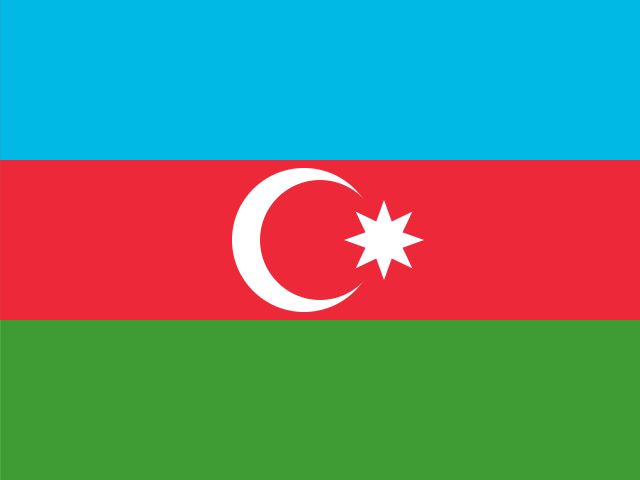 Seljuk Empire (modern-day Azerbaijan)
 Read more
A Persian poet considered the greatest romantic epic poet in Persian literature. His five long narrative poems, which include the famous story of Layla and Majnun, brought a new level of psychological depth and colloquial style to the genre.
Persia (modern-day Iran) Read more
A Persian poet, theoretician of Sufism, and hagiographer. His masterpiece is an allegorical epic in which the birds of the world gather to seek a king, a journey that symbolises the Sufi path to enlightenment.
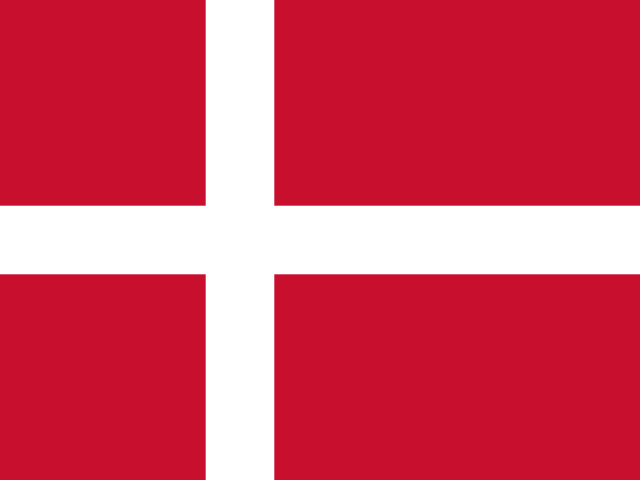 Denmark
 Read more
A Danish historian, theologian, and author. He is believed to have been a clerk to the Archbishop of Lund and is credited with writing the first full history of Denmark, a patriotic work that contains the earliest version of the story of Hamlet.
Japan Read more
A Japanese author, poet, and essayist. After taking Buddhist vows, he became a hermit, and his famous short work, *Hōjōki* ("An Account of My Hut"), is a classic of hermit literature, reflecting on the impermanence of life from his small dwelling.
France Read more
A medieval poet who was probably born in France and lived in England during the late 12th century. She is known for her narrative poems, which were influential in the development of courtly literature, and she may have been the first woman to write verse in French.
Japan Read more
A Japanese poet, critic, and calligrapher of the late Heian and early Kamakura periods. One of the most influential figures in the history of Japanese poetry, he was a master of the *waka* form and the compiler of several imperial anthologies.
Al-Andalus (modern-day Spain) Read more
An Arab Andalusian Muslim scholar and mystic, considered one of the most important spiritual teachers of Sufism. His vast and complex writings, which advocate for the "oneness of being" (*wahdat al-wujud*), have had a profound impact on Islamic mysticism.
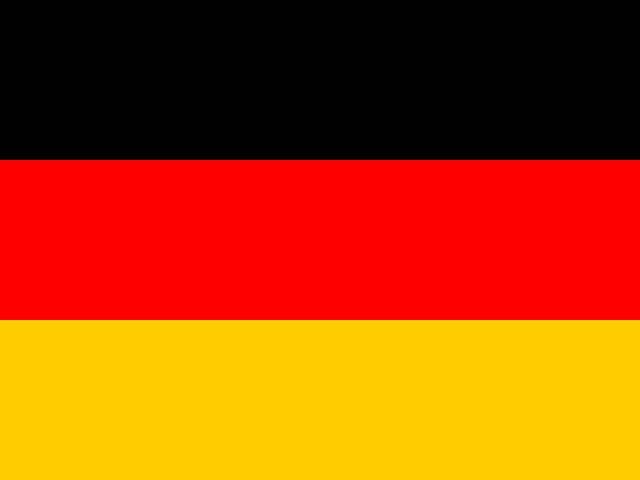 Holy Roman Empire (modern-day Germany)
 Read more
A German knight and poet, regarded as one of the greatest epic poets of his time. His masterpiece, *Parzival*, is a chivalric romance that tells the story of the Arthurian hero's quest for the Holy Grail and is celebrated for its spiritual depth and narrative complexity.
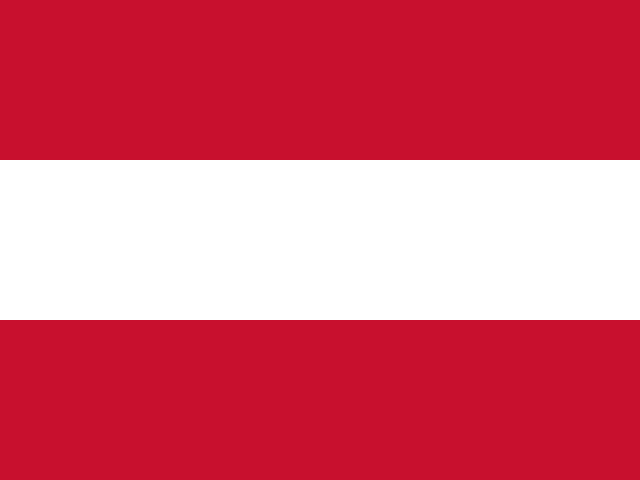 Holy Roman Empire (modern-day Austria/Germany)
 Read more
The most celebrated of the Middle High German lyric poets. His work, which includes love songs (*Minnesang*), political poems, and religious verse, is known for its innovation, wit, and emotional range.
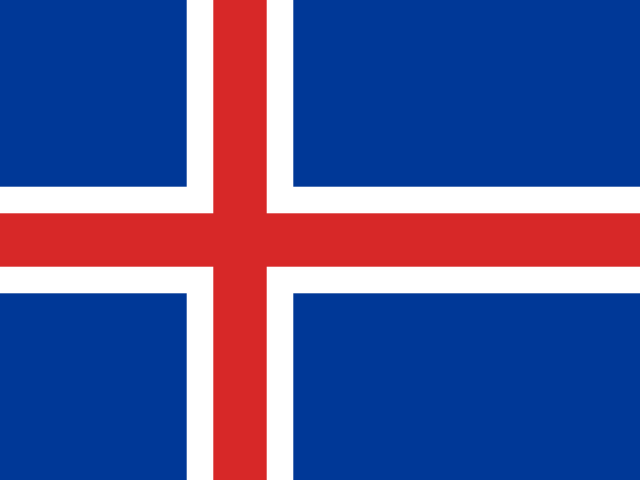 Iceland
 Read more
An Icelandic historian, poet, and politician. His work is the primary source for our knowledge of Norse mythology and the history of the Norwegian kings, preserving the rich literary heritage of medieval Scandinavia.
Holy Roman Empire (modern-day France/Germany) Read more
A German poet and a contemporary of Wolfram von Eschenbach. His unfinished epic poem, based on the legend of Tristan and Iseult, is considered a masterpiece of courtly romance, celebrated for its stylistic brilliance and its psychological exploration of adulterous love.
Anatolian Seljuk Sultanate (modern-day Turkey) Read more
A Turkish Sufi folk poet and dervish. His narrative poem retelling the story of Joseph and Zulaikha is one of the earliest known literary works written in the Anatolian Turkish language.
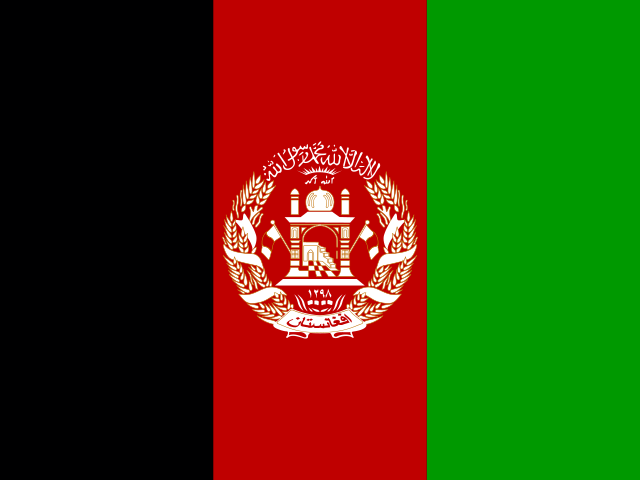 Khorasan/Sultanate of Rum (modern-day Afghanistan/Turkey)
 Read more
A 13th-century Persian poet, mystic, and theologian, Rumi is one of the world’s most widely read poets. His *Mathnawi* is a monumental work of Sufi mysticism, blending spiritual wisdom, storytelling, and lyrical beauty with enduring influence across cultures and centuries.
Persia (modern-day Iran) Read more
One of the major Persian poets of the medieval period. He is celebrated for the quality of his writing and the depth of his social and moral thought. His work, particularly the *Gulistan*, is a paragon of Persian prose, filled with ethical wisdom and humorous anecdotes.
Delhi Sultanate (modern-day India) Read more
A renowned Sufi saint of the Chishti Order from the Indian subcontinent. While he did not write books himself, his teachings and conversations were recorded by his disciple Amir Hasan Sijzi in a work that became a classic of Sufi literature.
Sultanate of Rum (modern-day Turkey) Read more
A Turkish poet and Sufi mystic who was a pioneer of poetry in the Anatolian Turkish language. His work, which explores themes of divine love and human destiny with a simple, direct style, has had a profound influence on Turkish literature.
Delhi Sultanate (modern-day India) Read more
An Indo-Persian Sufi singer, musician, poet, and scholar. He was a prolific writer in Persian and is also credited with being the father of Urdu literature. He is known for his poetic synthesis of Persian, Arabic, and Indian traditions.
Republic of Florence (modern-day Italy) Read more
An Italian poet, writer, and philosopher. His epic poem, *The Divine Comedy*, is a journey through Hell, Purgatory, and Paradise, and is considered the pre-eminent work in Italian literature and a supreme achievement of medieval literature.
Japan Read more
A Japanese author and Buddhist monk. His collection of reflective essays is a classic of the *zuihitsu* genre, celebrated for its insights into human nature, aesthetics, and the Buddhist concept of impermanence.
Vijayanagara Empire (modern-day India) Read more
A princess and Sanskrit-language poet of the Vijayanagara Empire. Her epic poem celebrates the victory of her husband, Kumara Kampana, over the Madurai Sultanate and is a significant historical and literary work of the period.
Republic of Florence (modern-day Italy) Read more
An Italian scholar and poet of the early Renaissance. He is often called the "Father of Humanism" for his role in rediscovering classical texts. His sonnet sequence, dedicated to his beloved Laura, was immensely influential in European poetry.
Italy Read more
An Italian writer and poet, whose masterpiece, *The Decameron*, is a collection of one hundred tales set against the backdrop of the Black Death. The work is a cornerstone of Italian prose, celebrated for its realistic dialogue and its varied portrayal of human character.
Persia Read more
The pen name of Shams-ud-Din Mohammad Hafez-e Shirazi, a Persian lyric poet whose collected works are regarded as a pinnacle of Persian literature. His poetry, which explores themes of love, faith, and hypocrisy, is found in the homes of most Iranians.
China Read more
A Chinese writer who is credited with authoring one of the Four Great Classical Novels of Chinese literature. His historical novel is a sprawling epic that dramatises the turbulent events at the end of the Han dynasty and the Three Kingdoms period.
Tunisia Read more
An Arab historian, sociologist, and philosopher from Ifriqiya (modern-day Tunisia). His book, the *Muqaddimah*, is a foundational text in historiography and sociology, introducing concepts of social cohesion and the cyclical nature of dynasties.
England Read more
The presumed author of the Middle English allegorical poem *Piers Plowman*. A contemporary of Chaucer, his work is a complex and powerful critique of medieval English society and religious life, written from the perspective of an ordinary man.
Turkey Read more
An early Ottoman poet whose *Iskendername* (The Book of Alexander) is one of the most important epic works in early Anatolian Turkish literature, recounting the legendary life of Alexander the Great and including a history of the Ottoman sultans.
England Read more
An English poet and author widely considered the greatest English poet of the Middle Ages. He is often called the "Father of English literature" for legitimising the literary use of Middle English in works like his famed collection of stories, *The Canterbury Tales*.
England Read more
An English anchoress and an important Christian mystic and theologian. Her work, which records a series of divine visions she received, is the earliest surviving book in the English language known to have been written by a woman.
Japan Read more
A Japanese aesthetician, actor, and playwright. Along with his father Kan'ami, he was the creator of Noh theatre. His writings are the foundational texts on the aesthetics and practice of Noh, codifying its principles for future generations.
France Read more
An Italian-French author who was one of the first women in Europe to earn a living as a professional writer. Her book *The Book of the City of Ladies* is a pioneering work of feminist literature, written in defence of women against the misogynistic attitudes of her time.
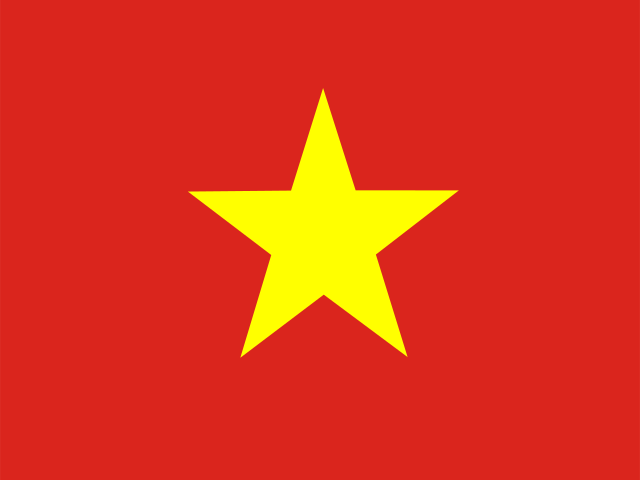 Vietnam
 Read more
Poet, statesman, and national hero who wrote Vietnam's famous declaration of independence from Ming China. Considered one of Vietnam's greatest poets.
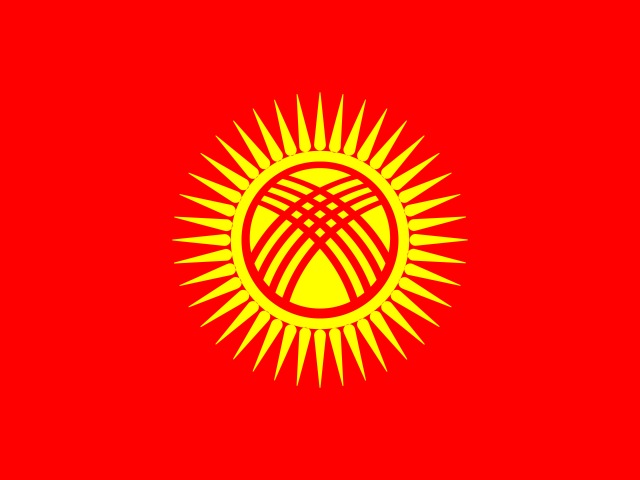 Kara-Khanid Khanate (modern-day Kyrgyzstan)
 Read more
Author of *Kutadgu Bilig* (Wisdom of Royal Glory), one of the earliest literary works in a Turkic language, a mirror for princes.
Kara-Khanid Khanate (modern-day China/Kyrgyzstan) Read more
Scholar who compiled the *Diwan Lughat al-Turk*, an encyclopaedic dictionary that is the most important single source of knowledge about early Turkic languages and culture.
Arabia Read more
Called "The Wandering King", he is considered the greatest of the pre-Islamic Arabic poets. His *Mu'allaqa* is the most celebrated of the seven great odes.
Arabia Read more
Pre-Islamic warrior-poet, one of the seven authors of the Mu'allaqat. Born a slave of mixed race, his life became the subject of a famous Arab epic.
Karnataka (modern-day India) Read more
Founder of the Lingayat/Virashaiva movement and a revolutionary social reformer. His Kannada Vachanas (prose poems) attacked caste and ritualism.
Karnataka (modern-day India) Read more
Kannada poet and Bhakti saint who renounced all worldly attachments. Her ecstatic devotional poetry is remarkable for its radical female voice.
Al-Andalus (modern-day Spain) Read more
The greatest Hebrew poet of medieval Spain. His devotional and secular poetry is still sung in synagogues, and *The Kuzari* is a foundational work of Jewish philosophy.
Al-Andalus (modern-day Spain) Read more
Andalusian Hebrew poet and Neoplatonic philosopher. His philosophical poem *Keter Malkhut* (Royal Crown) is recited on Yom Kippur.
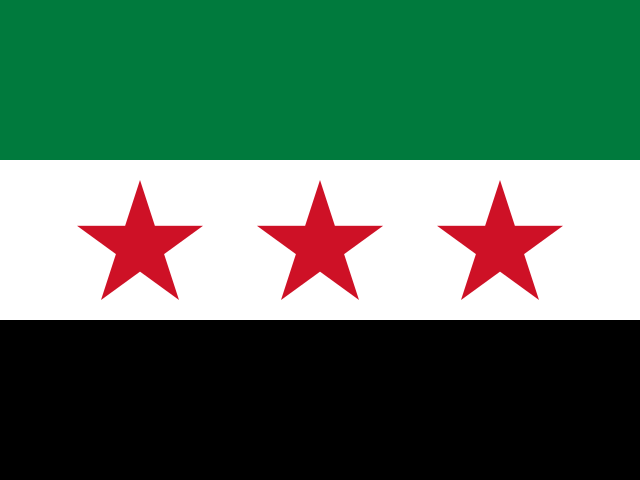 Abbasid Caliphate (modern-day Syria)
 Read more
Blind Arab philosopher-poet known for his radical scepticism about religion and his pessimistic view of humanity. His *Risalat al-Ghufran* prefigures Dante's *Divine Comedy*.
Germany Read more
Medieval German poet who introduced Arthurian romance to German literature. His works set the standard for Middle High German courtly epic.
🎭 Early modern 75 authors
Turkic/Oghuz Read more
The legendary bard associated with the Oghuz Turks, whose epic tales are central to the oral and literary traditions of Turkic peoples. The stories blend myth, history, and moral lessons, and are a cornerstone of Turkish, Azerbaijani, and Turkmen heritage.
England Read more
An English writer, the author or compiler of a retelling of the legends of King Arthur and the Knights of the Round Table. His work is considered the definitive English-language version of the Arthurian legend and was one of the earliest books printed in England.
India Read more
A 15th-century Indian mystic poet and saint, whose writings influenced Hinduism's Bhakti movement and are also found in Sikhism's scripture. He was critical of both organised religion and caste, advocating for a direct experience of the divine.
Italy Read more
An Italian diplomat, philosopher, and writer during the Renaissance. His most famous work, *The Prince*, is a political treatise that advises rulers on how to gain and maintain power through pragmatism, rather than morality, giving rise to the term "Machiavellian".
India Read more
The founder of Sikhism and the first of the ten Sikh Gurus. His teachings, which advocate a message of one God, equality, selfless service, and social justice, are recorded in the sacred scripture Guru Granth Sahib, with the *Japji Sahib* as its first composition.
England Read more
An English lawyer, social philosopher, and statesman, venerated in the Catholic Church as a saint. He is remembered for his book *Utopia*, a work of fiction and political philosophy that describes a fictional island society with political, religious, and social customs that differ from those of European society.
France Read more
A French Renaissance writer, physician, and humanist. His comic masterpiece is a sprawling epic known for its rich, exuberant language, its satirical humour, and its celebration of life free from religious and political constraints.
Ottoman Iraq (modern-day Iraq) Read more
A prominent poet who composed works in Azerbaijani, Persian, and Arabic. Born in what is now Iraq, his passionate lyrical poetry, particularly his *ghazals*, is considered among the greatest in the Turkic literary tradition.
India Read more
A composer, singer, and one of the chief founding proponents of Carnatic music (South Indian classical music). He is often referred to as the *Pitamaha* (grandfather) of Carnatic music, and his devotional compositions are widely sung in South India.
China Read more
A Chinese novelist and poet of the Ming dynasty. He is widely considered the author of *Journey to the West*, one of the Four Great Classical Novels of Chinese literature. The novel is a beloved mythological adventure filled with humour and spiritual insight.
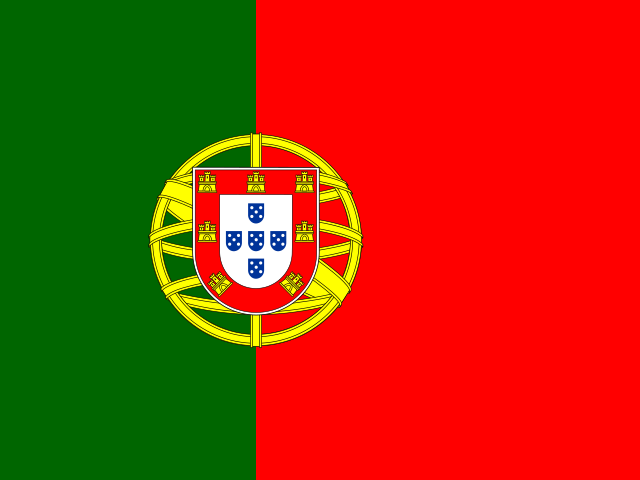 Portugal
 Read more
Portugal's national poet, often compared to Homer and Virgil. His epic poem *Os Lusíadas*, which celebrates the voyages of Vasco da Gama and the history of Portugal, is the most important work in Portuguese literature.
France Read more
One of the most significant philosophers of the French Renaissance. He is known for popularising the essay as a literary genre. His massive volume *Essais* contains some of the most widely influential essays ever written, known for their sceptical, self-exploratory tone.
Italy Read more
An Italian poet of the 16th century, best known for his epic poem *Gerusalemme liberata*, which depicts a fictionalised version of the First Crusade. The poem was immensely influential and served as a model for later epic poetry.
Spain Read more
A Spanish writer who is regarded as the greatest writer in the Spanish language and one of the world's pre-eminent novelists. His novel *Don Quixote* is considered a founding work of Western literature and the first modern novel.
England Read more
An English poet best known for his epic poem and fantastical allegory celebrating the Tudor dynasty and Protestantism. His work is a landmark in English literature, and he is considered one of its greatest poets, famed for his creation of the "Spenserian stanza".
Spain Read more
A Spanish playwright, poet, and novelist. He was a key figure in the Spanish Golden Age of Baroque literature. His prolific output is one of the most extensive in the history of world literature, and he is considered the father of Spanish Golden Age drama.
England Read more
An English playwright, poet, and translator of the Elizabethan era. He was the foremost Elizabethan tragedian of his day, and his plays are known for their powerful blank verse and their exploration of protagonists with overwhelming ambition.
England Read more
An English playwright, poet, and actor, widely regarded as the greatest writer in the English language and the world's pre-eminent dramatist. His works are considered pinnacles of English drama and are performed more often than those of any other playwright.
England Read more
An English poet, scholar, and cleric in the Church of England. He is considered the pre-eminent representative of the metaphysical poets. His work is noted for its wit, intellectual complexity, and sensual style, and includes sonnets, love poems, and religious poems.
England Read more
An English playwright and poet. A contemporary of Shakespeare, he is best known for his satirical plays that adhered to classical principles, and he had a lasting influence on English poetry and stage comedy.
England Read more
An English scholar at Oxford University. He is best known for his vast and digressive prose work that examines the subject of melancholy from multiple perspectives, drawing on a huge range of literary and medical sources.
Spain Read more
A Spanish Baroque dramatist, poet, and Roman Catholic monk. He is best known for writing the play that first introduced the character of Don Juan, the archetypal seducer, to literature.
England Read more
An English philosopher, considered to be one of the founders of modern political philosophy. His 1651 book *Leviathan* established the social contract theory, arguing for the necessity of a strong central authority to avoid the chaos of the state of nature.
England/Wales Read more
A Welsh-born English poet, orator, and Anglican priest. He is one of the foremost British devotional lyricists and is considered a major metaphysical poet. His collection *The Temple* is a sequence of poems exploring his relationship with God, known for its formal ingenuity.
England Read more
An English writer, best known as the author of *The Compleat Angler*, a celebration of the art and spirit of fishing in prose and verse. The book is one of the most reprinted in the history of English literature and a model of pastoral writing.
Spain Read more
A dramatist, poet, and writer of the Spanish Golden Age. He is regarded as one of Spain's foremost dramatists, and his philosophical play *Life Is a Dream* is a masterpiece of the era, known for its exploration of fate and free will.
England Read more
An English polymath and author of varied works which reveal his wide learning in diverse fields. His writings display a deep curiosity towards the natural world, and his prose is known for its rich, ornate, and Latinate style, a key example of Baroque English prose.
France Read more
A French tragedian, one of the three great seventeenth-century French dramatists, along with Molière and Racine. His play *Le Cid* is considered a landmark in the development of French classical tragedy, establishing the genre's reputation for decades.
England Read more
An English poet and intellectual who is considered one of the greatest writers in the English language. He is best known for his epic poem *Paradise Lost*, a monumental work of blank verse that seeks to "justify the ways of God to men". His prose work *Areopagitica* is a powerful defence of free speech.
China Read more
A Chinese playwright, novelist, and publisher of the late Ming and early Qing dynasties. He was a great innovator in the comic theatre and is known for his witty, hedonistic works that often challenged Confucian orthodoxy.
France Read more
A French novelist and dramatist whose life inspired the famous play by Edmond Rostand. His own work, a satirical fantasy novel about a journey to the moon and sun, is considered a pioneering work of science fiction.
England Read more
An English writer, diarist, and a founding member of the Royal Society. His detailed diary, kept from 1640 until the year of his death, is a valuable historical source for the art, culture, and politics of the 17th century, complementing that of his contemporary Samuel Pepys.
England Read more
An English metaphysical poet and Member of Parliament. He is regarded as one of the great poets of the 17th century, celebrated for his lyrical and witty verse that explores themes of love, nature, and politics.
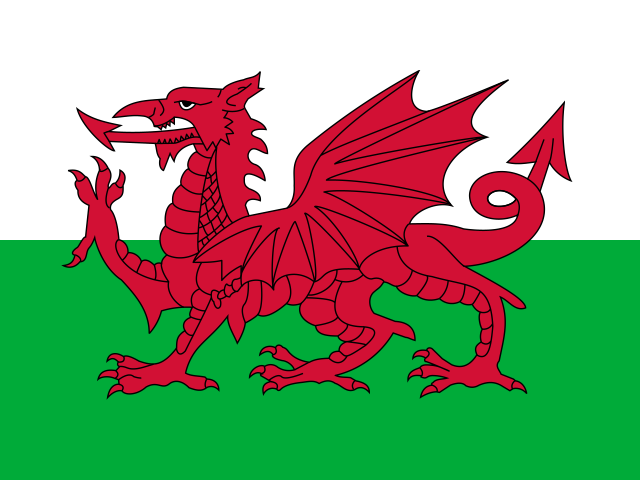 Wales
Wales Read more
A Welsh metaphysical poet, author, and physician. His most famous work is a collection of religious poems known for its simple, heartfelt style and its exploration of mystical themes and the presence of God in the natural world.
France Read more
The stage name of Jean-Baptiste Poquelin, a French playwright and actor considered to be one of the greatest masters of comedy in Western literature. His satirical plays, often targeting the hypocrisy of the French establishment, remain widely performed today.
France Read more
A French mathematician, physicist, inventor, and Catholic writer. A child prodigy, he made foundational contributions to probability theory and fluid dynamics before turning to philosophy and theology. His *Pensées* is a collection of fragments on religious belief, known for "Pascal's Wager".
England Read more
An English aristocrat, philosopher, and writer. A pioneering figure in a male-dominated age, she wrote one of the earliest examples of science fiction, engaged with the scientific debates of her time, and was the first woman to attend a meeting of the Royal Society.
England Read more
An English writer and Puritan preacher. His allegorical novel *The Pilgrim's Progress*, written in two parts while he was imprisoned for his religious beliefs, became one of the most famous and widely read works of Christian literature.
England Read more
An English poet, literary critic, and playwright who was England's first Poet Laureate (1668). He was the dominant literary figure of the Restoration era, known for his masterful political satires and his development of the heroic couplet.
England Read more
An English philosopher and physician, widely regarded as one of the most influential of Enlightenment thinkers and commonly known as the "Father of Liberalism". His ideas on government and natural rights profoundly influenced the United States Declaration of Independence.
England Read more
An English naval administrator and Member of Parliament, now most famous for the detailed private diary he kept for a decade during his youth. His diary provides an unparalleled first-hand account of life in 17th-century London, covering major events like the Great Plague and the Great Fire.
France Read more
A French writer who authored what is often considered the first modern novel in French literature. *La Princesse de Clèves* was a pioneering work of psychological fiction, praised for its spare prose and its intense focus on the inner life of its characters.
France Read more
A French dramatist who is considered one of the three great playwrights of 17th-century France (along with Molière and Corneille). He is renowned as the master of French classical tragedy, celebrated for the psychological depth of his characters and the formal perfection of his verse.
England Read more
A prolific Restoration-era English playwright, poet, and novelist. She was one of the first English women to earn her living by her writing, breaking cultural barriers and serving as a literary role model for later generations of women authors.
Japan Read more
A Japanese poet and creator of the "floating world" genre of Japanese prose (*ukiyo-zōshi*). His work, known for its humour and realism, depicted the lives and loves of the merchant class in 17th-century Osaka.
Japan Read more
The most famous poet of the Edo period in Japan. He is recognised as the greatest master of haiku, and his work elevated the form to a high art, imbuing it with a profound sense of natural beauty and spiritual insight.
China Read more
A Chinese dramatist of the Qing dynasty. His masterpiece, a *chuanqi* opera, is a classic of the Chinese stage, retelling the famous love story of Emperor Xuanzong and his consort Yang Guifei with great lyrical beauty.
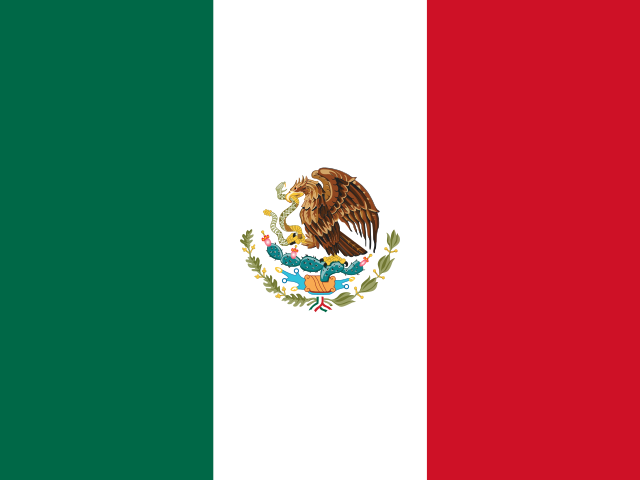 Mexico
 Read more
A self-taught scholar, poet, and nun of New Spain. A master of Baroque poetry and a prominent figure of the Hispanic Golden Age, she is celebrated as a protofeminist for her spirited defence of a woman's right to an intellectual life.
China Read more
A Chinese playwright and poet of the Qing dynasty, best known for his historical drama *The Peach Blossom Fan*. The play is a major work of Chinese literature, chronicling the fall of the Ming dynasty through the romance of its two protagonists.
Japan Read more
A Japanese dramatist, widely regarded as the greatest playwright of the Japanese puppet theatre (*bunraku*) and the kabuki stage. His plays, particularly his domestic tragedies, explored the conflict between social obligations and human emotion.
England Read more
An English writer, journalist, and spy, who is considered one of the pioneers of the English novel. He is best known for his novel *Robinson Crusoe*, which helped to popularise the form of realistic fiction.
England Read more
An English poet and one of the first published women poets in English. Her work, which often focused on nature and social critique, was admired by later Romantic poets like Wordsworth.
 Ireland/England
 Read more
An Anglo-Irish satirist, essayist, and political pamphleteer who became Dean of St Patrick's Cathedral, Dublin. He is regarded as the foremost prose satirist in the English language, celebrated for his savage and biting wit.
England Read more
An English playwright and poet of the Restoration period. He is known for his clever and satirical comedies of manners, and *The Way of the World* is often considered the peak of the genre.
England Read more
An English essayist, poet, and politician. With his friend Richard Steele, he founded *The Spectator* magazine, which pioneered the periodical essay and had a profound influence on English prose style and public morals.
Ireland/England Read more
An Irish writer and politician, best remembered for co-founding, with Joseph Addison, the influential magazines *The Tatler* and *The Spectator* in London. His work helped to shape the manners and taste of the 18th-century reading public.
 Korea
Korea Read more
A Korean Neo-Confucian scholar who was a key figure in the Silhak (Practical Learning) movement. His encyclopedic work promoted empirical knowledge and social reform, critiquing the formalism of traditional Confucianism.
England Read more
A leading English poet of the Augustan age, celebrated for his satirical verse and his mastery of the heroic couplet. He is one of the most frequently quoted writers in the English language after Shakespeare.
England Read more
An English writer and printer best known for his three epistolary novels. He was a major innovator in the development of the novel, focusing on psychological realism and the inner lives of his characters.
England Read more
An English aristocrat, writer, and poet. She is remembered for her witty letters, particularly those from her travels to the Ottoman Empire, and for introducing and advocating for smallpox inoculation to Britain.
France Read more
The pen name of François-Marie Arouet, a French Enlightenment writer, historian, and philosopher. A master of satire, he was a tireless advocate for freedom of religion, freedom of speech, and the separation of church and state.
Italy Read more
An Italian poet and librettist who was the most celebrated and influential librettist of the 18th century. His libretti for the genre of opera seria were set to music hundreds of times by composers such as Handel, Mozart, and Gluck.
Korea (Joseon) Read more
A legendary kisaeng (courtesan) and one of Korea's most celebrated classical poets. Her sijo poems explore themes of love, longing, nature, and Buddhist impermanence with extraordinary emotional depth.
Korea (Joseon) Read more
Considered the greatest master of sijo and gasa poetry in Korean literature. His landscape poems combine natural beauty with philosophical depth.
Korea (Joseon) Read more
Master sijo poet whose *Fisherman's Calendar*, describing a hermit's life through the seasons, is considered one of the finest works in Korean literature.
Korea (Joseon) Read more
Major female classical poet whose work gained greater recognition in China and Japan than in patriarchal Joseon Korea. Her poetry expresses the constraints faced by talented women.
Korea (Joseon) Read more
Author of two foundational Korean novels that explore Buddhist themes of illusion and awakening through romantic and political narratives.
Vietnam Read more
Called "The Sage of Bạch Vân", a philosopher-poet of the Lê dynasty revered for his wisdom, prophecies, and ethical teachings.
 Timurid Empire (modern-day Uzbekistan)
 Read more
Called "the Dante of the East" and the father of Uzbek/Turkic literature. His works elevated Chagatai Turkish to a literary language rivalling Persian.
Maharashtra (modern-day India) Read more
The greatest Marathi poet. His abhangas (devotional poems) are still sung in temples and homes across Maharashtra, expressing intense devotion to Vithoba.
Kerala (modern-day India) Read more
Called the father of Malayalam literature. His translations of the Sanskrit epics into Malayalam made them accessible to common people.
Aztec Empire (modern-day Mexico) Read more
Philosopher-king of Texcoco and the most celebrated poet of pre-Columbian Mesoamerica. His Nahuatl poetry meditates on the transience of life and the nature of the divine.
Korea (Joseon) Read more
Major sijo poet of the Joseon dynasty, known for his patriotic poetry during the Japanese invasions. One of the "Three Tang Poets" of Korea.
Timurid Empire (modern-day Afghanistan) Read more
The last great classical poet of Persian literature. A Sufi master whose allegorical poetry and prose influenced literature across the Islamic world.
Ottoman Empire (modern-day Turkey) Read more
Ottoman poet of the Tulip Era whose playful, sensuous verse broke from classical conventions and celebrated the pleasures of Istanbul life.
📜 18th century 72 authors
 Scotland
 Read more
A Scottish poet and playwright whose blank-verse poem *The Seasons* was a landmark of 18th-century nature poetry and a significant influence on the later Romantic movement.
China Read more
A Chinese writer of the Qing dynasty, best known for his satirical novel *The Scholars*, which offers a sharp and humorous critique of the scholar-official class and the civil service examination system.
Japan Read more
An iconoclastic Japanese philosopher who developed a radical critique of feudal society. His utopian vision advocated for a classless, agrarian society free from rulers, money, and written Chinese characters.
England Read more
An English novelist and dramatist known for his satirical wit and his development of the novel form. His "comic epic-poem in prose," *Tom Jones*, is considered a masterpiece of English literature.
England Read more
An English writer who made lasting contributions to English literature as a poet, essayist, moralist, and lexicographer. His dictionary was a monumental achievement and the pre-eminent work of its kind for over a century.
Scotland Read more
A Scottish Enlightenment philosopher, historian, and economist, best known for his influential system of philosophical empiricism, skepticism, and naturalism.
 Switzerland/France
 Read more
A Genevan philosopher and writer whose political philosophy profoundly influenced the Enlightenment across Europe, as well as aspects of the French Revolution. His *Confessions* pioneered the modern autobiography.
Ireland/England Read more
An Anglo-Irish novelist and clergyman born in Ireland who spent much of his life in England. His novel *Tristram Shandy* is a landmark of experimental fiction, celebrated for its digressive, non-linear narrative and its playful exploration of the process of writing.
France Read more
A French philosopher and writer who was a prominent figure during the Enlightenment. He was a co-founder and chief editor of the *Encyclopédie*, a seminal work of the era, and his fiction challenged literary conventions.
China Read more
A Chinese writer of the Qing dynasty, renowned as the author of what is considered one of the Four Great Classical Novels of Chinese literature. His semi-autobiographical epic offers a detailed, episodic record of the rise and fall of his own family.
Japan Read more
An influential Japanese philosopher of the Edo period. He developed a unique and complex system of metaphysics and natural philosophy, known for its rigorous logic and its dialectical approach to understanding reality.
Scotland Read more
A Scottish economist and philosopher who was a key figure in the Scottish Enlightenment. His magnum opus, *The Wealth of Nations*, is considered the first modern work of economics and a foundational text of classical economics.
Prussia Read more
A German philosopher and one of the central Enlightenment thinkers. His work in metaphysics, epistemology, ethics, and aesthetics has made him one of the most influential figures in the history of Western philosophy.
Vietnam Read more
A Vietnamese poet, philosopher, and government official. He was an encyclopedic scholar and one of the most outstanding intellectuals of 18th-century Vietnam, making significant contributions to historiography, poetry, and philosophy.
Ireland Read more
An Anglo-Irish novelist, playwright, and poet. He is known for his sentimental novel, his enduring comedy of manners, and his pastoral poem lamenting rural depopulation.
Japan Read more
A Japanese polymath of the Edo period: a pharmacologist, writer, inventor, and painter. He was a leading figure in the Dutch Learning (*Rangaku*) movement and known for his witty, satirical fiction.
Germany Read more
A German writer, philosopher, and art critic who was a leading figure of the Enlightenment. His plays and theoretical writings had a profound influence on the development of German literature.
Germany Read more
A German Jewish philosopher and a leading figure of the Haskalah, or Jewish Enlightenment. His work argued for religious tolerance, freedom of conscience, and the possibility of combining Jewish identity with modern European culture.
England Read more
An English poet and hymnodist. One of the most popular poets of his time, his work, which often deals with nature and everyday life, is considered a forerunner of Romantic poetry.
France Read more
A French polymath: a playwright, watchmaker, inventor, musician, and revolutionary. He is best known for his three Figaro plays, whose satire of aristocratic privilege was a precursor to the French Revolution.
Japan Read more
A Japanese physician and scholar who was a pioneer of Western medicine in Japan. His translation of a Dutch anatomical text was a landmark in the development of the Dutch Learning (*Rangaku*) movement.
Japan Read more
A Japanese author and scholar of the Edo period. He is considered a master of the *yomihon* genre and is best known for his collection of supernatural tales, a classic of Japanese fantasy literature.
England Read more
An English historian and Member of Parliament. His magnum opus is a work of immense scholarship and celebrated prose, known for its critical use of primary sources and its controversial critique of organised religion.
Korea Read more
A Korean philosopher and novelist in the late Joseon Dynasty. A leader of the Silhak (Practical Learning) school, he advocated for social and technological reform, and his satirical stories critiqued the conservative Confucian aristocracy.
Italy Read more
An Italian criminologist, philosopher, and politician. His treatise condemning torture and the death penalty was a foundational work in the field of penology and had a profound influence on legal reform across Europe and in the United States.
Scotland Read more
A Scottish biographer, diarist, and lawyer. He is best known for his biography of Samuel Johnson, which is often considered the greatest biography ever written in the English language for its vivid detail and dramatic structure.
France Read more
A French aristocrat and writer of libertine novels. His transgressive works explore themes of sexual cruelty and absolute freedom from moral constraints, giving rise to the term "sadism".
France Read more
A French novelist and army officer. His epistolary novel, *Dangerous Liaisons*, is considered a masterpiece of French literature for its cynical and psychologically astute depiction of the amoral machinations of the French aristocracy.
Germany Read more
A German philosopher, theologian, and poet. His work on language and his concept of the *Volksgeist* (national spirit) were key influences on the Sturm und Drang movement and the development of cultural nationalism.
Germany Read more
A German writer and statesman who was a towering figure of world literature. His work, which spans multiple genres, was central to the Sturm und Drang and Weimar Classicism literary movements, and his drama *Faust* is considered a defining work of German literature.
England Read more
An English satirical novelist, diarist, and playwright. Her novels, particularly her debut *Evelina*, were a landmark in the development of the novel of manners and influenced later writers such as Jane Austen.
England Read more
An English poet, painter, and printmaker. Largely unrecognised during his lifetime, he is now considered a seminal figure in the Romantic Age for his visionary imagination, his radical politics, and his creation of a complex personal mythology.
Scotland Read more
The national poet of Scotland. He is celebrated for his poems and songs written in the Scots language, which chronicled rural life, class inequality, and Scottish culture with wit, lyricism, and social insight.
Germany Read more
A German poet, philosopher, physician, and historian. A leading figure of the Sturm und Drang movement and Weimar Classicism, his work explores themes of freedom, human dignity, and idealism. He wrote the poem "Ode to Joy", famously set to music by Beethoven.
China Read more
A Chinese novelist of the Qing dynasty. His novel *Jinghua Yuan* (*Flowers in the Mirror*) is a work of fantasy that combines adventure and satire with a wide range of erudite knowledge and contains some of the earliest expressions of feminist ideas in Chinese literature.
Vietnam Read more
A celebrated Vietnamese poet and writer. His epic poem, *The Tale of Kiều*, written in the six-eight verse form, is considered the most important work of Vietnamese literature, renowned for its linguistic artistry and profound humanism.
Germany Read more
An important German lyric poet. His work, which combines the spirit of ancient Greece with a modern sensibility, was a key influence on German Idealism and later philosophers like Hegel and Heidegger.
England Read more
A major English Romantic poet who, with Samuel Taylor Coleridge, helped to launch the Romantic Age in English literature with their joint publication *Lyrical Ballads*. He served as Britain's Poet Laureate from 1843 until his death.
Scotland Read more
A Scottish historical novelist, poet, and historian. He is considered the inventor of the modern historical novel, and his works, often set in the Scottish Highlands, were immensely popular throughout Europe in the 19th century.
Germany Read more
The pen name of Georg von Hardenberg, a poet and philosopher of early German Romanticism. His work, though fragmentary due to his early death, is celebrated for its mystical and philosophical depth and its symbol of the "blue flower".
England Read more
An English poet, literary critic, and philosopher. A founder of the Romantic Movement in England, he is best known for his supernatural and Gothic poems and for his influential literary criticism.
Germany Read more
A German poet, translator, and editor of the Romantic movement. He was a pioneer of the *Kunstmärchen* (art fairy tale) and a central figure in the literary life of his time, known for his ironic and imaginative works.
England Read more
An English novelist known primarily for her six major novels, which interpret, critique and comment upon the British landed gentry at the end of the 18th century. Her use of irony, realism, and social commentary has made her one of the most influential writers in English literature.
Germany Read more
A German Romantic author of fantasy and Gothic horror, as well as a composer and music critic. His stories, which explore the dark and uncanny sides of human nature, were a major influence on composers like Schumann and Offenbach.
Germany Read more
A German poet, dramatist, and novelist. His work, characterised by its psychological intensity and its exploration of extreme human emotions, stands as a bridge between Classicism and Romanticism.
 Sweden
 Read more
A Swedish writer, professor, and bishop, and a leading figure of Swedish Romanticism. His epic poem *Frithiof's Saga*, based on an old Icelandic saga, became one of the most famous literary works in 19th-century Scandinavia.
France Read more
The pen name of Marie-Henri Beyle, a French writer. A pioneer of psychological realism, his novels are celebrated for their acute analysis of his characters' inner lives and their depiction of the ambitious individual in a rigidly stratified society.
England Read more
An English essayist, best known for his autobiographical work which detailed his struggles with opium addiction. His ornate and digressive prose style influenced writers such as Poe and Baudelaire.
Italy Read more
An Italian poet and novelist. His masterpiece, *The Betrothed*, is considered a foundational work of the Italian novel and a symbol of the Italian Risorgimento, celebrated for its historical depth and its role in shaping the modern Italian language.
 Thailand
 Read more
Thailand's most famous poet. His epic poem *Phra Aphai Mani*, a vast fantasy adventure, is considered a major work of Thai literature, and he is celebrated for his imaginative storytelling and his mastery of poetic form.
England Read more
A British poet and a leading figure of the Romantic movement. Famed for his flamboyant life and aristocratic excesses, he created the concept of the "Byronic hero" and became one of the most influential and celebrated poets of his era.
Germany Read more
A major poet and novelist of German Romanticism. His lyrical and evocative work, which often celebrates nature and the simple life, is considered a high point of the movement, and many of his poems have been set to music.
England Read more
A major English Romantic poet, regarded as one of the finest lyric poets in the English language. A radical in his poetry as in his political and social views, his work explored themes of rebellion, love, and the power of the human imagination.
England Read more
An English poet, the son of a farm labourer. He became known for his celebratory representations of the English countryside and his laments over its disruption and the enclosure of common land.
England Read more
A key figure of the second generation of Romantic poets. Despite his short life, his work is celebrated for its sensual imagery and its exploration of beauty and mortality, particularly in his series of odes.
England Read more
An English novelist who wrote the Gothic novel *Frankenstein*, which is considered a foundational text of science fiction. She was also an accomplished editor and travel writer, and a key figure in the Romantic movement.
Germany Read more
One of the most significant German poets of the Romantic era. He is celebrated for his lyrical poetry, which combined emotional intensity with irony and wit, and for his satirical political writings.
Mughal Empire (modern-day India) Read more
The pre-eminent Urdu and Persian-language poet during the late Mughal Empire. He is considered one of the most popular and influential poets of the Urdu language, celebrated for his philosophical depth and the complex beauty of his ghazals.
Italy Read more
An Italian philosopher, poet, and writer, considered the greatest Italian poet of the 19th century. His work is known for its profound lyrical quality and its exploration of philosophical pessimism and existential despair.
 Poland/Lithuania/France
 Read more
A Polish poet, dramatist, and political activist. He is regarded as the national poet of Poland and a central figure of Polish Romanticism. His epic poem *Pan Tadeusz* is considered the national epic of Poland.
 Russia
 Read more
A Russian poet, playwright, and novelist of the Romantic era who is considered by many to be the greatest Russian poet and the founder of modern Russian literature. His work is celebrated for its clarity, craftsmanship, and psychological depth.
France Read more
A French novelist and playwright. His magnum opus was a sequence of short stories and novels collectively entitled *La Comédie humaine*, which presents a panorama of French life in the years after the fall of Napoleon Bonaparte.
Vietnam Read more
Called "The Queen of Nôm poetry". Vietnam's most celebrated female poet, known for witty, subversive verses using double meanings to critique patriarchal society.
 Malaysia
 Read more
Called the father of modern Malay literature. His autobiography *Hikayat Abdullah* broke from classical courtly conventions and pioneered realistic prose.
Thailand (Siam) Read more
Thailand's national poet and greatest literary figure. His epic poem *Phra Aphai Mani* is a beloved adventure tale still read widely today.
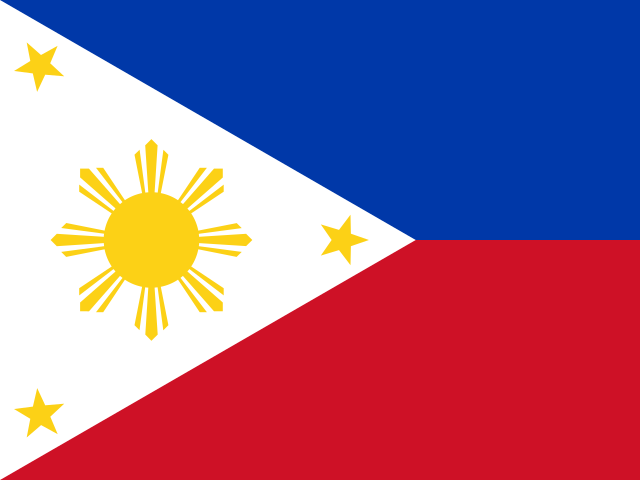 Philippines
 Read more
Called "The Tagalog Shakespeare". His verse romance *Florante at Laura* is the greatest work in Tagalog and is required reading in Philippine schools.
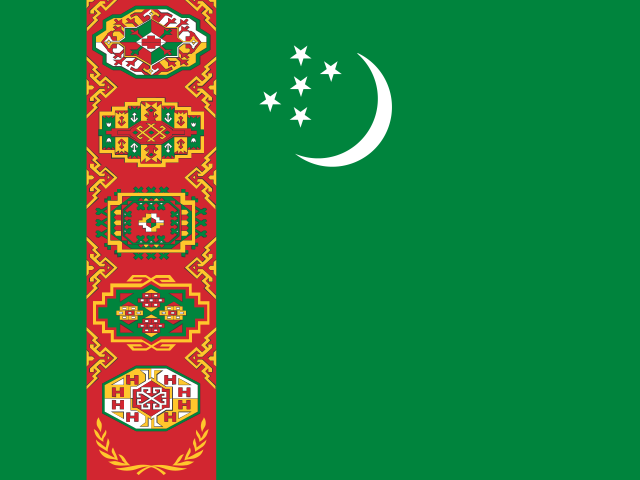 Turkmenistan
 Read more
Turkmenistan's national poet and father of Turkmen literature. His poetry promoting Turkmen unity and ethical values is central to Turkmen identity.
 Sokoto Caliphate (modern-day Nigeria)
 Read more
Prolific Hausa poet, scholar, and teacher who wrote in Arabic, Fulfulde, and Hausa. A remarkable female intellectual figure who established a network of women's education.
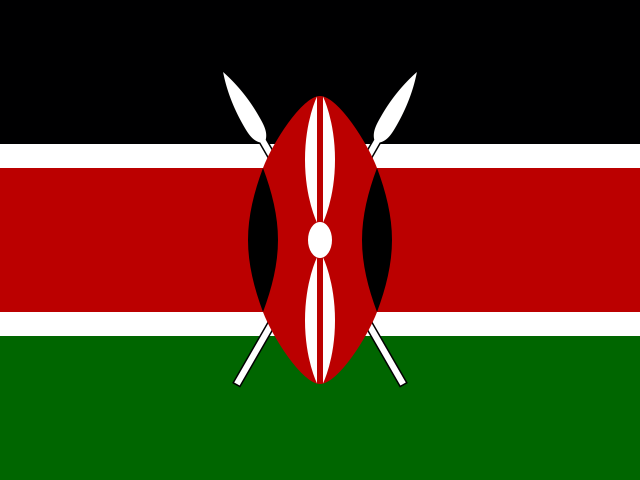 Mombasa (modern-day Kenya)
 Read more
The greatest classical Swahili poet. His witty, satirical, and often political verse set the standard for Swahili poetry.
Japan Read more
One of the four great masters of haiku. His poems, marked by compassion for small creatures and the struggles of daily life, are beloved for their warmth and accessibility.
Japan Read more
Major haiku poet and painter, considered one of the four great haiku masters alongside Bashō, Issa, and Shiki. His visual artist's eye created striking poetic images.
Germany Read more
Jacob and Wilhelm Grimm were German academics who collected and published folklore. Their collection of fairy tales, including "Cinderella", "Snow White", and "Hansel and Gretel", became foundational works of Western folklore and children's literature.
🖋️ 19th century 197 authors
 Finland
 Read more
A Finnish physician, philologist and collector of traditional oral poetry. He is best known for compiling the *Kalevala*, the Finnish national epic, from folklore he gathered on several expeditions, a work that was instrumental in the development of the Finnish national identity.
France Read more
A French poet, novelist, and dramatist of the Romantic movement. He is considered one of the greatest and best-known French writers, celebrated for his epic novels that champion social justice and the cause of the poor.
France Read more
The pen name of Amantine Dupin, one of the most popular French writers of the 19th century. A pioneering feminist, she was known for her rustic novels, her socialist political views, and her numerous romantic affairs.
Finland Read more
A Finnish priest, poet, and writer who wrote in Swedish. He is the national poet of Finland and author of the lyrics to the Finnish national anthem. His most famous work is a collection of poems depicting the Finnish War.
Denmark Read more
A Danish author best remembered for his literary fairy tales. His work, which transcended national borders and has been translated into over 125 languages, revolutionised the genre by blending fantasy with deep psychological and moral insight.
England Read more
One of the most prominent English poets of the Victorian era. Her poetry was widely popular in both Britain and the United States during her lifetime. Her sonnet sequence on her romance with Robert Browning is her most famous work.
France Read more
A French poet, essayist, and translator of the Romantic movement. His work, known for its dreamlike and mystical quality, explored the connection between the real world and the supernatural, influencing later Symbolist and Surrealist writers.
 Ukraine/Russia
 Read more
A Ukrainian-born Russian writer. A key figure of Russian literary realism, his work is celebrated for its satirical brilliance, its blend of the grotesque and the fantastic, and its sharp critique of the political corruption of the Russian Empire.
England Read more
An English naturalist, geologist, and biologist best known for his theory of evolution by natural selection. Darwin’s groundbreaking work profoundly influenced biology, philosophy, and literature, reshaping humanity’s understanding of its place in nature.
England Read more
The Poet Laureate of Great Britain and Ireland during much of Queen Victoria's reign. He remains one of the most popular British poets, celebrated for his mastery of rhythm and his melancholic, richly imagistic verse.
France Read more
A French dramatist, poet, and novelist. A key figure of the Romantic movement, his work is known for its emotional intensity and its exploration of love, despair, and the "mal du siècle" (sickness of the century).
England Read more
An English novelist and short story writer during the Victorian era. Her novels offered a powerful critique of industrial society and a detailed, sympathetic portrayal of the lives of the poor and of women.
England Read more
A British novelist and author, born in India. He is best known for his satirical novels, particularly *Vanity Fair*, which offered a panoramic and cynical view of English society, famously subtitled "A Novel without a Hero".
France Read more
A French poet, dramatist, novelist, and critic. He was a leading figure in the Decadent movement and a staunch defender of "l'art pour l'art" (art for art's sake), arguing for the autonomy of art from moral or utilitarian functions.
England Read more
An English writer and social critic who is regarded by many as the greatest novelist of the Victorian era. He created some of world literature's best-known fictional characters and was celebrated for his humour, satire, and keen observation of character and society.
Azerbaijan Read more
An Azerbaijani writer, philosopher, and founder of modern literary criticism in Azerbaijan. He is considered one of the fathers of Azerbaijani literature, known for his satirical plays and his advocacy for modernising and secularising society.
England Read more
An English poet and playwright whose mastery of the dramatic monologue made him one of the foremost Victorian poets. His work is known for its irony, psychological depth, and complex characterisation.
 Prince-Bishopric of Montenegro (modern-day Montenegro)
 Read more
A Prince-Bishop of Montenegro who was also a philosopher and poet. His epic poem *The Mountain Wreath* is considered a masterpiece of Serbian and Montenegrin literature and a cornerstone of South Slavic identity.
Ukraine Read more
A Ukrainian poet, writer, artist, and political figure. He is considered the father of modern Ukrainian literature and, for many, the founder of the modern Ukrainian language. His work formed the foundation for a new national consciousness.
England Read more
One of the most successful and prolific English novelists of the Victorian era. He is best known for his series of novels set in the fictional county of Barsetshire, which offer a detailed and insightful portrait of political, social, and clerical life.
England Read more
An English novelist and poet, the eldest of the three Brontë sisters. Her novel *Jane Eyre* is a landmark of English literature, celebrated for its intense psychological portrayal of its heroine and its exploration of class, feminism, and morality.
England Read more
An English novelist and poet. Her only novel, *Wuthering Heights*, is a masterpiece of Gothic Romanticism, celebrated for its passionate intensity, complex structure, and its exploration of destructive love on the wild Yorkshire moors.
Russia Read more
A Russian novelist, short story writer, and playwright. His novel *Fathers and Sons* is considered a masterpiece of 19th-century fiction, and his work was influential in bringing Russian literature to a wider Western audience.
England Read more
The pen name of Mary Ann Evans, an English novelist and one of the leading writers of the Victorian era. Her novels are celebrated for their realism, psychological insight, and intellectual depth.
France Read more
A French poet who is considered one of the fathers of modern poetry. His collection *Les Fleurs du mal* (*The Flowers of Evil*) was highly controversial for its themes of decadence and eroticism, and was a key text for the Symbolist movement.
France Read more
A leading figure of French literary realism, renowned for his meticulous pursuit of "le mot juste" (the right word) and his objective, detailed style. His works, particularly *Madame Bovary*, revolutionised the modern novel.
Russia Read more
A Russian novelist whose work explores human psychology in the troubled political and spiritual atmosphere of 19th-century Russia. He is considered one of the greatest psychological novelists in world literature.
 Hungary
 Read more
A Hungarian national poet and liberal revolutionary, considered a key figure in the Hungarian Revolution of 1848. His patriotic and passionate verse made him a powerful symbol of the struggle for liberty.
Austrian Empire (modern-day Montenegro) Read more
A significant 19th-century writer and politician from Montenegro, then part of the Austrian Empire. He is remembered for his short stories that captured the essence of Montenegrin folk culture, ethics, and oral traditions.
England Read more
An English novelist and playwright, Collins is a pioneer of the detective and sensation novel. His intricate plots and memorable characters have had a lasting influence on crime fiction.
Russia Read more
A major Russian satirist of the 19th century. His work offers a scathing critique of Russian social and political life, particularly the provincial bureaucracy and the declining gentry.
France Read more
A French novelist who was a pioneer of the science-fiction genre. His imaginative adventure novels, which often featured futuristic technology, have had a lasting influence on popular literature and cinema.
 Norway
 Read more
A Norwegian playwright referred to as "the father of realism" and one of the founders of modernism in theatre. His plays, which challenged the moral conventions of his time, remain highly influential and are performed worldwide.
Russia Read more
A Russian writer who is regarded as one of the greatest authors of all time. He is best known for his epic novels, which are considered pinnacles of realist fiction, and for his later turn towards Christian anarchism and nonviolent resistance.
 Brazil
 Read more
A Brazilian novelist, politician, and literary critic. He is considered one of the founders of Brazilian literature, known for his romantic novels that idealised the indigenous peoples of Brazil and explored the formation of a national identity.
Russia Read more
A Russian novelist and short-story writer celebrated for his unique narrative techniques (a style known as *skaz*) and his vivid depiction of provincial Russian life, often focusing on the clergy and merchants.
England Read more
The pen name of Charles Lutwidge Dodgson, an English writer, mathematician, and photographer. He is best known for his works of literary nonsense, which have had a lasting influence on fantasy literature.
Finland Read more
The national writer of Finland, who wrote the first significant novel in the Finnish language. His work is a cornerstone of Finnish literature, known for its realistic portrayal of rural life and its innovative use of language.
 Argentina
 Read more
An Argentine journalist, poet, and politician. He is best known for his epic poem *Martín Fierro*, a seminal work of Argentine literature that tells the story of a rebellious gaucho and has become a symbol of Argentine national identity.
Brazil Read more
A Brazilian novelist, poet, and short story writer, widely regarded as the greatest writer in Brazilian literature. His work is known for its psychological depth, pessimism, and innovative, often ironic, narrative techniques.
France Read more
A French novelist and the most prominent figure of the literary school of naturalism. He is best known for his 20-novel cycle *Les Rougon-Macquart* and for his influential role in the Dreyfus Affair.
Italy Read more
An Italian realist writer, best known for his depictions of life in his native Sicily. He was the most important proponent of *Verismo*, a literary movement that sought to portray the world with objective, scientific precision.
England Read more
An English novelist and poet. A Victorian realist, he is known for his tragic novels set in the semi-fictional region of Wessex, which explore themes of fate, social constraints, and thwarted love.
France Read more
A French poet and critic who was a major figure of the Symbolist movement. His highly complex and allusive work, which sought to evoke ideas through suggestion rather than direct statement, had a profound influence on 20th-century art.
Spain Read more
A Spanish realist novelist considered by many to be second only to Cervantes in Spanish literature. His massive body of work offers a panoramic and critical view of 19th-century Spanish society.
France Read more
A French poet associated with the Symbolist and Decadent movements. He is known for his musical, lyrical verse and his tumultuous personal life, including his stormy affair with Arthur Rimbaud.
France Read more
A French poet, journalist, and novelist who won the Nobel Prize in 1921. He was a master of ironic and skeptical prose, and his work is celebrated for its elegance, classical purity of style, and witty engagement with French history and politics.
Portugal Read more
A Portuguese novelist widely considered to be the greatest writer in the realist style in the Portuguese language. His work is celebrated for its irony, social criticism, and its vivid depiction of Portuguese society.
 Albania
 Read more
An Albanian poet and writer who was a leading figure of the Albanian National Awakening. He is regarded as the national poet of Albania, celebrated for his patriotic verse that helped to establish a modern Albanian literary language.
Poland Read more
Winner of the 1905 Nobel Prize in Literature for his "outstanding merits as an epic writer," he is best known for his historical novels which dramatised key moments in Polish history, boosting national confidence during a period of foreign occupation.
British India/Bangladesh Read more
A pioneering Bengali novelist, playwright, and essayist from British India. His magnum opus, *Bishad Sindhu*, an epic depiction of the Battle of Karbala, is a classic of modern Bengali literature.
Ireland Read more
An Irish author, best known for his 1897 Gothic horror novel *Dracula*, which introduced the iconic vampire count and has become one of the most famous and influential works in the genre.
France Read more
A French novelist who began as a naturalist but became famous as a leading figure of the Decadent movement. His novel *À rebours* (*Against Nature*) became a key text of the aesthetic and decadent sensibilities of the fin de siècle.
Sweden Read more
A Swedish playwright, novelist, and painter. A prolific writer, his work evolved from naturalistic drama to a forerunner of Expressionism, exploring themes of psychological turmoil, misogyny, and class conflict with ferocious intensity.
 Romania
 Read more
A Romantic poet, novelist, and journalist, often regarded as the national poet of Romania. His work, which drew on mythology, folklore, and philosophy, had a profound influence on the development of the modern Romanian language and literature.
France Read more
A French writer who is considered one of the fathers of the modern short story. A protégé of Flaubert, he was a master of the naturalist style, known for his efficient, economical stories that often focused on the lives of ordinary people.
Scotland Read more
A Scottish novelist, poet, and travel writer. A master of adventure fiction and psychological thrillers, his work enjoyed immense popularity and has remained influential for its compelling storytelling and exploration of the duality of human nature.
 Bulgaria
 Read more
Often referred to as the "Patriarch of Bulgarian literature," he was a poet, novelist and playwright whose work chronicled the Bulgarian struggle for independence from the Ottoman Empire and helped to shape the modern Bulgarian literary language.
Spain Read more
A Spanish novelist, journalist, and critic. A prolific author and a leading proponent of naturalism in Spanish literature, she was also a pioneering feminist who advocated for women's education and rights.
Spain Read more
A Spanish novelist and literary critic who wrote under the pseudonym "Clarín". His masterpiece, *La Regenta*, is considered one of the greatest novels in Spanish literature, a complex and critical portrait of provincial society.
France Read more
A French poet who produced all of his literary work in his late teens. A revolutionary figure of the Symbolist movement, his visionary poetry, which sought a "derangement of all the senses," had a profound and lasting influence on modern literature.
Ireland Read more
An Irish poet and playwright who became one of London's most popular writers. A leading figure in the Aestheticism movement, he was celebrated for his brilliant wit, but his career was destroyed by his imprisonment for homosexual acts.
India Read more
A pioneering Indian poet who wrote in English and French. Despite her death at age 21, she left behind a significant body of work that drew on both Western and Indian traditions, making her a foundational figure of Indo-Anglian literature.
Austria-Hungary (modern-day Ukraine) Read more
A Ukrainian poet, writer, and political activist. He was a towering figure in Ukrainian literature and a co-founder of the modern socialist and nationalist movement in western Ukraine. His work includes poetry, prose, and drama that explored themes of social justice and Ukrainian identity.
England Read more
An English writer of adventure fiction set in exotic locations, primarily Africa. He was a pioneer of the "Lost World" literary genre, and his novels were immensely popular in the late Victorian era.
Austria Read more
An Austrian neurologist and the founder of psychoanalysis. Freud’s pioneering theories on the unconscious, sexuality, and the structure of the mind revolutionized psychology, literature, and the arts, making him one of the most influential thinkers of the 20th century.
Ireland Read more
An Irish playwright, critic, and political activist. A leading figure in 20th-century theatre, he wrote more than 60 plays that used comedy and satire to address prevailing social problems. He was awarded the Nobel Prize in Literature in 1925.
England Read more
An English novelist who published 23 novels between 1880 and 1903. A key figure in the naturalist movement, his work provides a stark and pessimistic portrayal of poverty, literary life, and the social issues of late-Victorian England.
Poland/England Read more
A Polish-British writer regarded as one of the greatest novelists to write in the English language. His work, often set at sea or in remote locations, explores the dark side of human nature, the complexities of colonialism, and the psychological depths of his characters.
Sweden Read more
A Swedish author and teacher who was the first woman to win the Nobel Prize in Literature (1909). Her work is deeply rooted in the legends and folklore of her native Värmland, known for its imaginative storytelling and moral depth.
Scotland Read more
A Scottish writer and physician who created the iconic character of Sherlock Holmes, a brilliant detective whose adventures revolutionised the genre of crime fiction. He also wrote historical novels, science fiction, and non-fiction works on spiritualism.
England Read more
An English classical scholar and poet. His cycle of poems, *A Shropshire Lad*, is his best-known work, celebrated for its simple, lucid style and its themes of pastoral beauty, lost love, and the transience of youth.
Norway Read more
A Norwegian writer who was awarded the Nobel Prize in Literature in 1920. A pioneer of psychological literature, his work broke from realism and explored the irrationality of the human mind. His reputation was later damaged by his support for Nazi Germany.
Russia Read more
A Russian playwright and master of the modern short story. His work is acclaimed for its psychological depth, understated realism, and its focus on the inner lives of ordinary people, profoundly influencing both drama and fiction.
Austria-Hungary Read more
An Austro-Hungarian journalist and writer who is considered the father of modern political Zionism. His pamphlet *Der Judenstaat* (*The Jewish State*) laid the foundational vision for the establishment of a modern Jewish state.
Philippines Read more
A Filipino nationalist and polymath during the tail end of the Spanish colonial period of the Philippines. He is considered the national hero of the Philippines, and his novels were instrumental in sparking the Philippine Revolution.
Georgia Read more
A Georgian poet and writer who is one of the three great figures of Georgian literature. His epic poems, rooted in the folklore of the Georgian highlands, explore themes of heroism, individuality, and the relationship between humanity and nature.
Austrian Empire (modern-day Italy) Read more
An Italian novelist from Trieste, born in the Austrian Empire. A close friend of James Joyce, he was a key figure in literary modernism, best known for his psychologically astute and ironic novel *Zeno's Conscience*.
India Read more
A Bengali polymath who reshaped his region's literature and music. In 1913, he became the first non-European to win the Nobel Prize in Literature for his "profoundly sensitive, fresh and beautiful verse".
Japan Read more
A Japanese Army surgeon general, translator, and writer. A prominent figure of the Meiji era, his work was instrumental in modernising Japanese literature, and his stories often explore the conflict between tradition and modernity.
Austria Read more
An Austrian author and dramatist, and a leading figure of Viennese Modernism. A contemporary of Freud, his work fearlessly explored themes of sexuality, psychology, and antisemitism with a distinctive psychological depth.
Germany Read more
A German dramatist and novelist who won the Nobel Prize in Literature in 1912. He was a leading proponent of literary naturalism, and his plays are known for their compassionate depiction of the suffering of the working classes.
 Belgium
 Read more
A Belgian Symbolist playwright, poet, and essayist who won the Nobel Prize in Literature in 1911. His work is known for its atmosphere of mystery, fate, and the exploration of the inner life.
Russia Read more
A Russian Symbolist poet, novelist, and playwright. His masterpiece, *The Petty Demon*, is a powerful and unsettling portrait of provincial evil and paranoia, considered one of the great novels of the Silver Age of Russian literature.
Greece/Egypt Read more
A Greek poet, journalist, and civil servant who lived in Alexandria, Egypt. He is one of the most important figures in modern Greek poetry, known for his unique blend of historical and sensual themes, and his precise, unadorned style.
Italy Read more
An Italian writer, poet, and nationalist politician. A leading figure of the Decadent movement, his flamboyant life and ultra-nationalist politics often overshadowed his literary achievements, which profoundly influenced Italian fascism.
Ukraine Read more
A Ukrainian modernist writer and feminist. Her prose, influenced by Nietzsche and George Sand, explored the inner lives of the Ukrainian intelligentsia and the struggle of women for emancipation, making her a key figure in early Ukrainian feminism.
Japan Read more
A Japanese author and translator credited with writing the first modern Japanese novel. His use of a colloquial style that mirrored spoken language revolutionised Japanese literature and bridged the gap between classical and modern forms.
Germany Read more
A German playwright whose work was a forerunner of Expressionism. His plays, which often satirised bourgeois attitudes and explored taboo themes of sexuality, were frequently subject to censorship but proved highly influential.
Spain Read more
A Spanish essayist, novelist, poet, and philosopher. A key member of the Generation of '98, his work explored existential themes, the nature of faith, and the Spanish national identity with passionate intellectual inquiry.
India/England Read more
An English novelist, poet, and short-story writer born in British India. His work, celebrated for its storytelling craft, also made him a major, and controversial, "prophet of British imperialism". He was awarded the Nobel Prize in Literature in 1907.
Ireland Read more
An Irish poet and a towering figure of 20th-century literature. A driving force behind the Irish Literary Revival, his work drew on Irish mythology and folklore, evolving from early Symbolism to a more powerful and modern style. He was awarded the Nobel Prize in Literature in 1923.
Spain Read more
A Spanish dramatist, novelist, and member of the Generation of '98. He is known for his radical stylistic innovations, particularly his creation of the *esperpento*, a theatrical style that used grotesque distortion to critique Spanish society.
England Read more
An English writer often called the "father of science fiction". His prolific output included novels, history, and social commentary. His "scientific romances" pioneered many themes of modern science fiction and explored his socialist political views.
 Nicaragua
 Read more
A Nicaraguan poet who initiated the Spanish-American literary movement known as *modernismo*. He is considered one of the most influential poets to have written in the Spanish language, revitalising its poetic traditions.
Japan Read more
A Japanese novelist considered the foremost writer of the Meiji era. His work explored the psychological turmoil of individuals caught between traditional Japanese values and the rapid modernisation of the West.
England Read more
An English novelist and a leading figure of literary realism. His most famous works are set in the "Five Towns" (the Staffordshire Potteries), where he chronicled the lives of ordinary people with meticulous detail and psychological insight.
England Read more
An English novelist and playwright who won the Nobel Prize in 1932. He is best known for his monumental series of novels, *The Forsyte Saga*, which chronicles the lives of an upper-middle-class English family and offers a powerful critique of the social mores of the late Victorian and Edwardian eras.
Italy Read more
An Italian dramatist, novelist, and short story writer who was awarded the Nobel Prize in Literature in 1934. His plays, which explore themes of identity, illusion, and the absurdity of reality, had a profound impact on the development of modern theatre.
Russia Read more
A Russian and Soviet writer and a founder of the socialist realism literary method. His work depicted the lives of Russia's downtrodden, and he had a complex and often fraught relationship with the Bolshevik regime.
France Read more
A French author and winner of the Nobel Prize in Literature in 1947. His work explored the conflict between rigid morality and the individual's quest for personal freedom, often drawing on his own experiences with his homosexuality and Protestant upbringing.
Russia Read more
A Russian writer who was the first Russian to win the Nobel Prize in Literature (1933). A master of realist fiction, he was a prominent émigré writer who remained a staunch opponent of the Bolsheviks after leaving Russia in 1920.
France Read more
A French novelist considered one of the most influential authors of the twentieth century. His seven-volume novel, *In Search of Lost Time*, is a monumental exploration of involuntary memory, art, and the nature of experience that pioneered the stream-of-consciousness technique and reshaped modern literature.
Poland/Germany Read more
Marxist theorist and revolutionary who critiqued capitalism and imperialism.
France Read more
A French poet, essayist, and philosopher. A leading figure of the Symbolist movement, he was celebrated for his intellectually rigorous and musical verse, which explored themes of consciousness, art, and the creative process.
England Read more
Philosopher and prominent anti-war activist who went to prison for his pacifism during World War I, later campaigned against nuclear weapons and the Vietnam War.
England Read more
An English novelist, poet, and editor who was a key figure in the development of literary modernism. He is celebrated for his experiments with narrative technique, particularly his use of the unreliable narrator and time shifts.
France Read more
A celebrated French writer nominated for the Nobel Prize in Literature in 1948. Her work is known for its sensual prose and its keen, nuanced exploration of female sexuality, independence, and the complexities of love.
England Read more
An English writer, philosopher, and lay theologian known as the "prince of paradox". His voluminous work spans fiction, non-fiction, and poetry, and is celebrated for its wit, Christian apologetics, and philosophical depth.
England Read more
One of the twentieth century’s most popular and prolific writers. Known for his clear, unadorned style, his work often explores cosmopolitan themes and offers keen psychological observations of human nature.
Austria-Hungary/Switzerland Read more
A Bohemian-Austrian poet and novelist, widely recognized as one of the most lyrically intense German-language poets. His work explores themes of spirituality, solitude, and the nature of art with profound introspection.
Germany Read more
A German novelist and Nobel Prize laureate whose epic, symbolic, and ironic novels are noted for their insight into the psychology of the artist and the intellectual. He is considered one of the foremost figures of modern German literature.
 Lesotho
 Read more
Regarded as the father of Sesotho literature. His historical novel *Chaka*, a psychological study of the Zulu king, is a groundbreaking work and a classic of African literature.
 Myanmar (Burma)
 Read more
Considered one of the greatest Burmese literary figures, he was a poet, playwright, and journalist whose powerful satirical verse made him a leading voice in the nationalist movement against British colonial rule.
British India (modern-day Pakistan) Read more
A poet, philosopher, and politician from British India who is considered the spiritual father of Pakistan. His work in both Urdu and Persian is celebrated for its powerful expression of Islamic philosophy and its call for spiritual renewal.
Germany/Switzerland Read more
A German-born Swiss poet and novelist who won the Nobel Prize in Literature. His work explores themes of spirituality, self-discovery, and the individual's search for authenticity, gaining him a huge following in the counter-culture movement.
 Uruguay
 Read more
An Uruguayan writer who was a master of the short story. His work, often set in the jungle, explores themes of the supernatural, horror, and the struggle of humanity against a hostile natural world, drawing comparisons to Edgar Allan Poe.
Ottoman Empire (modern-day Turkey)/Soviet Armenia (modern-day Armenia) Read more
A pioneering Armenian feminist writer, novelist, and translator. She was the only woman on the list of Armenian intellectuals targeted for arrest and deportation by the Ottoman government in 1915, and her work bears powerful witness to the Armenian genocide.
Switzerland Read more
A highly original Swiss writer whose playful, observant, and self-effacing work had a profound influence on authors such as Franz Kafka and Walter Benjamin. He was known for his "microscripts," written in a tiny, pencil-based script.
Germany Read more
A German novelist, essayist, and doctor, Döblin is best known for his modernist masterpiece *Berlin Alexanderplatz*, which vividly captures the chaos and transformation of Weimar Berlin. His innovative narrative style and psychological depth have made him a central figure in 20th-century German literature.
British India/India Read more
A poet and political activist known as the "Nightingale of India". She was a prominent figure in the Indian independence movement and one of the pioneers of Indian English poetry, celebrated for her lyrical and romantic verse.
England Read more
An English novelist and essayist whose work is characterized by its humanism and its critique of class divisions and hypocrisy in Edwardian society. His famous motto was "Only connect".
France Read more
A French poet, playwright, and art critic who was a leading figure in the Parisian avant-garde. He is credited with coining the terms "Cubism" and "Surrealism" and was known for his experimental verse and concrete poetry.
Russia Read more
A leading figure of the second generation of Russian Symbolist poets. His early work was mystical and otherworldly, while his later poetry, notably the controversial masterpiece *The Twelve*, engaged with the turmoil of the Russian Revolution.
Russia Read more
A key figure in the Russian Symbolist movement. His experimental novel *Petersburg*, with its rhythmic prose and complex symbolism, is considered a masterpiece of modernist literature and a forerunner of works like *Ulysses*.
British India/India Read more
A pioneer of modern Hindi and Urdu literature. His novels and short stories, marked by their social realism, depicted the lives of the poor and the oppressed in rural India, and critiqued social ills such as caste and debt.
Austria Read more
An Austrian writer best known for his immense and unfinished philosophical novel, *The Man Without Qualities*, a modernist epic that satirically dissects the intellectual and moral state of the Austro-Hungarian Empire on the eve of World War I.
China Read more
Considered the founder of modern Chinese literature. His short stories and essays offered a sharp critique of traditional Chinese culture and society, and his work had a profound influence on subsequent generations of Chinese writers.
Austria Read more
An Austrian novelist, playwright, and biographer. During the 1920s and 1930s, he was one of the most popular and widely translated authors in the world, known for his psychologically acute novellas and historical biographies.
England Read more
An English novelist, short-story writer, lyricist, and playwright, Wodehouse is celebrated as the master of comic fiction in the English language. He created iconic characters such as the hapless Bertie Wooster and his ingenious valet Jeeves, the eccentric Lord Emsworth of Blandings Castle, and the suave Psmith. Over a career spanning more than seventy years, Wodehouse wrote over ninety books and hundreds of short stories, renowned for their wit, intricate plotting, and playful use of language. His influence extends beyond literature to musical theatre, where he helped transform the American musical through collaborations with Jerome Kern and Guy Bolton. Knighted in 1975, Wodehouse’s work remains a touchstone of literary humour and escapism.
Ireland Read more
An Irish novelist who was one of the most influential figures of modernism. His work, celebrated for its revolutionary use of stream of consciousness and linguistic experimentation, profoundly changed the course of the novel.
England Read more
An English writer and a central figure of the Bloomsbury Group. She was a pioneer of the stream-of-consciousness narrative technique, and her novels and essays had a profound impact on modernist literature and feminist thought.
Norway Read more
A Norwegian novelist who was awarded the Nobel Prize in Literature in 1928, principally for her powerful and historically rich descriptions of medieval life in her epic trilogy *Kristin Lavransdatter*.
England Read more
An English writer, painter, and a co-founder of the Vorticist movement. He was a major figure in British modernism, known for his provocative, satirical writing and his controversial political views.
Austria-Hungary/Czechia Read more
A Czech writer, humorist, and satirist, best known for his novel *The Good Soldier Švejk*, an unfinished collection of farcical incidents about a soldier in World War I and a satire on the futility of war.
Austria-Hungary/Czechia Read more
A major figure of 20th-century literature, his work fuses elements of realism and the fantastic, typically featuring isolated protagonists facing bizarre or surrealistic predicaments and incomprehensible socio-bureaucratic powers.
Greece Read more
A Greek writer and philosopher, celebrated for his novels which explore themes of faith, freedom, and the human struggle for meaning. He was nominated for the Nobel Prize in Literature in nine different years.
Russia Read more
A Russian author of science fiction, philosophy, and political satire, best known for his 1921 novel *We*, a work of dystopian fiction that pioneered the genre and influenced George Orwell's *Nineteen Eighty-Four*.
 Venezuela
 Read more
A novelist and politician whose most famous work is a classic of Latin American literature, depicting the struggle between civilization and barbarism.
England Read more
A prolific and controversial English writer whose collected works represent an extended reflection upon the dehumanising effects of modernity and industrialisation.
Japan Read more
A major writer of modern Japanese literature, whose work is known for its exploration of sexuality and destructive erotic obsessions, as well as its examination of the tensions between traditional Japanese values and modernisation.
 New Zealand/England
 Read more
A prominent modernist writer from New Zealand who revolutionised the English short story. Her work is celebrated for its psychological depth and subtle exploration of character.
Portugal Read more
A Portuguese poet, writer, and philosopher, considered one of the most significant literary figures of the 20th century. He wrote under as many as 75 different names, which he called heteronyms, each with a distinct biography, personality, and writing style.
Finland Read more
A Finnish writer who was awarded the Nobel Prize in Literature in 1939 "for his deep understanding of his country's peasantry".
Austria-Hungary (modern-day Ukraine)/Mandatory Palestine/Israel Read more
A Nobel Prize laureate and a central figure of modern Hebrew fiction, born in the Galician town of Buchach (in modern-day Ukraine), he later immigrated to Palestine.
 Chile
Chile Read more
A Chilean poet-diplomat, educator and humanist who was the first Latin American author to receive the Nobel Prize in Literature, awarded "for her lyric poetry which, inspired by powerful emotions, has made her name a symbol of the idealistic aspirations of the entire Latin American world".
Russia Read more
One of the most significant Russian poets of the 20th century. Her work, characterized by its economy of language and emotional restraint, gives voice to the suffering of the Russian people under Stalinism.
Egypt Read more
A pioneering modernist Egyptian writer and intellectual, and a figurehead for the Egyptian Renaissance.
 Lebanon
 Read more
An esteemed philosopher, writer, and poet known for his spiritual writings and as a key figure in modern Arabic literature.
 Czechia
 Read more
A Czech writer, playwright, and critic, best known for his science fiction, including his play *R.U.R.*, which introduced the word "robot" to the world.
Russia Read more
A Russian poet, novelist, and literary translator. He was awarded the Nobel Prize for Literature in 1958 for his novel *Doctor Zhivago*, but was compelled by Soviet authorities to decline the prize.
 Sri Lanka
 Read more
A pioneering Sinhala writer whose work, which includes novels, short stories, and criticism, had a profound influence on the development of modern Sri Lankan literature.
England Read more
An English writer known for her 66 detective novels and 14 short-story collections. She is the world's best-selling novelist of all time, famous for creating the iconic detectives Hercule Poirot and Miss Marple.
Italy Read more
Marxist philosopher and political theorist who developed concepts of hegemony and cultural politics.
Russia Read more
A Russian poet and essayist and one of the foremost members of the Acmeist school of poetry. He was a victim of Stalin's Great Purge, arrested for his anti-Stalinist poem and dying in a transit camp.
Russia Read more
A Russian writer, medical doctor, and playwright best known for his posthumously published novel *The Master and Margarita*, a satirical fantasy that is considered one of the great masterpieces of the 20th century.
Germany/Sweden Read more
A German-Swedish poet and playwright who received the Nobel Prize in Literature in 1966. Her poignant work gives voice to the trauma of the Holocaust and the Jewish experience of exile and persecution.
Sweden Read more
A Swedish author who received the Nobel Prize in Literature in 1951. His work, which includes poems, plays, and novels, explores themes of good and evil, faith, and the meaning of life.
Japan Read more
A Japanese writer regarded as the "Father of the Japanese short story." His work explores complex psychological themes and the darker side of human nature. The prestigious Akutagawa Prize is named in his honour.
 Peru
Peru Read more
A Peruvian poet, writer, and journalist. Although he published only three books of poetry during his lifetime, he is considered one of the great poetic innovators of the 20th century in any language and a key figure in the literary avant-garde.
Russia Read more
A Russian poet whose work is considered among the greatest in twentieth-century Russian literature. Her fiercely independent and linguistically experimental work made her a major figure of the Russian Silver Age.
 South Africa/England
 Read more
An English writer, poet, philologist, and academic, best known as the author of high fantasy works. Born in South Africa, his early childhood experiences there influenced some of his later writing.
Read more
A Yugoslav novelist and poet who won the Nobel Prize in 1961 "for the epic force with which he has traced themes and depicted human destinies drawn from the history of his country." His work explores the complex, centuries-long interplay of cultures in the Balkans.
Russia Read more
A Russian and Soviet poet, playwright, artist, and actor. He was a prominent figure of the Russian Futurist movement and a major voice of the early Soviet era, known for his innovative, declamatory style.
 Croatia
 Read more
A leading Croatian and Yugoslav writer, playwright, and poet. His politically engaged work spans several genres and is known for its social critique and exploration of Croatian national identity.
Ukraine/Russia Read more
A Russian writer and journalist best known for his collections *Red Cavalry*, based on his experiences with the Red Army, and *Odessa Stories*, tales of Jewish gangsters. He was executed during Stalin's Great Purge.
France Read more
A French novelist whose writing style, developed in *Journey to the End of the Night*, was highly influential for its use of spoken, working-class French and its pessimistic, cynical tone. His legacy is marred by his antisemitic pamphlets.
England Read more
An English writer and philosopher who wrote nearly 50 books. He is best known for his dystopian novel *Brave New World* and his exploration of psychedelic experiences.
Greece Read more
A Greek poet considered one of the most representative figures of the "generation of the 1920s." His poetry is characterized by its lyrical pessimism and satire, and his suicide at a young age made him a symbol for his generation.
Spain Read more
A Spanish poet, playwright, and theatre director. A member of the Generation of '27, his work explored themes of love, death, and Andalusian culture. He was assassinated by Nationalist forces during the Spanish Civil War.
Germany Read more
A German theatre practitioner, playwright, and poet. A seminal figure of the 20th-century stage, he made significant contributions to dramaturgy and theatrical production, most notably through his development of "epic theatre."
Northern Ireland/Ireland Read more
A British writer and lay theologian who held academic positions at both Oxford and Cambridge. He is best known for his works of fiction, especially *The Chronicles of Narnia*, and for his non-fiction Christian apologetics.
Russia Read more
A Soviet Russian writer whose works were often critical of the Soviet system, leading to their suppression. His writing is known for its unique language, blending existential themes with elements of peasant folklore.
China Read more
A Chinese novelist and dramatist, and one of the most significant figures of 20th-century Chinese literature. His works are known for their vivid depiction of Beijing life. He was persecuted and died during the Cultural Revolution.
Japan Read more
A Japanese novelist whose spare, lyrical prose won him the Nobel Prize for Literature in 1968, the first Japanese author to receive the award. His work often explores themes of loneliness, beauty, and eroticism.
 Guatemala
 Read more
A Guatemalan poet, novelist, and diplomat who won the Nobel Prize in Literature in 1967. His work, deeply rooted in Mayan mythology and culture, was a powerful critique of dictatorship and imperialism in Latin America.
British India/Bangladesh Read more
The national poet of Bangladesh, a revolutionary writer and composer known for his activism against fascism and oppression. His work forms a distinct genre known as Nazrul Geeti.
Argentina Read more
An Argentine short-story writer, essayist, and poet, and a key figure in world literature. His work explores themes of dreams, labyrinths, libraries, and philosophy, characteristically blurring the lines between fiction and non-fiction.
Korea Read more
Called the father of modern Korean literature. His 1917 novel *Mujŏng* (Heartlessness) is regarded as the first modern Korean novel. His later collaboration with Japanese authorities remains controversial.
Korea Read more
Buddhist monk, independence activist, and poet. His collection *The Silence of Love* is a landmark of modern Korean poetry, blending religious devotion with allegorical nationalism.
 Java (modern-day Indonesia)
 Read more
The last great pujangga (court poet) of Java. His prophecy poem *Serat Kalatidha* lamenting the chaos of his times remains one of the most famous works in Javanese literature.
Vietnam Read more
Blind poet who wrote against French colonialism. His verse novel *Lục Vân Tiên* promoting Confucian virtues became a beloved classic of Vietnamese literature.
 Kazakhstan
 Read more
Father of Kazakh written literature and the Kazakh national poet. His philosophical prose and poetry promoted education and reform.
Tamil Nadu (modern-day India) Read more
Tamil poet, nationalist, and social reformer. His revolutionary poetry championed independence and attacked caste and gender inequality.
Bengal (modern-day India/Bangladesh) Read more
The most popular Bengali novelist, and one of the most widely read in South Asia. His melodramatic tales of love and society have been filmed dozens of times.
Bulgaria Read more
Bulgarian revolutionary and poet, a national hero who died fighting the Ottoman Empire. His small body of passionate, rebellious poetry is central to Bulgarian identity.
 Slovenia (Austrian Empire)
 Read more
Slovenia's greatest poet. His *Zdravljica* (A Toast) became the Slovenian national anthem. His sonnets brought Romanticism to Slovenian literature.
Japan Read more
The first major female writer of modern Japan. Her short stories depicting the lives of women and children in Tokyo's pleasure quarters are masterpieces of Japanese literature. She appears on the 5,000 yen note.
Turkey Read more
Major Turkish poet who bridged Ottoman and Republican literature. His sonorous verse celebrating Istanbul and Turkish history is widely memorised.
Slovenia (Austrian Empire) Read more
The greatest Slovenian prose writer. His socially critical novels depicted the plight of the poor with compassion.
Spain Read more
Major Spanish poet of the Generation of 98. His meditative verse capturing the Castilian landscape is among the most beloved in Spanish poetry.
Japan Read more
Master of modern Japanese fiction. His sensual novels exploring desire, aesthetics, and tradition are among Japan's finest.
Denmark Read more
Danish novelist and poet who won the 1944 Nobel Prize. His ambitious series *The Long Journey* depicts human evolution from ice-age to modernity.
Denmark Read more
Danish author who wrote under the pen name Isak Dinesen. Her memoir *Out of Africa* and gothic tales made her a literary icon.
Finland Read more
Finland's national poet. His lyrical poetry, drawing on Finnish mythology and nature, established him as the most beloved Finnish poet.
Brazil Read more
Brazilian novelist. His spare, brutal fiction depicting drought and poverty in the Northeast is among the finest in Brazilian literature.
South Africa Read more
South African novelist and feminist. Her novel *The Story of an African Farm* was groundbreaking for its treatment of women's independence.
📚 20th century 308 authors
Hungary Read more
A Hungarian novelist, poet, and journalist, Márai’s psychologically rich novels and diaries chronicle the decline of Central European civilisation.
Russia/France Read more
A French writer of Russian-Jewish origin and a leading figure of the *Nouveau Roman* (New Novel) literary movement. Her work explores the subtle, pre-verbal psychological states she called "tropisms."
England Read more
A British novelist and short story writer known for her experimental and surreal fiction. Her work, often drawing on her own experiences with mental illness and heroin addiction, explores themes of alienation and psychological disintegration.
 Trinidad and Tobago
 Read more
A historian, journalist, and political activist whose book *The Black Jacobins* is a classic of anti-colonial literature. He was a pioneering figure in postcolonial studies.
Turkey Read more
A Turkish poet, playwright, and novelist, described as a "romantic communist" and "romantic revolutionary." He spent much of his adult life in prison or in exile for his political beliefs.
 Australia
 Read more
An Australian novelist and short-story writer acclaimed for her satirical wit and penetrating psychological characterisations. Though she lived much of her life abroad, her work is considered a cornerstone of Australian literature.
China Read more
A modern Chinese writer from Hunan. His lyrical and impressionistic work combined vernacular with classical Chinese writing styles and focused on life in his native western Hunan. He was a likely candidate for the Nobel Prize in Literature in 1988 but died before it could be awarded.
Iceland Read more
An Icelandic writer who received the Nobel Prize in Literature in 1955. His work revived the epic narrative tradition of the Icelandic sagas, exploring the lives and struggles of ordinary Icelanders.
 Madagascar
 Read more
Considered the first modern poet of Madagascar, he was a key figure in the Negritude movement and is celebrated for blending traditional Malagasy poetic forms with French surrealism.
England Read more
An English novelist, essayist, journalist, and critic. He is best known for his dystopian novel *Nineteen Eighty-Four* and his allegorical novella *Animal Farm*, which are profound critiques of totalitarianism.
Iran Read more
A prominent Iranian writer and intellectual, considered one of the pioneers of modern Persian literature. His most famous work, *The Blind Owl*, is a dark, existential novel that had a profound impact on Iranian literature.
England Read more
An English novelist, biographer, and travel writer, known for his satirical novels and Catholic faith. He is considered one of the great prose stylists of the 20th century.
France Read more
A French novelist, essayist, and the first woman elected to the Académie Française. Yourcenar’s *Memoirs of Hadrian* is a celebrated historical novel, praised for its psychological insight and elegant prose, offering a profound meditation on power, mortality, and the nature of memory.
Belgium/France Read more
A prolific Belgian writer who created the fictional detective Jules Maigret. He is one of the most prolific and successful authors of the 20th century, having published around 400 novels and many short stories. Simenon lived for extended periods in France, the United States, and Switzerland.
Poland/Argentina Read more
A Polish novelist and playwright, known for his absurdist and grotesque style. He spent many years in Argentina, where he continued to write works that challenged conventional forms and explored themes of immaturity and identity.
Chile Read more
A Chilean poet-diplomat and politician who won the Nobel Prize in Literature in 1971. He is widely considered one of the greatest and most influential poets of the 20th century.
England Read more
An English novelist regarded as one of the leading writers of the 20th century. His work often explores complex moral and political issues, sometimes within a Catholic framework.
France Read more
A French philosopher, playwright, novelist, and political activist. He was a leading figure in 20th-century French philosophy, particularly existentialism and phenomenology.
Russia Read more
A Soviet novelist who won the Nobel Prize in 1965. He is best known for his epic novel, which depicts the lives of Don Cossacks during the First World War and the Russian Civil War, and is a major work of socialist realism.
Bulgaria/England Read more
A Bulgarian-born British novelist, playwright, and essayist who won the Nobel Prize in Literature in 1981. His work explores themes of power, crowd behaviour, and transformation.
England Read more
An English novelist best known for his 12-volume novel sequence *A Dance to the Music of Time*, a panoramic and comic depiction of English upper-class and Bohemian life through much of the 20th century.
British India/India Read more
An Indian writer in English, considered one of the pioneers of Indian English fiction. His novels often depicted the lives of the poor and oppressed in Indian society.
Ireland/France Read more
An Irish novelist, playwright, short story writer, theatre director, and poet. A key figure in the Theatre of the Absurd, he is widely regarded as one of the most influential writers of the 20th century. He wrote in both English and French.
British India/India Read more
An Indian writer known for his works set in the fictional South Indian town of Malgudi. He is considered one of the founding figures of Indian English literature.
 Senegal
 Read more
A Senegalese poet, politician, and cultural theorist who was the first president of Senegal (1960-1980). He was a leading proponent of Négritude, a literary and ideological movement that celebrated black African culture and identity.
Sweden Read more
One of the world's most translated authors, who revolutionised children's literature with her independent, strong, and unconventional characters.
Italy Read more
An Italian novelist, poet, literary critic, and translator. His works often explore themes of loneliness, existentialism, and the complexities of post-war Italian society.
England Read more
An English writer, journalist, and naval intelligence officer. He is best known for his James Bond series of spy novels, which have sold over 100 million copies worldwide.
Brazil Read more
A Brazilian novelist, short story writer, and diplomat, Guimarães Rosa is celebrated for his inventive use of language and his epic depiction of the Brazilian hinterlands. *The Devil to Pay in the Backlands* is considered one of the greatest works of Brazilian literature, blending regional folklore, myth, and existential inquiry.
France Read more
A French writer, intellectual, existentialist philosopher, political activist, feminist, and social theorist. She is best known for her treatise *The Second Sex*, a foundational work of feminist philosophy.
Bulgaria Read more
A prominent Bulgarian writer and playwright, best known for his novel *Tobacco*, which depicts Bulgarian society during the interwar period and World War II.
Greece Read more
A Greek poet and left-wing activist, one of the four great Greek poets of the 20th century. He was a five-time Nobel Prize in Literature nominee.
Romania/France Read more
A Romanian-French playwright who was one of the most important figures in the Theatre of the Absurd. His plays are known for their surreal and often nonsensical dialogues, exploring themes of meaninglessness and conformity.
Uruguay Read more
An Uruguayan novelist and short story writer, considered one of the most influential Latin American writers of the 20th century. His works often feature cynical and disillusioned characters in bleak urban settings.
France Read more
A French novelist, playwright, and poet, Genet’s provocative works explore themes of criminality, sexuality, and power, profoundly influencing theatre and queer literature.
Ireland Read more
An Irish novelist, playwright, and satirist. His novels are known for their experimental structures, postmodern elements, and dark humour.
Peru Read more
An influential Peruvian novelist, poet, and anthropologist whose works explored the clash between indigenous Andean and Spanish cultures in Peru. He is considered one of the most important figures in modern Peruvian literature.
British India/Pakistan Read more
A Pakistani poet, revolutionary, and one of the most celebrated Urdu poets of the 20th century. His work is known for its blend of classical ghazal and modern progressive themes.
Switzerland Read more
A Swiss architect, playwright, and novelist, widely considered one of the major figures in German literature of the post-World War II era. His work often explores themes of identity, guilt, and personal responsibility.
England Read more
An English novelist, playwright, and poet who won the Nobel Prize in Literature in 1983. He is best known for his allegorical novel *Lord of the Flies*, which explores the darker aspects of human nature.
Greece Read more
A Greek poet, essayist, and art critic who was awarded the Nobel Prize in Literature in 1979. He is a central figure in modern Greek literature, known for his lyrical poetry inspired by the Aegean landscape.
Egypt Read more
An Egyptian novelist, Nobel Prize laureate in Literature (1988), and one of the first Arab writers to gain international recognition. His work often explored themes of Egyptian identity, tradition, and modernity.
Argentina Read more
An Argentine novelist, essayist, and physicist, whose work was influential in the Latin American Boom. He is known for his dark, philosophical novels that explore existential themes.
British India/Pakistan Read more
A Pakistani writer, playwright, and author of short stories, widely regarded as one of the greatest short story writers in South Asian history. His work often dealt with the brutal realities of the Partition of India.
Italy Read more
An Italian novelist whose epic, psychologically rich fiction—especially *History*—is considered among the greatest postwar Italian literature, blending personal and political tragedy. *History* is included in the Bokklubben World Library List of 100 Best Books of All Time.
England/Australia Read more
An Australian novelist who won the Nobel Prize in Literature in 1973. Born in London, he is considered one of the major English-language novelists of the 20th century, known for his complex and challenging works.
Brazil Read more
One of Brazil's most famous modern writers, known for his works chronicling life in the state of Bahia, often with themes of social justice, sensuality, and popular culture.
Algeria/France Read more
A French philosopher, author, and journalist who was awarded the Nobel Prize in Literature in 1957. He is known for his philosophical essays and novels, which explore themes of existentialism, the absurd, and the human condition.
 Canada
 Read more
A Canadian novelist, playwright, critic, and professor, celebrated for his intellectual wit, deep understanding of Jungian psychology, and masterful storytelling that often explores the hidden spiritual and mythological dimensions of Canadian life.
 Martinique/France
 Read more
A Martiniquais poet, author, and politician. He was one of the founders of the Négritude movement, an intellectual and ideological movement that affirmed African cultural identity.
Wales Read more
A Welsh poet and writer, Thomas is renowned for his musical, emotionally charged verse and his innovative radio play *Under Milk Wood*. His work has had a profound influence on modern poetry and performance.
Belgium/Argentina/France Read more
An influential Argentine novelist and master of the short story. A key figure in the Latin American Boom, he was known for his playful, experimental narratives that challenge traditional notions of time and reality.
French Indochina/France Read more
A French novelist, playwright, and filmmaker, associated with the *Nouveau Roman* movement. Her work, often experimental and autobiographical, explores themes of memory, desire, and loss, famously depicted in her Prix Goncourt-winning novel *The Lover*.
Czech Republic Read more
A Czech writer considered one of the greatest masters of the 20th century. His work is known for its tragicomic tone, long, flowing sentences, and its celebration of the beauty and absurdity found in the lives of ordinary people.
Mexico Read more
A Mexican poet, essayist, and diplomat who was awarded the Nobel Prize in Literature in 1990. His work explores themes of Mexican identity, surrealism, and the intersection of poetry and politics.
Uruguay Read more
An Uruguayan lawyer, historian, and influential political and literary essayist. He was a leading intellectual figure of the "Generation of '45," known for his sharp analyses of Uruguayan history and culture.
Wales Read more
A British novelist, short-story writer, and screenwriter of Norwegian descent. He is one of the world's best-selling authors, celebrated for his unsentimental and often macabre children's books and his darkly humorous adult stories.
Spain Read more
A Spanish novelist who won the Nobel Prize in Literature in 1989. His work is known for its experimental style, dark realism (known as *tremendismo*), and its stark portrayal of post-Civil War Spanish society.
Germany Read more
A German writer and Nobel Prize laureate (1972). He was a leading voice of post-World War II German literature, with works that critically examine the country's past and the moral and social landscape of its "economic miracle."
Mexico Read more
A Mexican writer whose sparse but immensely influential body of work, particularly his novel *Pedro Páramo*, was a forerunner of magical realism and had a profound impact on Latin American literature.
 Paraguay
 Read more
Paraguay's most celebrated writer, his complex historical novel about a 19th-century dictator established him as a master of the Latin American Boom and a powerful voice against authoritarianism.
Scotland Read more
A Scottish novelist, poet, and essayist, Spark is best known for her sharp wit, psychological insight, and innovative narrative techniques. Her work often explores themes of identity, morality, and the absurdities of social convention.
Russia Read more
A Russian novelist, historian, and dissident who was awarded the Nobel Prize in Literature in 1970. His monumental works exposed the horrors of the Soviet Union's forced labour camp system, making him a powerful moral voice against totalitarianism.
Lesotho Read more
A pioneering Mosotho writer and educator, she was a significant contributor to Lesotho literature and one of the first published female authors in Southern Africa, focusing on drama and poetry in the Sesotho language.
Italy Read more
An Italian Jewish chemist and writer. He was a survivor of the Holocaust, and his memoirs and essays are considered among the most important works of the 20th century for their lucid, humane, and unflinching testimony of life in Auschwitz.
Ireland/England Read more
An Irish and British novelist and philosopher, known for novels that combine vivid realism and humour with profound philosophical inquiries into morality, love, and the nature of good and evil.
British India/India Read more
A prominent Indian novelist and poet who wrote in Punjabi and Hindi. She is considered the first major female Punjabi writer, known for her powerful works on the trauma of the Partition of India and the female experience.
Persia (modern-day Iran)/Southern Rhodesia (modern-day Zimbabwe)/England Read more
A British-Zimbabwean novelist, born in Persia (now Iran), who won the Nobel Prize in Literature in 2007. Her work spans realism, science fiction, and feminism, and is celebrated for its epic and incisive examination of the female experience and 20th-century social and political upheaval.
Romania/France/Germany Read more
A German-language poet and Holocaust survivor, Celan’s dense, elliptical poetry is among the most important of the postwar era, confronting trauma and the limits of language with haunting originality.
Ukraine/Brazil Read more
A Brazilian novelist and short story writer, born in Ukraine to a Jewish family. Acclaimed internationally for her innovative and existential prose, her work explores themes of identity, consciousness, and the nature of being with lyrical intensity.
Finland Read more
An influential Finnish author whose work, particularly his realistic depiction of ordinary soldiers in World War II, had a profound impact on the Finnish national identity and literature.
Uruguay Read more
A major Uruguayan writer of the "Generation of '45". His prolific output, spanning novels, short stories, and poetry, often focused on the lives of Montevideo's middle class with a distinctive blend of humour and melancholy.
Uruguay Read more
An Uruguayan poet, essayist, and literary critic. A member of the "Generation of '45," she is celebrated for her concise, intense, and deeply personal poetry exploring themes of love and absence.
Uruguay Read more
A prominent Uruguayan literary scholar and critic, closely associated with the Latin American Boom. He was a key figure in promoting the works of authors like Borges, Neruda, and Paz to an international audience.
Switzerland Read more
A Swiss playwright and novelist, Dürrenmatt’s darkly comic, existential dramas and crime novels are central to postwar European theatre and literature.
 Netherlands
 Read more
A Dutch author considered one of the "Great Three" of post-war literature in the Netherlands. His work is characterised by its existentialist and cynical tone, often attacking the moral and social ills of his time.
Guatemala Read more
A Guatemalan writer known for his short, ironic, and paradoxical fables and stories. His most famous work, "The Dinosaur," is one of the shortest stories ever written.
England Read more
A major post-war English poet whose cynical, melancholic, and formally precise verse explored themes of disappointment, modern life, and mortality with a profound and influential plainness of style.
 Serbia
 Read more
A Serbian poet of Romanian descent, he was one of the most influential European poets of the post-war era. His work combines elements of surrealism with ancient Serbian folklore and myth, creating a unique and powerful poetic language.
England Read more
An English novelist, poet, and critic. His debut novel, *Lucky Jim*, is a classic of post-war British satire and established him as a leading figure among the "Angry Young Men," known for his wit and social commentary.
France Read more
A French writer and filmmaker, he was a leading figure and theorist of the *Nouveau Roman* (New Novel) movement. His work challenged traditional literary conventions by focusing on objective descriptions and ambiguous, fragmented narratives.
Portugal Read more
A Portuguese writer and recipient of the 1998 Nobel Prize in Literature. His allegorical novels, characterized by long, unpunctuated sentences, explore history and the human condition with profound irony and compassion.
 Cuba/Italy
 Read more
An Italian journalist and writer known for his imaginative and playful postmodern fables. Born in Cuba, he became one of Italy's most important 20th-century fiction writers, blending fantasy, philosophy, and literary theory.
Japan Read more
A major Japanese novelist, Endō is acclaimed for exploring themes of faith, cultural conflict, and moral ambiguity, with *Silence* considered a masterpiece of world literature.
Syria Read more
A Syrian diplomat and poet, he is one of the most revered and influential contemporary Arab poets. His work, known for its simplicity and elegance, revolutionized modern Arabic poetry by focusing on themes of love, eroticism, and feminism.
Netherlands Read more
A Dutch writer and a member of the "Great Three" of postwar Dutch literature. He is known for his candid and often controversial works that explore themes of religion, sexuality, and loneliness with a distinctive blend of irony and romanticism.
Senegal Read more
A Senegalese novelist and filmmaker, often regarded as the "Father of African Film." His work, in both literature and cinema, gives a powerful voice to the working class and critiques the social and political challenges of post-colonial Africa.
Poland Read more
A Polish poet and Nobel Prize laureate (1996). Beloved for her wit, precision, and accessible style, her poetry explores profound philosophical themes through the lens of everyday life and ordinary objects.
South Africa Read more
A South African writer and political activist who won the Nobel Prize in Literature in 1991. Her powerful novels and short stories provided a searing moral critique of the apartheid system and its psychological toll.
Turkey Read more
One of Turkey's leading novelists. His work, rooted in the folklore and rural life of Anatolia, combines epic storytelling with a strong social conscience, championing the cause of the oppressed.
Uruguay Read more
An Uruguayan poet, translator, and critic, the last surviving member of the "Generation of '45." Her work is known for its intellectual depth and its precise exploration of language and perception. She was awarded the Cervantes Prize in 2018.
Japan Read more
A Japanese writer, playwright, and photographer known for his surreal, often nightmarish explorations of identity and alienation in modern society. His work is frequently compared to that of Franz Kafka for its absurdist and existential themes.
Poland Read more
A Polish poet, essayist, and moralist. He was one of the most significant poets of the post-war generation and a prominent voice of opposition against communism. His work, often filtered through the persona of "Mr. Cogito," explores themes of history, conscience, and cultural inheritance.
Germany/Israel Read more
A German-born Israeli poet widely considered Israel's greatest modern poet. His colloquial, yet profound, poetry on love, war, and daily life transformed Hebrew verse and has been translated into over 40 languages.
New Zealand Read more
One of New Zealand's most celebrated authors, known for her innovative narrative techniques and her powerful, lyrical exploration of social alienation, creativity, and mental health, often drawing from her own life experiences.
Philippines Read more
A National Artist of the Philippines for Literature, he was one of the most widely read Filipino writers in the English language. His novels and short stories depict the social underpinnings of class struggle and colonialism in Filipino society.
Martinique/Algeria Read more
Psychiatrist and anti-colonial thinker influential in decolonisation movements.
Japan Read more
A Japanese author, poet, and nationalist. Nominated three times for the Nobel Prize in Literature, his work is known for its blend of traditional Japanese aesthetics and modern themes of sexuality, death, and political change. He is remembered for his ritual suicide (seppuku).
Mexico Read more
A major Mexican writer and one of the most important voices of 20th-century Mexican literature. Her work championed the rights of women and indigenous peoples, exploring themes of cultural and gender oppression.
Indonesia Read more
A major Indonesian novelist whose work chronicles the history of his nation and its struggle for independence. He was a political prisoner for many years under the Suharto regime, during which he composed his most famous works orally.
Scotland Read more
A Scottish author and screenwriter, best known for his *Flashman Papers*, a widely acclaimed series of action-packed historical adventures. The books chronicle the exploits of the incorrigible 19th-century soldier, cad, and coward Harry Flashman, and are celebrated for their unique blend of broad satire and impeccable historical detail. He also wrote a celebrated memoir of his experiences in the Burma Campaign of World War II.
Uruguay Read more
An influential Uruguayan literary critic and academic. His concept of "narrative transculturation" provided a key theoretical framework for understanding the development of modern Latin American literature.
South Korea Read more
A prominent South Korean novelist best known for her 21-volume epic novel *Toji* (*The Land*), which chronicles the turbulent history of Korea from the late 19th century through the colonial period, weaving together the lives of hundreds of characters.
India Read more
An Indian writer and social activist. Her work, written in Bengali, focuses on the rights and struggles of tribal communities in India, giving voice to the marginalised and critiquing social injustice and exploitation.
Netherlands Read more
One of the "Great Three" of Dutch post-war literature, his complex, philosophical novels, often blending myth, history, and science, established him as a major contemporary writer.
 Colombia
 Read more
A Colombian novelist and Nobel Prize laureate (1982). A central figure in the Latin American Boom, he is best known for popularising magical realism, a style that blends fantastical elements with everyday reality.
Germany Read more
A German novelist, poet, and playwright who won the Nobel Prize in Literature in 1999. His most famous work, *The Tin Drum*, is a key text of European magic realism and confronts the German past with grotesque and imaginative energy.
 Panama/Mexico
 Read more
Though a Mexican national, he was born in Panama and is considered one of the most important writers of the Latin American Boom. His work is known for its experimental style and its deep engagement with Mexican history and identity.
Senegal Read more
A pioneering Senegalese feminist writer whose epistolary novel is a classic of African literature, offering a powerful critique of patriarchy and exploring the condition of women in post-colonial Senegalese society.
 Sudan
Sudan Read more
A Sudanese novelist whose work is considered a classic of modern Arabic literature. His most famous novel explores the complex cultural and psychological encounters between East and West, and the legacy of colonialism.
Hungary Read more
A Hungarian author and Holocaust survivor who won the Nobel Prize in Literature in 2002 for writing that "upholds the fragile experience of the individual against the barbaric arbitrariness of history." His work confronts the trauma of the Holocaust with stark, unsentimental prose.
Czech Republic/France Read more
A Czech-born French writer whose work, blending philosophy, humour, and fiction, explores themes of memory, exile, and the ironies of history and human existence. He lived in France from 1975 and wrote his later works in French.
Germany Read more
Philosopher and social theorist influential in critical theory and democratic theory.
Northern Ireland/Ireland Read more
The most significant Irish dramatist since Beckett and Synge. His plays explore Irish identity, memory, language, and the tension between tradition and modernity, often set in the fictional town of Ballybeg.
Nigeria Read more
A Nigerian novelist, poet, and critic who is regarded as the dominant figure of modern African literature. His first novel, *Things Fall Apart*, is a foundational text of postcolonial literature, exploring the devastating impact of European colonialism on Igbo society.
 St. Lucia
 Read more
A Saint Lucian poet and playwright who received the Nobel Prize in Literature in 1992. His work, rooted in the Caribbean, explores the complex legacy of colonialism and the search for a cultural identity in a post-colonial world.
 Barbados
 Read more
A Barbadian poet and academic, Brathwaite was a leading voice in Caribbean literature, known for his innovative use of language and exploration of postcolonial identity.
Syria/Lebanon Read more
A Syrian poet, essayist, and translator who has been a leading figure in the modernist movement in Arabic poetry since the mid-20th century. He is known for his revolutionary approach to language and poetic form and is a perennial Nobel Prize candidate.
 Uganda
 Read more
A Ugandan poet whose most famous work is a powerful and influential critique of the impact of colonialism and Westernisation on African culture, presented as a dramatic monologue by a rural woman.
England Read more
An English novelist who drew upon his experience in British intelligence to write masterful espionage fiction. He is credited with elevating the spy genre to a high literary art form, exploring the moral ambiguities of the Cold War.
Egypt Read more
A prominent Egyptian feminist writer, physician, and activist. Her work passionately critiques patriarchy, religion, and colonialism, confronting taboo subjects like female genital mutilation and sexuality, often informed by her time as a doctor and her political imprisonment.
Canada Read more
A Canadian short story writer and Nobel Prize laureate (2013), widely regarded as a master of the contemporary short story. Her work explores the complexities of human relationships and the lives of ordinary people in small-town southwestern Ontario with profound psychological insight.
Italy Read more
An Italian philosopher, semiotician, and novelist whose work bridges academic theory and popular fiction. He is renowned for his intellectually dense yet playful historical mysteries that explore signs, symbols, and the nature of truth.
Trinidad/England Read more
A Trinidadian-British Nobel laureate of Indian descent, known for his masterful prose and often pessimistic examination of colonialism's legacy, alienation, and displacement in the developing world.
Saudi Arabia Read more
One of the most significant Arab novelists of the 20th century, known for his epic quintet on the social and political impact of the oil industry on traditional Arab societies. His work was banned in several countries for its political critiques.
Netherlands Read more
A Dutch novelist, poet, and travel writer, Nooteboom is celebrated for his philosophical fiction and evocative travel writing.
Iran Read more
A pioneering and controversial Iranian poet and filmmaker. Her candid, modernist verse challenged the patriarchal conventions of her time, speaking from a distinctly female perspective about desire, sin, and confinement, making her a major figure in Iranian literature.
India Read more
A pioneering Indian poet and memoirist, Das wrote with frankness about female sexuality, identity, and social constraints, becoming a major voice in postcolonial Indian literature.
 Guadeloupe/France
 Read more
A celebrated author from Guadeloupe whose work explores the history of Africa and its diaspora, colonialism, sexuality, and the quest for identity across generations and continents. She was a prominent figure in French and Francophone literature.
Nigeria Read more
A Nigerian playwright, poet, and activist, the first sub-Saharan African to be awarded the Nobel Prize in Literature (1986). His work fuses Yoruba mythology and traditions with Western literary forms to explore complex social and political themes.
Australia Read more
An acclaimed Australian writer of Lebanese and English heritage. His lyrical prose often explores themes of identity, memory, language, and the landscapes of Australia and Europe, examining the points where different cultures meet.
 El Salvador
 Read more
A Salvadoran poet, essayist, and revolutionary. His work is known for its political commitment, wit, and conversational style, reflecting the turbulent history of his country. He was executed by a faction of the guerrilla group he had joined.
Yugoslavia/Serbia Read more
A highly influential Yugoslav novelist of Hungarian-Jewish and Montenegrin heritage. His work blends fact, fiction, and autobiography to explore the trauma of 20th-century European history, totalitarianism, and the construction of memory.
Japan Read more
A Japanese Nobel laureate whose work, deeply influenced by the birth of his son with a disability and post-war existentialism, confronts themes of responsibility, nuclear devastation, and the human condition.
Algeria/France Read more
An influential Algerian novelist, filmmaker, and historian. Her work explores the complexities of women's lives in the Arab world, the legacy of colonialism, and the challenges of reclaiming language and history, making her a leading voice in postcolonial and feminist literature.
Albania Read more
Albania's most renowned novelist and poet, frequently mentioned as a Nobel Prize candidate. His work uses allegory, myth, and history to critique totalitarianism and explore the soul of his homeland, often under the guise of historical fiction to evade state censorship.
Peru/Spain Read more
A Nobel laureate and a leading figure of the Latin American Boom, known for his structurally complex novels that often interweave political commentary with explorations of power and human nature.
South Africa/Botswana Read more
One of Africa's most prominent writers. Born in South Africa, she lived most of her life in exile in Botswana, the setting for her novels which explore themes of racial and ethnic discrimination, personal identity, and the nature of good and evil with profound psychological depth.
Australia Read more
A major Australian poet known as the "Bard of Bunyah." His voluminous and formally versatile work celebrated the Australian vernacular, rural life, and the natural world, while often engaging with history and spirituality.
Kenya Read more
A foundational figure of modern African literature from Kenya. Renowned for his political engagement, imprisonment, and his landmark decision to abandon English in favour of his native Gikuyu to decolonise literature.
Northern Ireland/Ireland Read more
An Irish poet and Nobel laureate, born in Northern Ireland, celebrated for his masterful craft and profound connection to the Irish landscape, language, and history, using rural life as a lens for universal human experience and the violence of the Troubles.
 Israel
 Read more
One of Israel's most acclaimed writers and intellectuals. His work, which includes novels, essays, and journalism, explores the complexities of Israeli life and the nuances of the Israeli-Palestinian conflict, often focusing on the kibbutz experience.
Australia Read more
Australian journalist and documentary filmmaker known for his investigative journalism and criticism of Western foreign policy. Exposed atrocities and human rights abuses worldwide.
Canada Read more
A prolific and influential Canadian writer of novels, poetry, and essays, known for her speculative fiction, feminist themes, and incisive exploration of power, identity, and environmental crises.
Uruguay Read more
An Uruguayan journalist and writer whose work, blending history, fiction, and political analysis, critiques imperialism and documents the social and political history of Latin America.
South Africa/Australia Read more
A South African-Australian novelist, essayist, and Nobel laureate whose austere, allegorical fiction relentlessly dissects the dynamics of power, colonialism, apartheid, and the complexities of conscience. He became an Australian citizen in 2006.
France Read more
A French writer and Nobel laureate who pioneered a form of "flat autobiography," using her own life to explore memory, class, gender, and the collective experience of her generation with stark honesty and precision.
China/France Read more
A Chinese-born French writer, playwright, and artist awarded the Nobel Prize for formally experimental work that explores the individual's quest for freedom and spirituality against a backdrop of Chinese history and politics.
Palestine Read more
Regarded as the national poet of Palestine, his work gave voice to the Palestinian experience of exile, loss, and the enduring struggle for identity, blending lyrical beauty with profound political commitment.
Northern Ireland/Ireland Read more
One of the foremost poets of his generation. His formally exquisite verse explores themes of exile, history, and the dialogue between civilisation and its discontents, with "A Disused Shed in Co. Wexford" frequently cited as one of the finest poems of the twentieth century.
Portugal Read more
A Portuguese novelist and psychiatrist whose experiences in the Angolan War of Independence deeply inform his complex, polyphonic novels that explore memory, trauma, and the downfall of the Portuguese Empire.
 Bangladesh
 Read more
A Bangladeshi writer, poet, and intellectual considered one of the most powerful and original voices in modern Bengali literature. His work is known for its fearless social and political critique and its exploration of the consciousness of ordinary people.
Pakistan/England Read more
Writer and political activist, prominent critic of Western foreign policy.
Italy Read more
The pseudonymous Italian novelist who gained global acclaim for her Neapolitan Novels, an intense and raw exploration of female friendship, class, and intellectual ambition in post-war Italy.
England Read more
An English theoretical physicist and cosmologist widely considered one of the greatest scientists of his time. Despite being diagnosed with motor neurone disease at age 21, he made groundbreaking contributions to our understanding of black holes, cosmology, and quantum gravity, and became a global icon for science through his popular writings.
Austria Read more
An Austrian novelist, playwright, and controversial Nobel laureate known for his experimental, language-focused works that challenge literary conventions and explore themes of alienation and perception.
England Read more
A British biologist and author known for his theory of morphic resonance, which proposes that memory is inherent in nature and that organisms draw upon a collective memory of their species through "morphic fields". After a distinguished early career as a Cambridge biochemist, he grew to see mechanistic science as fundamentally limited. His work directly challenges the assumptions of scientific materialism, provoking a famously hostile reaction from the journal *Nature*, which declared his first book "a book for burning?". Sheldrake contends that his hypotheses are testable—and that he has tested them—arguing that a truly scientific approach must investigate unexplained phenomena rather than dismiss them *a priori* for conflicting with established dogma.
Australia Read more
A two-time Booker Prize-winning Australian novelist known for his playful, picaresque, and postmodern novels that often reimagine Australian history and myth with great invention and energy.
Sri Lanka/Canada Read more
A Sri Lankan-born Canadian poet and novelist, Ondaatje is best known for his lyrical, multi-layered novels that blend history, memory, and identity.
Germany/England Read more
A German writer who lived in the UK, known for his unique, melancholic prose style that blends fiction, travelogue, history, and photography to explore themes of memory, loss, and the trauma of German history.
England Read more
Foreign correspondent known for his coverage of the Middle East and criticism of Western policy.
England Read more
An English novelist and essayist, Barnes is acclaimed for his witty, philosophical fiction that explores memory, love, and the elusiveness of truth.
Austria Read more
An Austrian playwright and novelist who was awarded the Nobel Prize in Literature in 2004 for her "musical flow of voices and counter-voices in novels and plays that with extraordinary linguistic zeal reveal the absurdity of society's clichés and their subjugating power."
Brazil Read more
A Brazilian lyricist and novelist, best known for his international bestseller *The Alchemist*. His works often explore spiritual themes and the journey of self-discovery, and have been translated into numerous languages.
England Read more
A highly acclaimed English novelist and screenwriter, known for his meticulously crafted prose and his exploration of moral complexity, often through characters facing ethical dilemmas in tense, psychologically charged situations.
 Tanzania/England
 Read more
A Nobel Prize-winning author whose works deeply examine the effects of colonialism, displacement, and the refugee experience, focusing on the complexities of identity and memory in post-colonial East Africa.
 Belarus
 Read more
A Belarusian investigative journalist and oral historian who won the Nobel Prize in 2015 "for her polyphonic writings, a monument to suffering and courage in our time." She pioneered a new literary genre of "documentary novels" composed of meticulously crafted interviews.
Bangladesh Read more
A beloved and prolific Bangladeshi novelist, dramatist, screenwriter, and filmmaker, credited with revitalising modern Bengali literature and creating iconic characters that captured the hearts of millions.
England Read more
An English novelist and essayist, Amis is known for his darkly comic, stylistically inventive novels that dissect contemporary culture, consumerism, and morality.
Japan Read more
A globally acclaimed novelist known for his surreal, melancholic, and often enigmatic narratives that blend everyday reality with the fantastical, frequently incorporating themes of loss, memory, and popular culture.
Spain Read more
A distinguished Spanish author celebrated for his intricate, meditative prose and philosophical novels that delve into themes of secrets, memory, language, and the nature of knowledge.
Northern Ireland/Ireland Read more
A Pulitzer Prize-winning poet known for his playful, allusive, and formally inventive verse. Born in County Armagh, he has been a major figure in contemporary poetry, celebrated for his wit, wordplay, and intricate structures.
England Read more
An English novelist, Mantel twice won the Booker Prize for her acclaimed historical trilogy about Thomas Cromwell, praised for its psychological depth and stylistic innovation.
India/Canada Read more
An Indian-born Canadian writer, Mistry’s novels are acclaimed for their compassionate, panoramic depictions of Indian society and the struggles of ordinary people.
Turkey Read more
A Nobel laureate whose novels often blend historical and cultural narratives, exploring the clash between East and West, tradition and modernity, and the complexities of Turkish identity, particularly in his native Istanbul.
India Read more
A versatile Indian writer known for his poetry, travel writing, and particularly for his sprawling, meticulously crafted novels that capture vast social panoramas with warmth and intricate detail.
Chile/Mexico/Spain Read more
A celebrated Chilean author whose innovative and often sprawling work, much of it published posthumously, explores themes of literature, crime, history, and the wandering lives of Latin American intellectuals and artists.
Romania/Germany Read more
A Nobel Prize-winning writer whose poetic and fragmented prose vividly depicts the harsh realities of life under the Ceaușescu regime in Communist Romania and the profound, dislocating impact of exile.
Martinique/France Read more
A prominent French writer from Martinique and a key figure in the Créolité movement, known for his rich, lyrical prose that explores the history, culture, and language of the Caribbean.
Scotland Read more
A versatile Scottish author acclaimed for both his mainstream literary fiction and, as Iain M. Banks, his influential science fiction, particularly the epic "Culture" series.
Japan/England Read more
A Japanese-born British novelist and Nobel laureate whose subtle and emotionally resonant novels often explore themes of memory, identity, and the unspoken truths that shape individual lives.
China Read more
A Nobel laureate whose works employ "hallucinatory realism" to explore the complexities of rural Chinese life, history, and human nature, often with a satirical and folkloric edge.
 Zimbabwe
 Read more
A Zimbabwean novelist, playwright, and filmmaker whose debut novel is considered a landmark of African and feminist literature for its powerful exploration of race, gender, and colonialism.
Norway Read more
Winner of the 2023 Nobel Prize in Literature "for his innovative plays and prose which give voice to the unsayable," known for his minimalist and incantatory style.
Nigeria/England Read more
A Booker Prize-winning Nigerian writer who lives in the UK, celebrated for his use of magical realism, fables, and oral traditions to explore post-colonial identity, political turmoil, and spiritual themes.
China Read more
A leading contemporary Chinese author known for his unflinching, often darkly humorous portrayals of Chinese society and history, examining themes of human suffering, resilience, and the absurdities of life under authoritarianism.
India Read more
A Booker Prize-winning novelist and activist renowned for her lyrical prose and her powerful, outspoken critiques of globalisation, injustice, and environmental issues.
Poland Read more
A Polish writer and Nobel laureate, known for her mythically toned and genre-bending narratives that explore themes of travel, history, and the psychology of her characters with an "encyclopedic passion".
Northern Ireland Read more
A Belfast-born novelist who won the Booker Prize for *Milkman*, an extraordinary, claustrophobic novel about the Troubles told in a distinctive, stream-of-consciousness style that never names its characters or location.
South Korea Read more
The first South Korean writer to win the Nobel Prize in Literature (2024). Her poetic and intense prose confronts historical trauma and explores the fragility of human life, often focusing on the connections between body and soul.
Canada Read more
Canadian author, social activist, and filmmaker. Leading critic of corporate globalisation and neoliberal capitalism, focusing on climate change and social justice.
Turkey/England Read more
A Turkish-British novelist and activist whose works explore themes of identity, migration, Sufism, and the complexities of Turkish history. She is known for her non-conformist stance and advocacy for freedom of expression.
England Read more
An English novelist and essayist whose debut novel, *White Teeth*, established her as a major voice in contemporary British literature. Her work often explores themes of race, class, and identity in multicultural London.
Korea Read more
Korea's most beloved modern poet. His poem *Azaleas* is memorised by every Korean schoolchild, and his simple, musical verses capture the sorrow of the Korean people under colonial rule.
Korea Read more
Master of the Korean short story. His *Sonagi* (Shower), about innocent young love, is one of the most beloved stories in Korean literature.
Korea Read more
Contemporary novelist whose *Please Look After Mom* became the first Korean novel to win the Man Asian Literary Prize and achieved international bestseller status.
Indonesia Read more
Founder of modern Indonesian poetry. His intense, direct style broke from Dutch colonial influences and created a distinctly Indonesian voice. His poem *Aku* (I) is iconic.
Indonesia Read more
Called "Raja Penyair" (King of Poets). A pioneer of modern Malay/Indonesian poetry who was killed during the Indonesian revolution.
Indonesia Read more
Major Islamic scholar, novelist, and national figure. His romantic novels exploring the conflict between tradition and modernity are beloved classics.
Indonesia Read more
Novelist and linguist who played a crucial role in developing and standardising the modern Indonesian language.
Indonesia Read more
Called "The Peacock" for his flamboyant performances. Influential poet and playwright who used his art to challenge the authoritarian Suharto regime.
Indonesia Read more
Journalist and novelist. His *Twilight in Jakarta* is a classic of Indonesian social realism depicting corruption and poverty in the young republic.
Indonesia Read more
Novelist from rural Java whose *Dancer* trilogy, depicting village life under the New Order regime, is widely admired for its unflinching realism.
Vietnam Read more
Leader of the Self-Strength Literary Group (Tự Lực Văn Đoàn) who modernised Vietnamese prose and championed individual freedom.
Vietnam Read more
Leading poet of Vietnam's New Poetry movement, called "the most poet of poets" for his sensuous, romantic verse.
Malaysia Read more
Malaysia's National Laureate. A major poet, playwright, and journalist whose work championed social justice and national identity.
Malaysia Read more
Malaysia's National Laureate. His novel *Salina*, depicting life in post-war Singapore/Malaya, is a landmark of Malay literature.
Malaysia Read more
Malaysia's National Laureate. Prolific novelist whose work unflinchingly depicted rural poverty and social injustice.
Thailand Read more
Prime Minister, journalist, and novelist. His epic *Four Reigns* (Si Phaendin), following a woman through four reigns of Thai monarchs, is considered Thailand's greatest novel.
Thailand Read more
Major Thai novelist whose *The Judgment*, about a man destroyed by village gossip, won the SEA Write Award and became a Thai classic.
Philippines Read more
The Philippines' National Artist for Literature. The greatest Filipino writer in English, known for exploring Philippine identity and colonial history.
Kyrgyzstan/Soviet Union Read more
Kyrgyz writer who achieved international fame. His works blend Central Asian folklore with modern themes of memory, identity, and environmental destruction.
India Read more
Major Hindi poet of the Chhayavaad (Romantic) movement. Called the "Modern Meera", her melancholic verse explores feminine consciousness.
Tanzania Read more
Called the father of modern Swahili literature and Tanzania's national poet. His novels, poems, and essays shaped the development of Swahili as a literary language.
 Cameroon
 Read more
Cameroonian novelist whose satirical works attacked both colonialism and post-colonial corruption with biting humour.
 Somalia
 Read more
The first African to win the Neustadt International Prize for Literature. His novels examine Somali society, dictatorship, and exile.
 Ivory Coast
 Read more
Ivorian novelist whose work blends African oral tradition with French prose. His last novel, told by a child soldier, won major prizes.
Nigeria Read more
Nigerian writer and environmental activist who campaigned against oil companies devastating Ogoniland. Executed by the Abacha regime, he became a martyr for environmental justice.
Nigeria/England Read more
Nigerian novelist whose work explored the challenges facing African women, both in traditional society and as immigrants in the West.
 Angola
 Read more
Pen name of Artur Pestana, major Angolan novelist who fought in the independence war. His work chronicles Angola's history from colonialism through disillusionment.
 Mozambique
 Read more
Mozambique's most celebrated writer and the most translated Portuguese-language African author. His lyrical prose blends African storytelling with Portuguese literary traditions.
Romania Read more
Major Romanian poet and playwright known for his wry, absurdist humour and his ability to write obliquely about life under dictatorship.
New Zealand Read more
The first Māori novelist. His work explores Māori identity, culture, and the relationship between traditional and modern life. *The Whale Rider* became an acclaimed film.
 Samoa/New Zealand
 Read more
Called the father of Pacific literature. His novels and essays articulate a distinct Pacific voice and challenge colonial and post-colonial assumptions.
 Tonga/Fiji
 Read more
Tongan/Fijian writer and anthropologist whose satirical fiction and visionary essays reimagined Pacific identity as empowered rather than marginalised.
Turkey Read more
Revolutionary Turkish poet who rejected ornate Ottoman poetry for plain speech about ordinary life. His movement transformed modern Turkish verse.
Iraq Read more
Iraqi poet who pioneered free verse in Arabic. His *Rain Song* is one of the most influential poems in modern Arabic literature.
Palestine Read more
Palestinian novelist whose powerful fiction gave voice to Palestinian dispossession. Assassinated by Mossad at 36.
Israel (Palestinian) Read more
Palestinian novelist whose satirical masterpiece used dark humour to depict the absurd position of Arabs in Israel.
Egypt Read more
Master of the Arabic short story. His tales of Egyptian peasant and urban life established him as the Arab Chekhov.
Iran Read more
The first major Iranian woman novelist. Her *Savushun* is the best-selling Persian novel of all time.
Iran Read more
The most influential modernist poet in Persian. His free verse broke from classical forms, and his political poetry made him a voice of resistance.
 Estonia
 Read more
Estonia's most celebrated novelist. His historical fiction examined Estonian identity under Russian and Soviet rule.
Catalonia (Spain) Read more
The most important Catalan writer of the 20th century. Her novel depicting a woman's experience of the Civil War is a Catalan masterpiece.
Portugal Read more
Portuguese writer whose fierce, elemental prose depicted peasant life with mythic intensity.
South Korea Read more
One of Korea's most celebrated living poets. A former Buddhist monk, his vast oeuvre includes epic poetry cataloguing thousands of Koreans.
South Korea Read more
Major Korean novelist who began writing at 40. Her work examining the Korean War and women's lives is widely admired.
Japan Read more
Japanese Catholic novelist whose work explores faith, doubt, and the clash of cultures. *Silence* is his masterpiece.
China Read more
Avant-garde Chinese writer whose hallucinatory fiction broke radically from socialist realism.
China Read more
Major Chinese scholar and novelist. His satirical *Fortress Besieged* is considered a comic masterpiece.
India Read more
Major Indian novelist in English. Three-time Booker Prize finalist whose fiction explores Indian family dynamics.
India Read more
Pioneering Urdu writer whose frank depictions of female sexuality led to an obscenity trial. One of modern Urdu's four pillars.
India/Pakistan Read more
Major Urdu novelist. Her epic *River of Fire*, spanning 2,500 years, is one of the great works of Urdu literature.
Kerala (modern-day India) Read more
Beloved Malayalam writer whose humorous tales of ordinary Muslim life broke from literary conventions.
Karnataka (modern-day India) Read more
Major Kannada novelist. His *Samskara*, critiquing Brahminical orthodoxy, sparked the Navya movement.
Algeria Read more
Algerian novelist and playwright. His fragmented, experimental novel *Nedjma* is considered the founding work of modern Algerian literature.
 Morocco/France
 Read more
Moroccan-French novelist who won the Prix Goncourt. His poetic fiction explores Moroccan society, sexuality, and immigration.
Morocco/France Read more
Pioneer of Moroccan literature in French. His first novel's fierce critique of patriarchy and tradition caused scandal.
Zimbabwe Read more
Zimbabwean writer whose intense, experimental work challenged both colonial and nationalist narratives. A cult figure who died young.
South Africa Read more
Afrikaner novelist whose anti-apartheid work was banned. The first Afrikaans writer to be censored by the South African government.
South Africa Read more
South Africa's greatest playwright. His politically charged dramas opposing apartheid were performed worldwide.
South Africa Read more
Afrikaner poet, painter, and anti-apartheid activist. Imprisoned for seven years, his prison writings are among the most powerful in South African literature.
Romania/France Read more
Romanian historian of religion and novelist. His scholarly works shaped the study of comparative religion; his fiction draws on Romanian folklore.
Russia/Soviet Union Read more
Soviet writer and journalist. His suppressed masterpiece *Life and Fate*, comparing Nazism and Stalinism, is one of the great novels of the 20th century.
Russia/Soviet Union Read more
Russian writer who spent 17 years in the Gulag. His *Kolyma Tales*, among the most harrowing literature of the camps, ranks with Solzhenitsyn's work.
Russia/Soviet Union Read more
Russian-American poet who won the 1987 Nobel Prize. Exiled from the Soviet Union, he became one of the great poets of the 20th century.
Czechoslovakia/Czech Republic Read more
Czech playwright, dissident, and president. His absurdist plays satirised totalitarianism; his essays inspired the Velvet Revolution.
Finland Read more
Finnish novelist whose historical epic *The Egyptian* became an international bestseller. Widely translated, he brought Finnish literature to world attention.
Spain Read more
Spanish novelist and essayist who wrote in exile. His experimental trilogy savagely critiqued Franco's Spain and Spanish nationalism.
Spain Read more
Spanish novelist whose debut *Nada*, depicting post-war Barcelona, won the inaugural Nadal Prize and became a landmark of Spanish literature.
Chile Read more
Chilean novelist associated with the Latin American Boom. His nightmarish, baroque fiction is among the most experimental of the movement.
Argentina Read more
Argentine novelist whose innovative fiction wove together popular culture, film, and political critique in experimental forms.
Cuba Read more
Cuban novelist who coined "lo real maravilloso" (marvellous realism). His fiction explored Caribbean history and African heritage.
Cuba Read more
Cuban novelist who was persecuted for his homosexuality and writings. His memoir *Before Night Falls* is a searing account of life under Castro.
Cuba Read more
Cuban poet and novelist. His baroque, encyclopaedic novel *Paradiso* is considered one of the masterpieces of Latin American literature.
Peru Read more
Peruvian novelist. His novel about an indigenous community's struggle against exploitation is a landmark of Peruvian literature.
Brazil Read more
Brazilian novelist, the first woman elected to the Brazilian Academy of Letters. Her regional fiction depicts life in the drought-stricken Northeast.
Nigeria Read more
Nigerian writer. His fantastical novels, written in idiosyncratic English and drawing on Yoruba folklore, were a revelation to Western readers.
 Ghana
Ghana Read more
Ghanaian novelist. His bitter first novel depicted post-independence corruption; later work offered pan-African historical epics.
South Africa Read more
South African writer and intellectual. His autobiography *Down Second Avenue* is a landmark of African literature.
 Guinea
 Read more
Guinean novelist. His lyrical memoir *The Dark Child* was one of the first African novels to gain international recognition.
Cameroon Read more
Cameroonian novelist. His satirical novels exposed the hypocrisies of French colonialism with bitter irony.
 Mali
Mali Read more
Malian writer. His controversial Prix Renaudot-winning novel offered a revisionist view of African history, later mired in plagiarism accusations.
Read more
Congolese novelist and playwright. His grotesque, carnivalesque fiction satirised post-colonial dictatorship with dark humour.
Syria (Kurdish) Read more
Syrian Kurdish poet and novelist. One of the most important Kurdish writers, his dense, mythological work explores Kurdish identity and displacement.
 Libya
Libya Read more
Libyan Tuareg novelist. His mystical desert fiction, drawing on Tuareg culture and Sufi tradition, has been widely translated.
Morocco Read more
Moroccan poet imprisoned for his writings. His poetry of resistance and exile made him a major figure in Moroccan literature.
Algeria Read more
Algerian novelist, the most prolific writer of his generation. His trilogy depicted colonial Algeria; later work became more experimental.
Algeria Read more
Algerian novelist. His transgressive, experimental fiction attacks patriarchy, religion, and colonialism with ferocious intensity.
Italy Read more
An Italian playwright, actor, and director who won the Nobel Prize in 1997. He revived and reinvented the traditions of medieval jesters and the commedia dell'arte to create sharp political satire.
France/Mauritius Read more
A French-Mauritian writer awarded the Nobel Prize in 2008 as "author of new departures, poetic adventure and sensual ecstasy, explorer of a humanity beyond and below the reigning civilization."
France Read more
A French novelist awarded the Nobel Prize in 2014 for "the art of memory with which he has evoked the most ungraspable human destinies." His atmospheric works explore themes of identity, memory, and the German occupation of France.
Poland/France Read more
A Polish-American poet, prose writer, and diplomat who won the Nobel Prize in 1980. His work bears witness to the tragedy of 20th-century Central Europe while affirming the power of poetry to sustain hope.
Peru/Chile Read more
A Chilean writer and one of the best-known Latin American authors. Her debut novel, blending magical realism with political history, established her as a major literary voice exploring family, memory, and social justice.
Japan Read more
A major Japanese author of the post-war period whose darkly autobiographical fiction explored alienation, depression, and the collapse of traditional values with raw honesty. His work remains hugely influential in Japan.
Nigeria Read more
A Nigerian writer whose novels and essays have brought African and feminist perspectives to global audiences. Her fiction explores Nigerian history, identity, race, and the immigrant experience with sharp insight.
Ghana Read more
A Ghanaian author, poet, and playwright, one of Africa's foremost literary figures. Her innovative work blends prose, poetry, and drama to explore colonialism, gender, and African identity with wit and political acuity.
Read more
An Antiguan-American novelist and essayist whose lyrical, often autobiographical work explores colonialism, mother-daughter relationships, and Caribbean identity with fierce clarity and poetic prose.
Trinidad/England Read more
A Trinidadian novelist whose groundbreaking work captured the Caribbean immigrant experience in post-war Britain. His innovative use of Trinidadian dialect in literary prose was revolutionary.
Senegal Read more
A pioneering Senegalese novelist and one of the first African women to gain international recognition for her fiction. Her satirical novels critique social hypocrisy and explore the tensions between tradition and modernity.
Lebanon/France Read more
A Lebanese-French author who writes in French. His historical novels and essays explore the encounters between East and West, identity, and belonging, winning him the Prix Goncourt and a seat in the Académie française.
Nicaragua Read more
A Nicaraguan novelist and poet. Her work blends eroticism, feminism, and political commitment, drawing on her experience in the Sandinista revolution to explore women's liberation and Central American history.
Martinique Read more
A Martiniquais writer and philosopher whose concept of "créolisation" profoundly influenced post-colonial theory. His poetry, novels, and essays explore Caribbean identity and the poetics of cultural mixture.
Senegal Read more
A Senegalese writer whose literary adaptations of traditional Wolof folktales became classics of African literature. His work preserves and transforms oral traditions into written art.
Senegal Read more
A Senegalese writer and filmmaker, often called the father of African cinema. His novels and films depicted the lives of ordinary Africans and critiqued colonialism and post-colonial corruption.
Lebanon Read more
A Lebanese poet and founder of the influential Arabic literary magazine *Shi'r*. He was a key figure in the modernist movement in Arabic poetry, championing free verse and experimentation.
Palestine/Israel Read more
A Palestinian poet and journalist, one of the leading figures of Palestinian resistance poetry alongside Mahmoud Darwish. His work gave voice to Palestinian identity and the struggle for homeland.
Trinidad Read more
A Trinidadian novelist and playwright. His fiction explores Trinidadian society, Carnival culture, and the struggles of ordinary people with lyrical prose and deep social insight.
South Korea Read more
A major South Korean novelist whose work confronts the painful divisions of Korean history. Imprisoned for visiting North Korea, his epic novels explore war, division, industrialisation, and the search for reconciliation.
Barbados Read more
A major Barbadian novelist and essayist. His debut novel is a classic of Caribbean literature, and his essays profoundly shaped post-colonial thought.
Austria Read more
An Austrian poet and prose writer, one of the most important German-language authors of the post-war period. Her work explores language, gender, and the wounds of history.
Austria Read more
An Austrian novelist and playwright notorious for his misanthropic, hypnotic prose and relentless critique of Austrian society. His works are marked by obsessive monologues and dark humour.
Germany Read more
A major East German novelist whose work explored memory, identity, and the contradictions of life under socialism with lyrical intensity and moral seriousness.
Japan Read more
A Japanese novelist whose unsettling, quietly surreal fiction explores memory, loss, and the fragility of existence. Her work has gained international acclaim for its haunting delicacy.
Peru Read more
A Peruvian short story master whose understated tales of urban marginalisation and quiet desperation made him one of Latin America's finest short fiction writers.
Argentina Read more
An Argentine novelist whose rigorous, experimental prose explored perception, memory, and the Argentine landscape. Considered by many the finest Argentine writer since Borges.
Japan Read more
A Japanese novelist whose gentle, melancholic fiction explores grief, family, and healing. Her debut *Kitchen* became a literary sensation and defined a new voice in Japanese literature.
Republic of the Congo/France Read more
A Congolese-French novelist whose darkly comic fiction captures the absurdities of post-colonial African life. His exuberant, digressive prose has made him one of the most celebrated francophone African writers.